Own your Scope 3 emissions
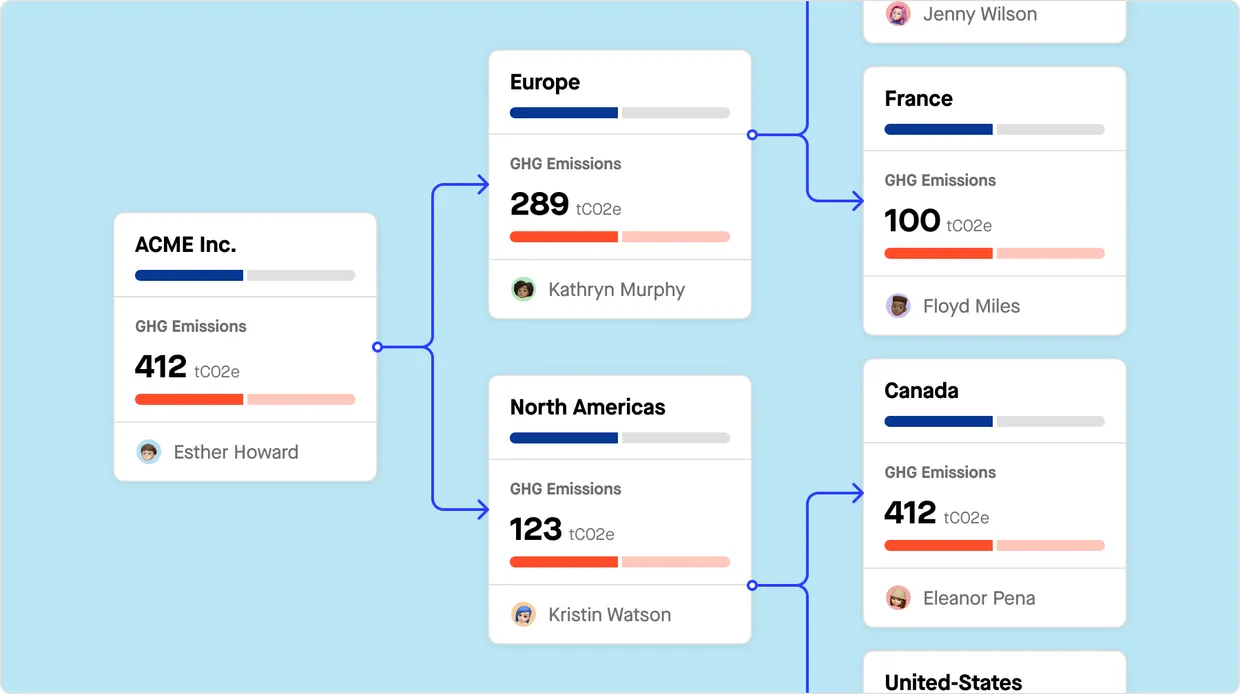











Scope 3 is essential, but hard to track
of your emissions come from your supply chain
of companies say they lack confidence in supplier data
Sweep got you covered

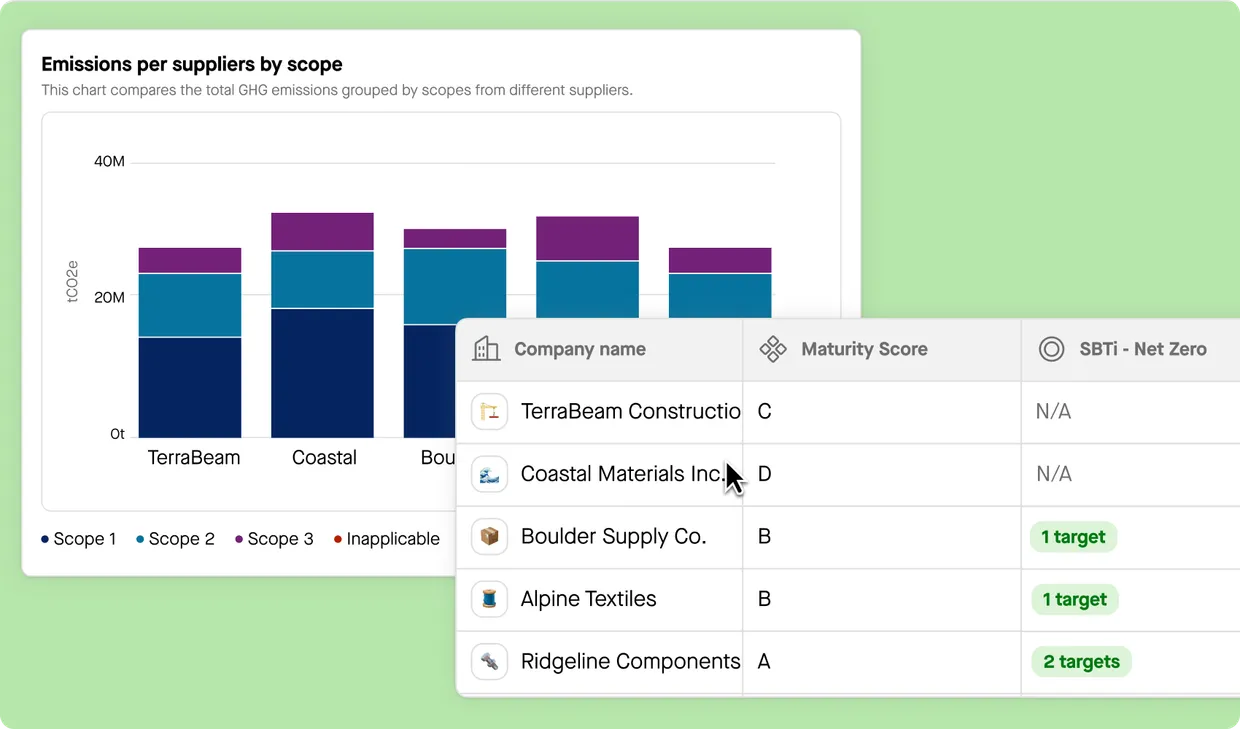
Centralize your supplier SBTi commitments from all sources : surveys, manual import or API integration

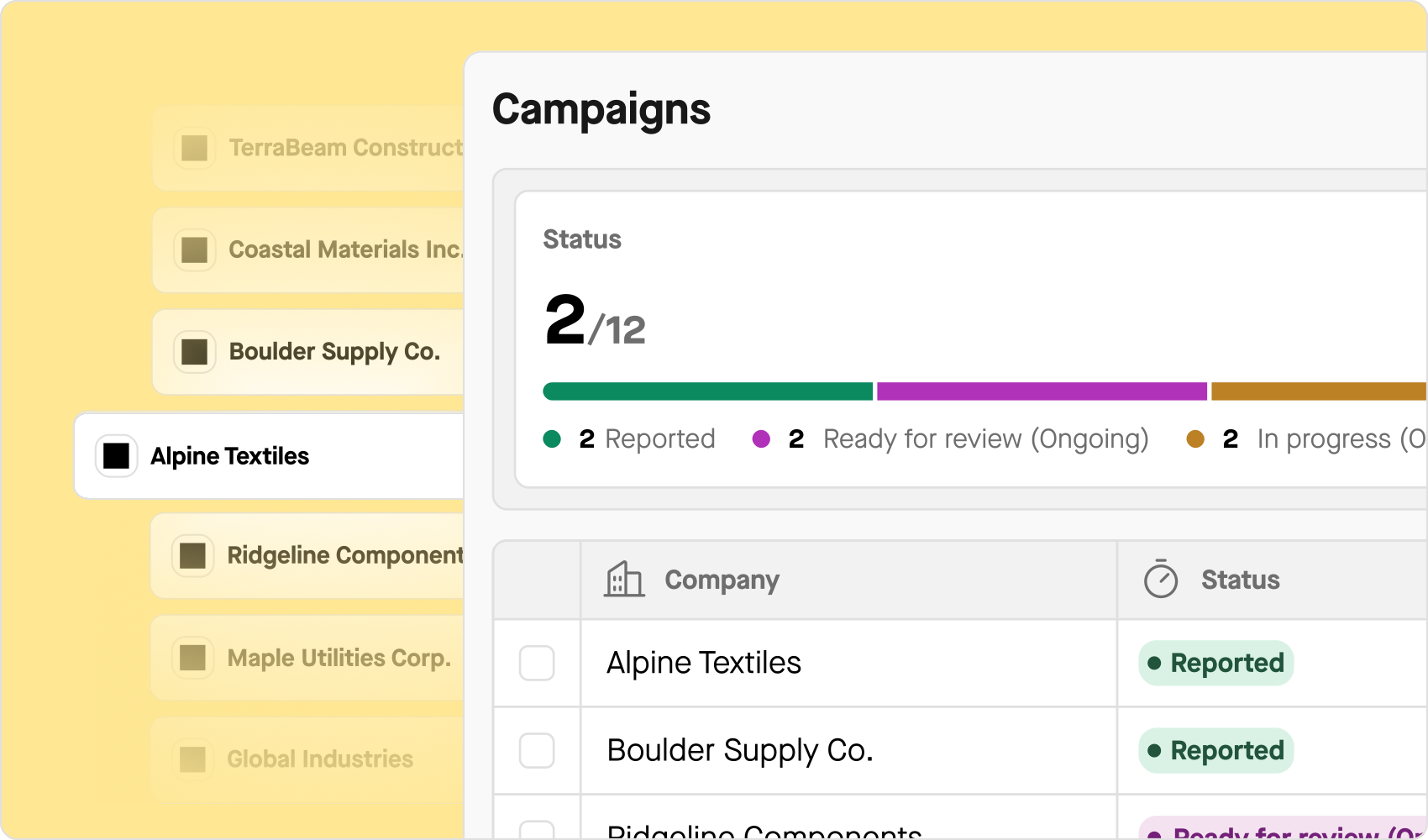
Reach your entire supply chain through multilangual survey and provide them with free accounts to submit their data

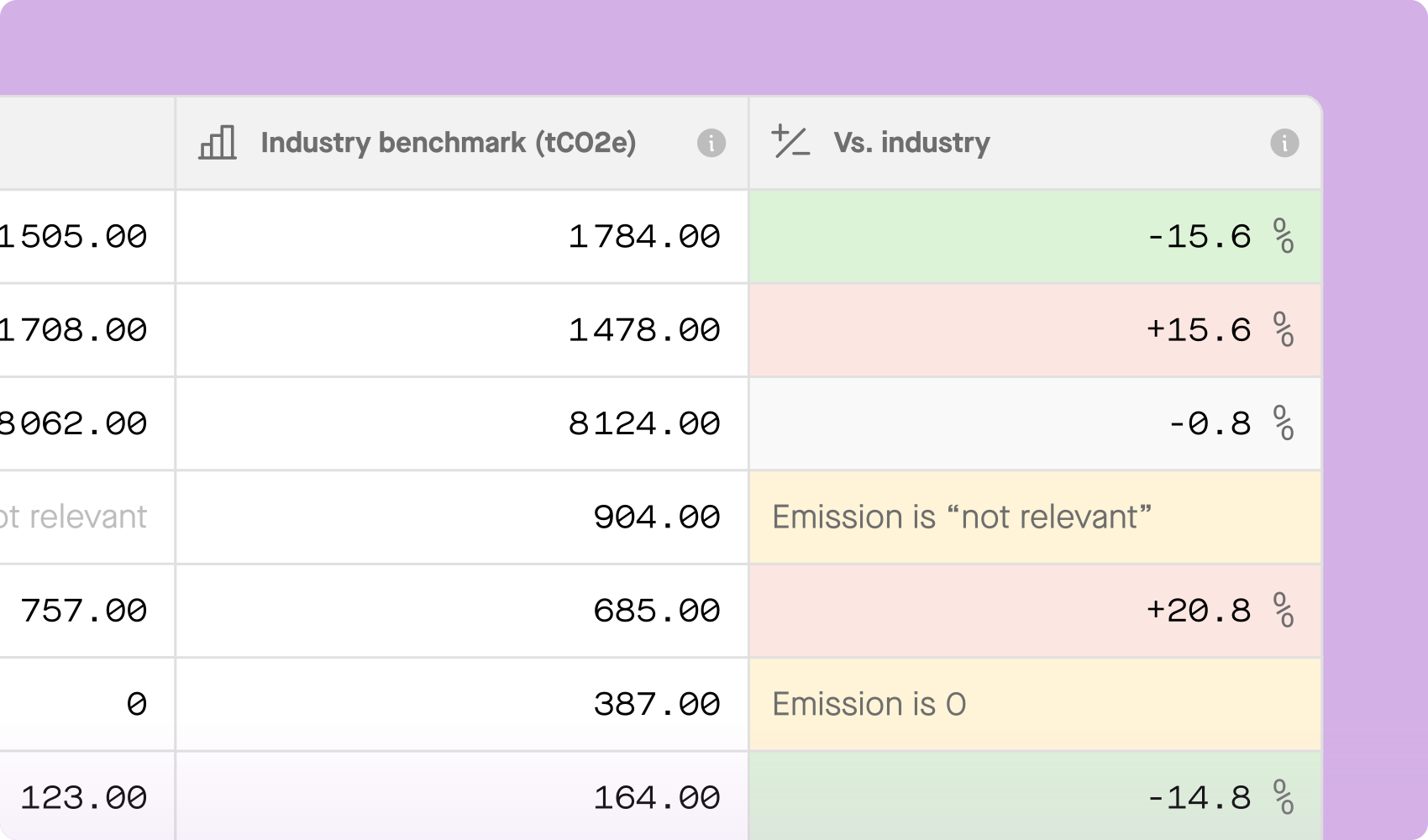
Compare supplier carbon intensity to industry benchmarks of each GHG categories

Use automatic data cleansing to remove duplicates, errors and inconsistencies.
Book a demo
Discover how Sweep can support your business in a 30-minute demo.
We believe Sweep is the top ESG data solution. Our customers think so too.
“Sweep was the best tool on the market for putting all of our data into a single source of truth and visualising where carbon emissions were highest.”


“Sweep has removed risk, automating and streamlining data collection into one single source of truth.”

“The major added value of Sweep was the automation of our calculation rules for modeling our value chain and removing as much as possible the copy-paste errors from dozens of Excel files and hundreds of millions of lines of data”


“Sweep stood out among 22 sustainability software vendors, including major global players. They won because they were simply the best”

The platform makes ESG reporting much simpler, both for investors and for our company leadership.


“The major added value of Sweep was the automation of our calculation rules for modeling our value chain.”


Sweep is bringing more simplicity and transparency to the complicated process of tracking our Scope 3 emissions.

FAQ
What is the Scope 3
For most companies, Scope 3 emissions—especially from upstream activities—are the biggest piece of the carbon puzzle. In fact, they’re on average 11 times higher than direct operational emissions.
Unlike Scope 1 and 2, which cover direct emissions and purchased energy, Scope 3 includes emissions from your entire value chain—spanning suppliers, transportation, product use, and more.
Why should you measure Scope 3 emissions?
– Regulatory pressure is increasing
Frameworks like the CSRD require companies to disclose Scope 3 emissions and establish a credible transition plan. As regulations tighten, accurate reporting is becoming a business necessity.
– Your net-zero goals depend on it
For most companies, Scope 3 emissions make up the bulk of their carbon footprint. Cutting operational emissions alone isn’t enough—reducing value chain emissions is essential to meeting climate commitments.
– Supplier collaboration is critical
Engaging suppliers with reliable data and a clear reduction strategy is the most effective way to drive real impact. A strong Scope 3 approach ensures transparency, compliance, and progress toward sustainability goals.
How to measure Scope 3 emissions
Measuring Scope 3 emissions can feel overwhelming—they extend far beyond your own operations and often involve thousands of suppliers. But you don’t have to do it alone.
The key is upstream collaboration at scale. By working closely with suppliers and leveraging the right tools, you can streamline data collection, improve accuracy, and take meaningful action to cut emissions across your value chain.