A smarter decarbonization strategy
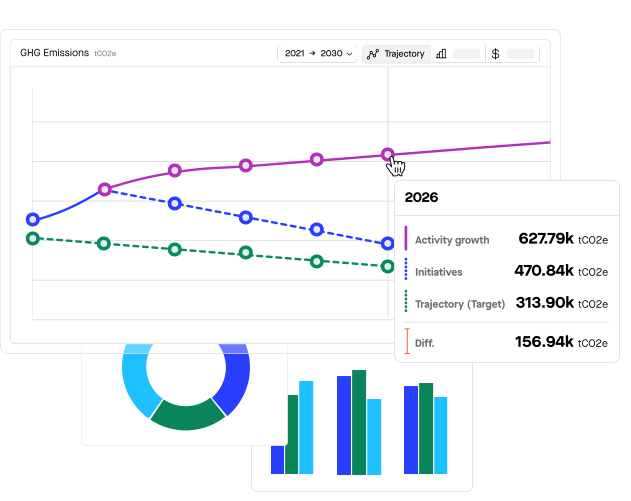
Build a decarbonization plan and deliver
Sweep connects carbon accounting to target-setting, initiative planning, and financial modeling, so every decision is grounded in real emissions data rather than generic benchmarks.

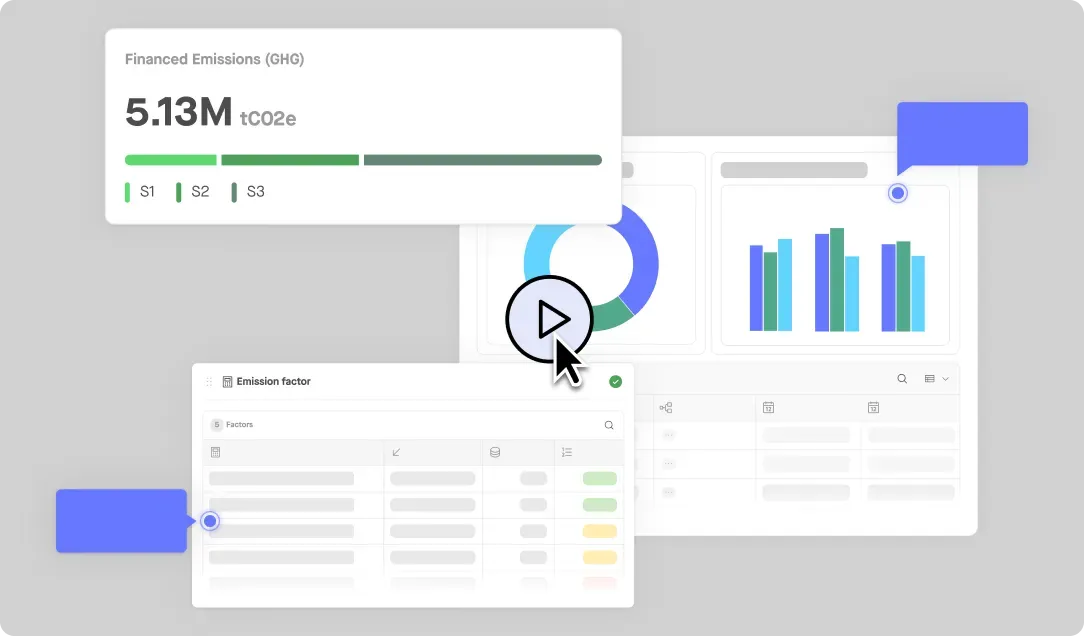
See your highest-emission activities across Scope 1, 2, and 3 at a glance, so your reduction plan targets the right levers.

Start from a built-in library of SBTI-aligned initiatives, then adapt to your operations and emissions profile.

Run multi-year simulations, with AI shaping forecasts and scenarios. Test assumptions and initiatives, before you make changes.

Assign initiatives, engage suppliers, and track progress together in one intuitive interface.
2026 Decarbonization Playbook for Enteprises

From target to delivered tonne, in one platform
Set targets, plan initiatives, and model budgets against your real forecasts, all in one place, so the strategy you commit to is one you can deliver.
DATA-BACKED TARGETS
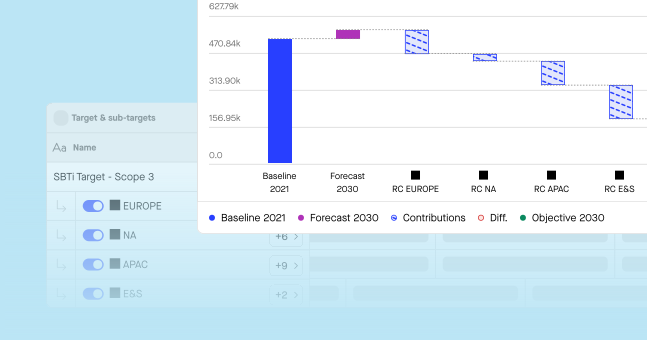
Set financial-grade targets
Build absolute and intensity targets that align with SBTi and roll up across your organization.
- AI-assisted Scope 1, 2, and 3 data collection and transformation
- Absolute and intensity targets – economic and physical
- Top-down or bottom-up target consolidation across scopes, regions, and entities
- Reductions aligned to your business forecast so every target is defendable
TEST AND TRACK
Model with accuracy
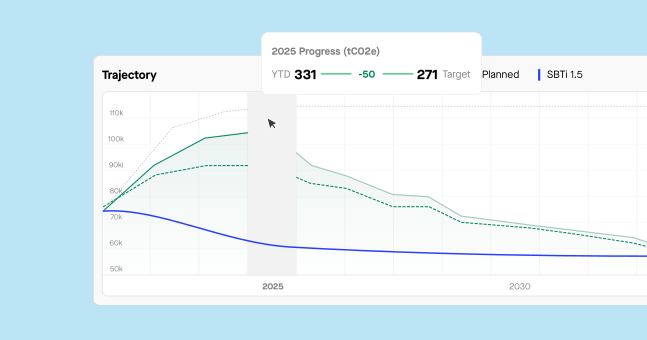
Run multi-year simulations on real forecasts and track delivery against the strategy you committed to.
- AI-assisted forecasts and scenario simulations
- Visual dashboards to forecast the effect of any change
- Bottom-up and top-down execution with dependencies
- Real-time tracking of initiative progress
INITIATIVES WITH FINANCIAL TRADE-OFFS
Plan against your budget
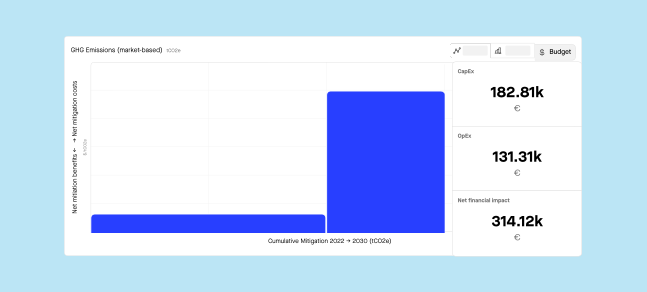
Set initiatives that combine carbon and budgets to align sustainability and finance.
- Library of SBTI-aligned initiative templates
- Year-by-year CapEx and OpEx modeling
- Built-in MAC curve view to rank initiatives
- Budget view across the full initiative portfolio
Decarbonization is great. Contribution is bigger.
Leverage the Climate Contribution Framework: a new and complementary way to measure corporate climate action.
Cutting your own emissions matters. But it’s not the whole story. Meaningful progress on global emissions only happens if companies also scale low-carbon solutions and put capital behind climate action beyond their supply chain.
The Climate Contribution Framework brings those three threads — emission reductions, climate solutions, and climate financing — into a single view of corporate climate action. Helping you demonstrate how your business is contributing to the energy transition.
- Reduce: Decarbonize your operations and supply chain across Scope 1, 2, and 3 through transition planning and low-carbon investment choices.
- Scale:Build and deploy the low-carbon products, services, and technologies the energy transition depends on, from renewables to circular innovation.
- Finance:Direct capital toward climate projects, low-carbon technologies, and carbon credits that cut or remove emissions beyond your supply chain.
Developed by Sweep and the Mirova Research Center, I Care by BearingPoint, and Winrock. Shaped by industry leaders including Orange, Schneider Electric, EDF, Renault, and Veolia.
“Sweep stood out among 22 sustainability software vendors, including major global players. They won because they were simply the best.”


“With Sweep, we can model various reduction initiatives and decide which measures to give priority to. This means we can build a solid, evidence-based roadmap to achieving our climate targets, and fine-tune this along the way based on real-time changes in data.”


“We calculated our first carbon footprint with Sweep, and it was a success. We have identified the different emissions hot spots within each category of product or service. This means we can identify areas to improve upon in the next few years.”


A world-class solution with global recognition
Sweep has been recognized as a top carbon and ESG reporting platform by independent analysts worldwide.
Sweep Named Leader in IDC MarketScape for Carbon Management and PCF software (2026)
We’ve been recognized as a Leader out of 17 carbon management platforms for both capabilities and strategy by independent analysts, IDC. The IDC MarketScape report highlighted:
⭐ Sweep’s enterprise-grade data management
⭐ Skills-based AI architecture
⭐ Integrated LCA workflows
Sweep Named a Leader in IDC MarketScape for Sustainability Management Platforms (2025)
This recognition highlights Sweep’s leadership in carbon accounting and as a full ESG data management platform, positioning it as a comprehensive sustainability solution, structured around three core pillars: Track, Disclose, Act.
Key highlights from the IDC report:
⭐ Leading on data management
⭐ Goal-setting & ROI modeling
⭐ Supplier engagement at scale
⭐ Double materiality & IRO tools
Verdantix Green Quadrant (2026)
Verdantix highlights Sweep’s strengths in the areas that matter most for scaling decarbonization:
⭐ Value chain emissions management
⭐ Carbon data management
⭐ Organizational structure and scalability
⭐ Carbon financial management











Ready to try?
Book a demo today.
Decarbonization strategy FAQ
What is decarbonization software?
Decarbonization software enables businesses to measure their carbon footprint, plan emissions reductions, and track progress toward science-based emissions reduction goals. Unlike standalone carbon accounting tools, dedicated decarbonization strategy software like Sweep combines automated data ingestion, AI-powered insights, scenario modeling, and sustainability reporting in a single platform.
This gives sustainability and finance teams the data-driven capabilities they need to move beyond measurement and deliver real, auditable emissions reductions — with clear financial returns.
How does Sweep help identify where to reduce carbon emissions?
Sweep automatically identifies emissions hotspots across Scope 1, 2, and 3, giving teams an at-a-glance view of the highest-impact areas within their operations and supply chain. Built-in scenario modeling allows teams to simulate the carbon and financial impact of specific decarbonization initiatives before committing any resources.
Every reduction planning decision is grounded in accurate emissions data, not assumptions — making your strategy both credible and cost-effective.
How does Sweep handle Scope 3 and supply chain emissions?
Scope 3 emissions typically account for 70 to 90% of a company’s carbon footprint, making supply chain decarbonization one of the most important opportunities in any emissions reduction strategy. Sweep’s supplier portals enable direct collection of primary emissions data from suppliers, replacing unreliable industry averages with accurate, supplier-specific carbon data.
Built-in collaboration tools make it easy to engage suppliers on shared reduction targets, helping companies address their full supply chain footprint and meet the Scope 3 requirements of frameworks like California SB 253, ISSB, and SBTi.
What sustainability reporting frameworks does Sweep support?
Sweep generates audit-ready sustainability reports aligned with SB 253, CDP, GHG Protocol, TCFD, GRI, ISSB, and CSRD (for companies with EU operations). Built-in reporting templates, automated data validation, and clear footprint ledgers with full data lineage provide a traceable audit trail for third-party verification.
As reporting requirements shift across states and sectors, Sweep’s structured approach ensures organizations can adapt without extensive manual rework — reducing risk and protecting against financial and reputational exposure.
How does Sweep support science-based target setting?
Setting credible science-based targets requires an accurate, verified baseline across all emission scopes. Sweep automates Corporate Carbon Footprint (CCF) calculations using recognized emission factors applied to real activity data, eliminating guesswork from carbon accounting.
Scenario modeling tools allow teams to compare decarbonization pathways, assess trade-offs between cost and impact, and build a reduction roadmap connected directly to their measured emissions data — not generic benchmarks. That’s a requirement for credible SBTi-aligned target setting.
Sweep supports both absolute and intensity targets, including the economic and physical intensity targets SBTi recognizes for Scope 3 and sector-specific Scope 1/2 pathways.
Can Sweep show the financial impact of decarbonization initiatives?
Yes. Sweep’s Financial and ROI Analysis capabilities link emissions reductions directly to costs, enabling teams to prioritize decarbonization initiatives using Marginal Abatement Cost (MAC) analysis. By modeling the financial impact of actions such as switching to renewable energy, changing suppliers, or reducing energy use, sustainability and finance teams can identify which investments deliver the greatest return.
This transforms decarbonization planning from a cost center into a driver of measurable savings and competitive advantage — a critical factor for CFOs, financial institutions, and investors assessing climate risk.
How does Sweep reduce manual work in carbon management?
Sweep automates data ingestion from ERP systems, utility providers, and financial records via APIs and AI, removing manual data collection processes that create errors and slow down teams. Calculation rules are applied automatically and documented with full data lineage, eliminating copy-paste errors from spreadsheet-based carbon management.
Real-time monitoring dashboards deliver live emissions tracking — not a once-a-year snapshot — while task management tools enable efficient collaboration across teams and geographies.
How does Sweep ensure emissions data quality and audit readiness?
Sweep’s carbon management platform includes built-in quality control at every stage of the data pipeline. Automated data validation flags inconsistencies before they affect calculations, full data lineage provides transparency on how every figure was derived, and clear footprint ledgers create a complete, traceable record for third-party verification.
This audit-ready approach gives organizations the confidence to report accurate emissions data to investors, stakeholders, and regulators — and to defend that data under scrutiny from frameworks including SB 253, TCFD, and the GHG Protocol.