Streamlined carbon management
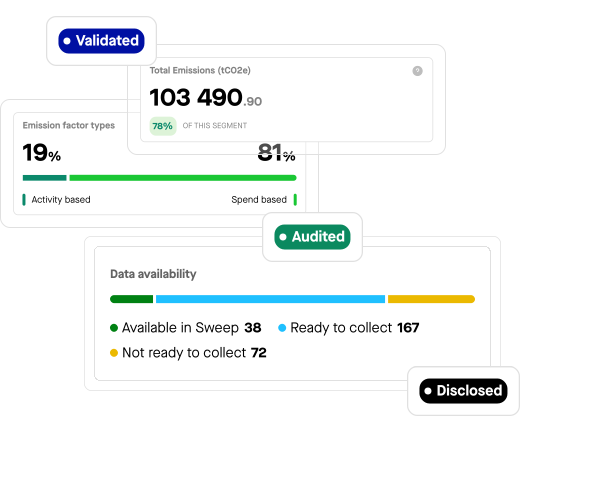
One platform for all your carbon emissions data
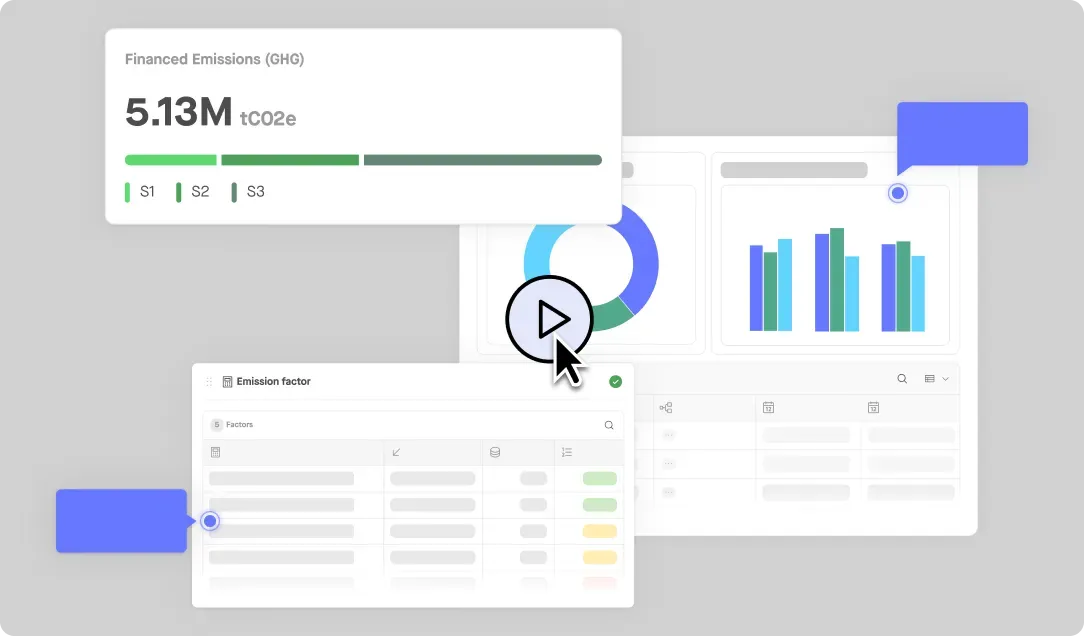
Sweep connects and automates data collection across your entire carbon footprint—from fuel combustion to supply chain emissions—so you can focus on reducing emissions, not chasing numbers.

Replace months of spreadsheet wrangling with automated Scope 1, 2, and 3 data collection across every entity, site, product, and supplier.

Apply the right factors to the right activities and trace every number back to its source, built on GHG Protocol, IPCC, EPA, and ADEME methodologies.

Model reduction scenarios, set science-based targets, and track progress, with Sweepy flagging data gaps and recommending the next move.
Types and methods of carbon accounting – what businesses need to know

Everything you need to manage your carbon footprint, in one platform
From first measurement to measurable reduction: corporate footprint, product footprint, and reduction planning, with audit-grade data and AI built in.
CORPORATE FOOTPRINT
Every scope, every entity
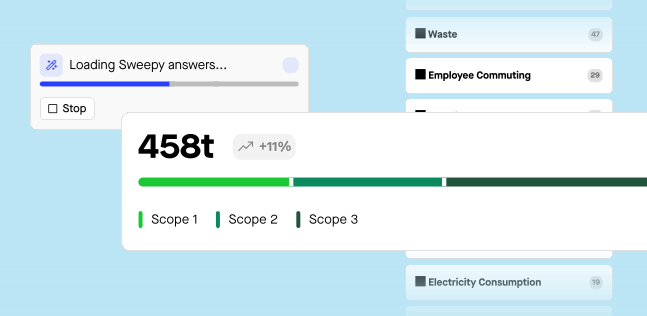
Build a complete corporate carbon footprint across operations, energy use, and your full supply chain.
- AI-assisted Scope 1, 2, and 3 data collection
- Multi-entity, multi-region, multi-currency rollups
- Built-in emissions factors from GHG Protocol, Exiobase, IPCC, EPA, and more
- Supplier interfaces for primary supply chain emissions data at scale
PRODUCT FOOTPRINT
Carbon at the SKU level
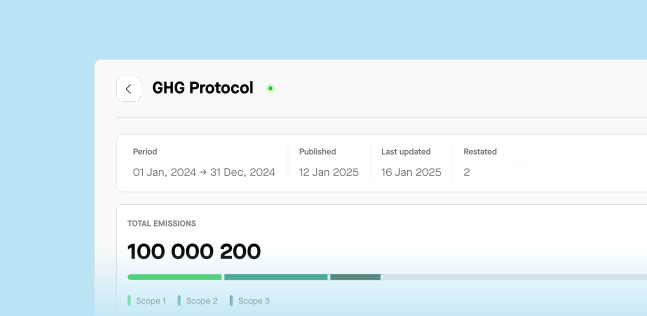
Calculate Product Carbon Footprints at the scale of your catalog and put carbon data into pricing, design, and procurement decisions.
- Lifecycle emissions from raw materials to end of life
- Aligned to ISO 14067 and the GHG Protocol Product Standard
- Auditable PCF and corporate footprint outputs for customers, retailers, and EPDs
- Reuse product-and-supplier-specific emission factors across thousands of SKUs
REDUCTION AND TARGETS
From baseline to lasting reduction
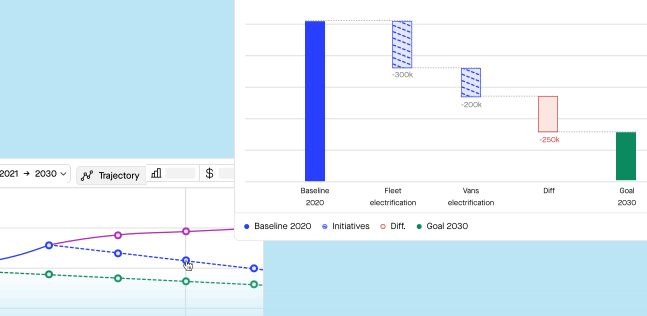
Set business-performance and science-based targets, model reduction scenarios, and track progress with AI-assisted gap detection.
- SBTi-aligned target-setting workflow
- Integration of financial performance and projections
- Scenario modeling for abatement levers and trade-offs
- Top-down and bottom-up strategy and tracking

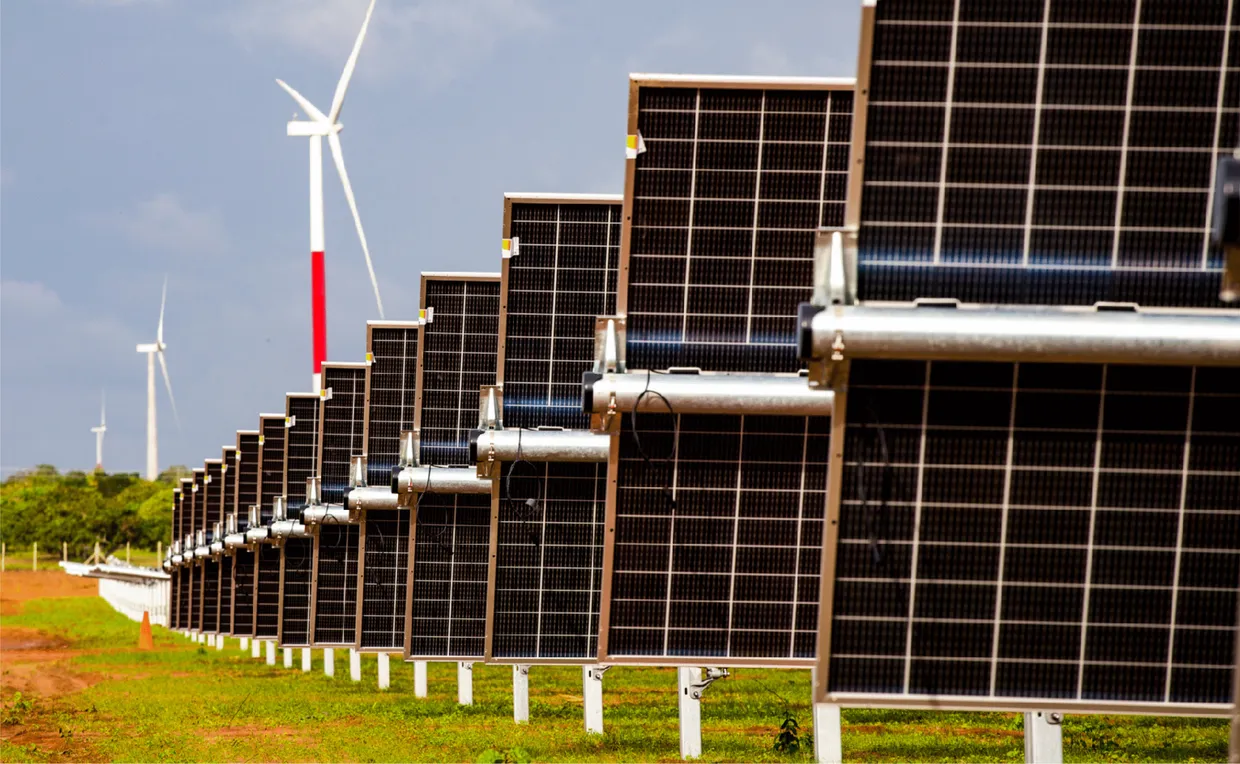
A world-class solution with global recognition
Sweep has been recognized as a top carbon and ESG reporting platform by independent analysts worldwide.
Sweep Named Leader in IDC MarketScape for Carbon Management and PCF software (2026)
We’ve been recognized as a Leader out of 17 carbon management platforms for both capabilities and strategy by independent analysts, IDC. The IDC MarketScape report highlighted:
⭐ Sweep’s enterprise-grade data management
⭐ Skills-based AI architecture
⭐ Integrated LCA workflows
Sweep Named a Leader in IDC MarketScape for Sustainability Management Platforms (2025)
This recognition highlights Sweep’s leadership in carbon accounting and as a full ESG data management platform, positioning it as a comprehensive sustainability solution, structured around three core pillars: Track, Disclose, Act.
Key highlights from the IDC report:
⭐ Leading on data management
⭐ Goal-setting & ROI modeling
⭐ Supplier engagement at scale
⭐ Double materiality & IRO tools
Verdantix Green Quadrant (2026)
Verdantix highlights Sweep’s strengths in the areas that matter most for scaling decarbonization:
⭐ Value chain emissions management
⭐ Carbon data management
⭐ Organizational structure and scalability
⭐ Carbon financial management












Ready to try?
Book a demo today.
Carbon Management: Frequently Asked Questions
How does Sweep calculate and manage greenhouse gas emissions across all scopes?
Accurate carbon accounting is the foundation of any effective carbon management strategy. The Greenhouse Gas Protocol, recognized by 92% of Fortune 500 companies and developed in partnership with the World Resources Institute, provides the most widely used international accounting framework for quantifying corporate greenhouse gas emissions. It classifies total emissions into three scopes:
- Scope 1 (direct emissions from fuel combustion and operations within owned or controlled facilities),
- Scope 2 (indirect emissions from purchased electricity across all sites), and
- Scope 3 (all other indirect emissions across the supply chain, including suppliers, business travel, employee commuting, and product lifecycle).
Research published in Nature Climate Change shows that Scope 3 can account for up to 70% of a company’s total emissions. Sweep addresses this with AI-assisted data collection across all three scopes, covering every entity, site, region, and currency.
Key capabilities include:
- Built-in emissions factors from GHG Protocol, IPCC, EPA, ADEME, and Exiobase.
- Multi-entity, multi-region, multi-currency rollups.
- Full data traceability from source to filed figure.
- Supplier interfaces for primary supply chain emissions data at scale.
- Carbon intensity benchmarking across 200-plus industry sectors.
- Automated workflows and approval processes to keep data collection accurate across distributed teams.
Every number Sweep produces is built on GHG Protocol, IPCC, EPA, and ADEME methodologies, so organizations can defend their carbon figures to auditors, investors, and stakeholders with full confidence.
What is product carbon footprint management, and how does Sweep support life cycle analysis?
A product carbon footprint (PCF) measures the total greenhouse gas emissions generated across a product’s full lifecycle, from raw material extraction and manufacturing through distribution, product use, and end of life.
Life cycle analysis is the methodology underpinning this calculation, tracing emissions at every stage to build an accurate picture of a product’s environmental and cost impact. As retailers, investors, and business customers increasingly demand verified, product-level carbon data, PCF management and life cycle analysis are becoming strategic business capabilities that drive competitive differentiation.
Key business uses include:
- Integrating carbon data into product design and procurement decisions to reduce lifecycle emissions and costs.
- Meeting retailer and customer requirements for verified Environmental Product Declarations (EPDs) and PCF disclosures.
- Connecting product-level carbon data to pricing and sourcing decisions.
- Identifying high-emission components for targeted supplier engagement and cost reduction.
Sweep calculates product carbon footprints at catalog scale, aligned to ISO 14067 and the GHG Protocol Product Standard. Emissions factors are reusable across thousands of SKUs, and auditable PCF outputs support customer-facing disclosures, retailer requirements, and EPDs.
How does Sweep support carbon emissions reduction strategies and science-based target-setting?
Measuring carbon emissions is only the first step. Effective carbon management requires organizations to translate their carbon footprint data into a clear, evidence-based reduction plan with measurable targets, modeled pathways, and regular progress assessments.
Core strategies include improving energy efficiency to cut operating costs, switching to clean energy and renewable power generation, optimizing industrial processes to reduce direct emissions, adopting sustainable procurement practices across the supply chain, and implementing internal carbon pricing to embed emissions costs into business decisions.
Offsetting through carbon credits compensates for unavoidable emissions while deeper structural reductions are pursued.
Engaging suppliers is equally essential, as supply chain emissions often represent the largest share of a company’s total carbon footprint. Companies that actively engage their suppliers improve their sustainability performance, attract investors, and gain a competitive edge as supply chain carbon transparency becomes a market expectation.
Sweep’s capabilities include:
- SBTi-aligned target-setting workflow.
- Scenario modeling for abatement levers and trade-offs that shows cost and emissions impact before committing resources.
- Top-down and bottom-up tracking.
- Integration of financial performance and projections.
- Sweepy, Sweep’s AI assistant, which flags data gaps, surfaces emissions hotspots, and recommends the next move.
Which regulations and reporting requirements apply to carbon management, and how does Sweep help?
Several regulatory and reporting requirements now apply to carbon management for US businesses. These include:
- California SB 253 (requires Scope 1, 2, and 3 emissions disclosure for large companies operating in California, with third-party verification requirements — making auditable carbon data a legal requirement for many US businesses).
- CSRD (relevant for US companies with EU operations or customers, requiring standardized carbon disclosures across all three scopes).
- ISSB / IFRS S2 (sustainability-related financial reporting standards being adopted across 21 jurisdictions, with carbon emissions at the core).
- GRI (widely adopted framework for reporting environmental impacts including GHG emissions, used by investors and customers globally).
- SBTi (over 104,000 companies have committed to science-based emissions reduction targets, requiring credible, measurable progress).
Works across current requirements and adapts as rules evolve. The regulatory landscape varies by state and sector — Sweep helps companies navigate this complexity, building audit-ready data infrastructure that