 |
 |
|
| Platform model | Independent, data-agnostic carbon accounting platform | Native to the Salesforce platform |
| Scope 3 focus | Strong supplier engagement and value chain emissions | Scope 3 Emissions Hub within Salesforce |
| Regulatory coverage | CSRD, ESRS, SB 253, ISSB, GRI, CDP, TCFD | CSRD, GRI, SASB, CDP, TCFD, GHG Protocol |
| Ease of use | User friendly for sustainability teams | Best for existing Salesforce users |
| Action and planning | Reduction targets, scenario modeling, actionable insights | Carbon forecasting and financial alignment |
| Primary focus | Full ESG data management (environmental, social, governance) + carbon | Carbon accounting + environmental tracking (limited social/governance) |
| Platform model | Independent, data-agnostic carbon accounting platform | Add-on – complementary to the Salesforce platform |
| Best suited for | Organizations prioritizing ESG & sustainability reporting | Industrial organizations needing integrated EHS, safety, & ESG management |
Salesforce Net Zero Cloud vs Sweep
Compare Salesforce Net Zero Cloud vs Sweep. Learn how a standalone ESG platform differs from a CRM-based carbon tool in flexibility, ESG coverage, and ease of adoption.

How do Sweep and Salesforce Net Zero Cloud compare
Organizational flexibility
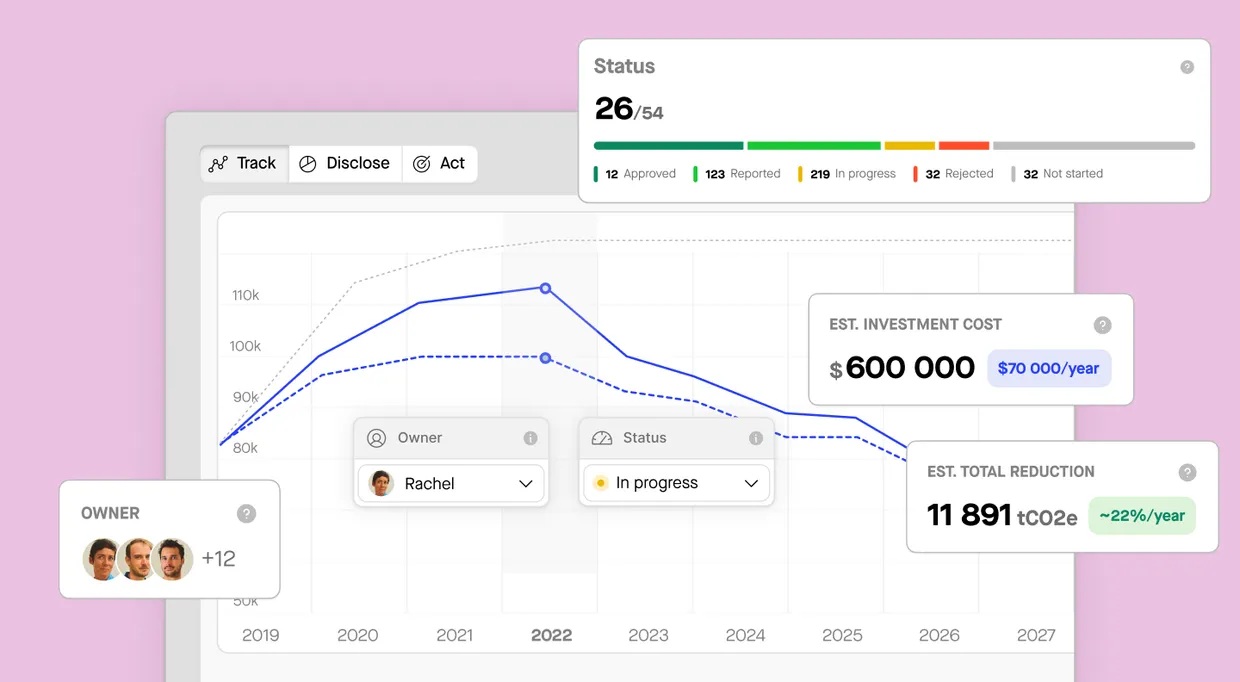
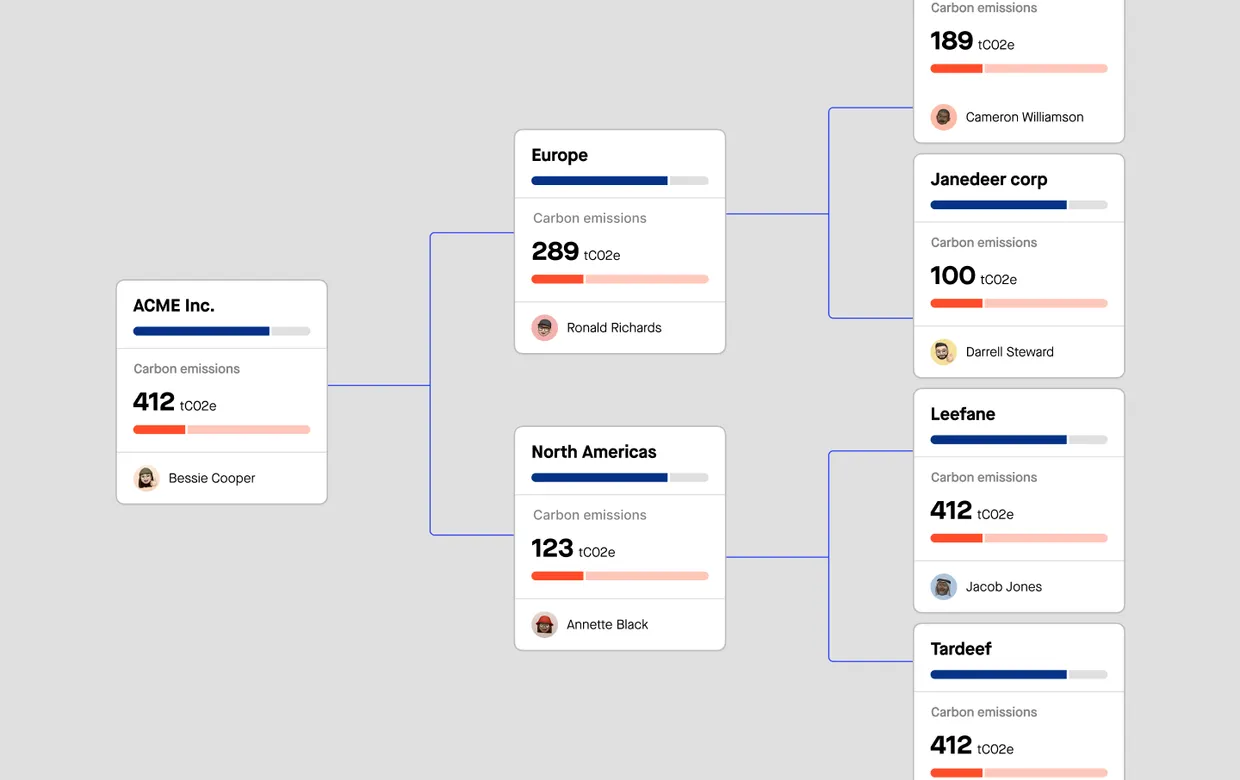
Sweep centralizes carbon accounting data, emissions data, and sustainability data into a single, standalone carbon accounting platform. It enables sustainability teams to track emissions across business units, regions, and complex supply chains using a flexible data model that adapts to different maturity levels. Sweep trees visually model value chain emissions, including indirect emissions, helping teams calculate greenhouse gas emissions, identify hotspots, and track reduction targets.
Salesforce Net Zero Cloud is a carbon accounting module built on the Salesforce CRM platform. Originally developed for Salesforce’s internal sustainability needs in 2019 and launched commercially in 2021, it organizes carbon data through Salesforce objects and workflows. This CRM-native approach offers advantages for organizations already deeply invested in Salesforce, as it can integrate emissions data with customer and operational data. However, it requires Salesforce infrastructure and expertise, making it less accessible for organizations using non-Salesforce ERP, financial systems, or seeking a standalone sustainability solution.
Complete ESG integration
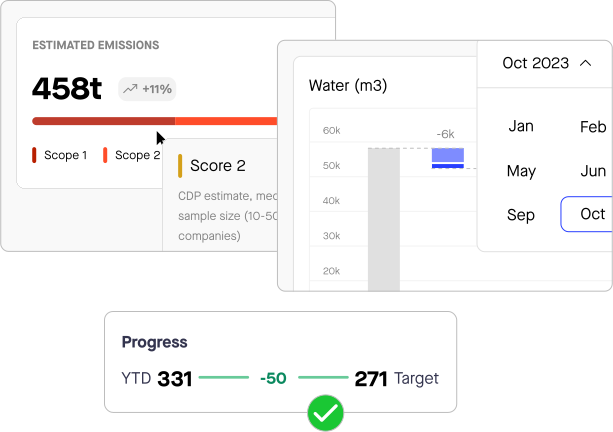
Sweep combines carbon accounting with ESG data management, allowing sustainability teams to manage emissions tracking, sustainability metrics, and ESG data in one centralized system. Robust reporting capabilities, data visualization, and environmental impact analysis support sustainability reporting, climate disclosure, and progress tracking aligned with the Greenhouse Gas Protocol.
Salesforce Net Zero Cloud is great for carbon accounting and environmental tracking (Scope 1, 2, and 3 emissions, waste, and water). However, as noted by analysts, “the focus is more on the environmental side, and less developed on the social and governance aspects.” While it supports some ESG reporting frameworks, comprehensive ESG workflows often require additional Salesforce products and custom integrations rather than operating as a unified ESG data management platform. Organizations seeking full ESG coverage beyond carbon may need to supplement with other tools.
Regulatory coverage
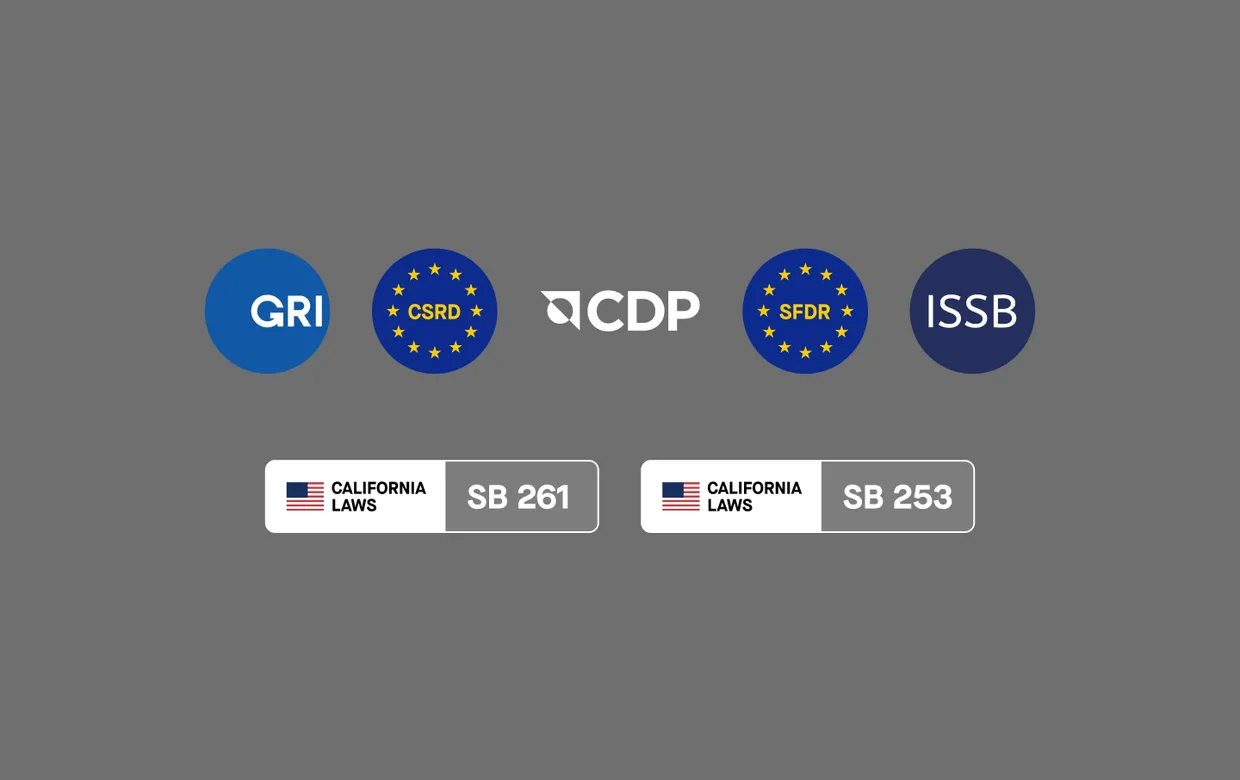
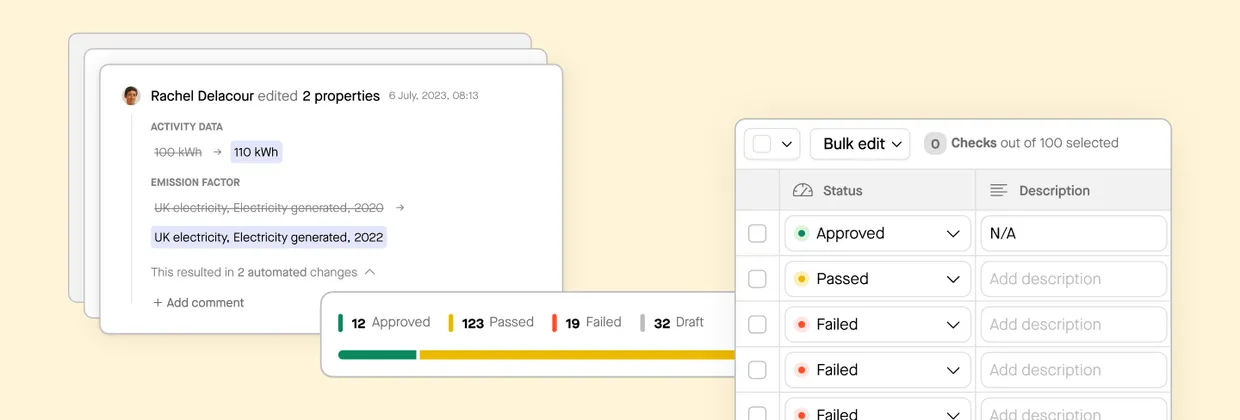
Sweep follows an “upload once, use everywhere” model across reporting frameworks. A single dataset supports CSRD (with full coverage including double materiality), ESRS, SB 253, SB 261, ISSB, GRI, CDP, and TCFD, improving data quality, audit trails, and regulatory compliance while reducing duplication.
Salesforce Net Zero Cloud automatically aligns with CSRD, GRI, SASB, CDP, TCFD, and the GHG Protocol. Regulatory reporting is strong, particularly when integrated with Salesforce financial reporting, but customization is often required for region-specific or evolving regulatory frameworks.
Collaboration at scale
Both Salesforce Net Zero Cloud and Sweep provide tools for tracking Scope 3 emissions, which are often the largest share of a company’s carbon footprint.
Sweep is specifically built to tackle indirect emissions by linking business nodes to external suppliers for real-time data sharing. It automates Scope 3 emissions data collection, supports supplier development programs, and simplifies value chain emissions reporting across complex supply chains.
Salesforce Net Zero Cloud includes a Scope 3 Emissions Hub to manage upstream emissions data. Supplier engagement is effective within the Salesforce ecosystem but often requires additional configuration and ecosystem tools.
Flexible access and scalable deployment
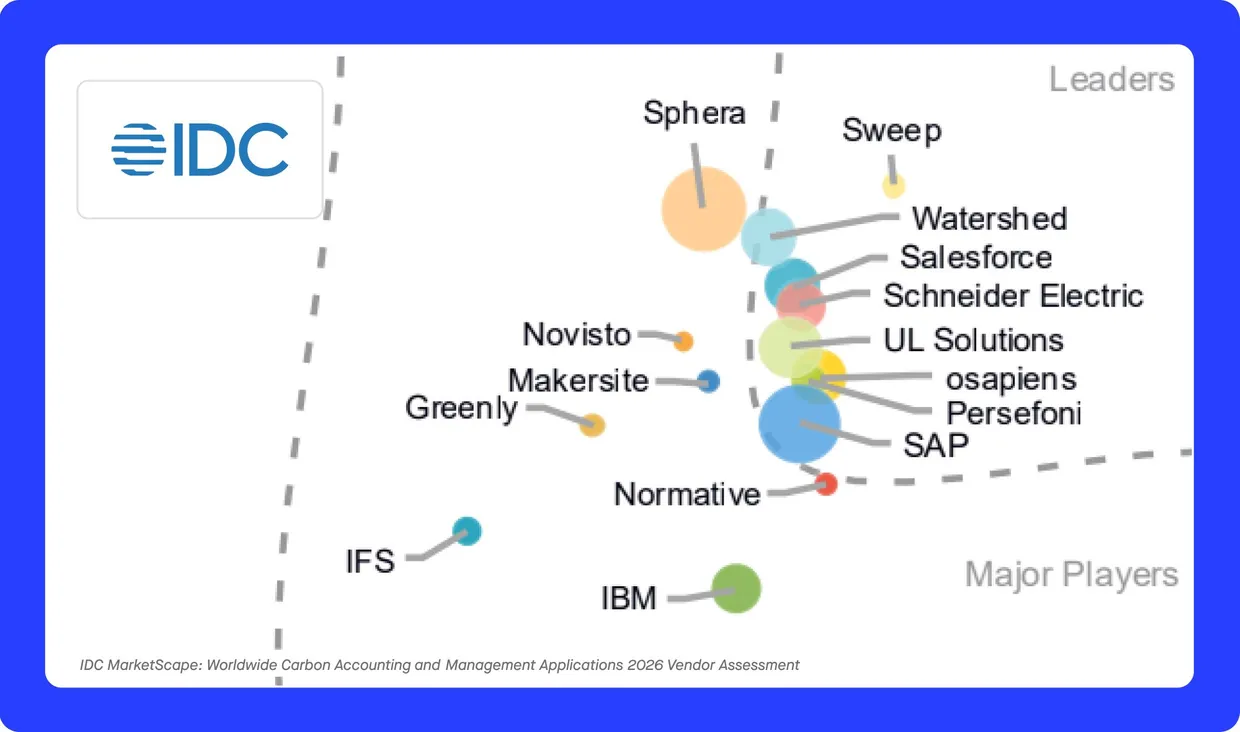
Sweep is designed for organizations of all sizes, from growing businesses using its Starter package to enterprises managing complex value chains. Its data-agnostic design offers greater standalone flexibility and supports a wide range of procurement teams and sustainability efforts. Sweep has received high ratings in reports by analysts such as IDC Marketscape for its product capabilities and strategies.
Salesforce Net Zero Cloud is ideal for large enterprises already embedded in the Salesforce platform. While highly scalable, deployment typically requires Salesforce expertise and deeper configuration.
AI-powered Scalability
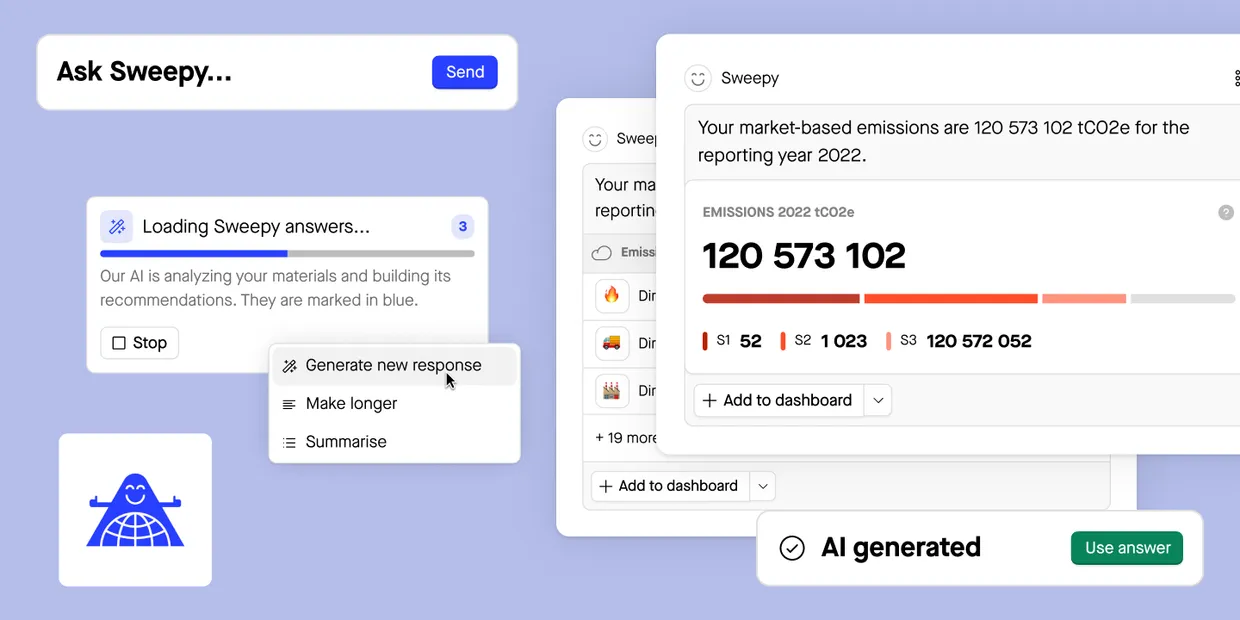
Sweep uses AI for data cleansing, anomaly detection, and instant query-based insights into carbon data. Scenario modeling supports reduction efforts, future emissions forecasting, and continuous monitoring across the sustainability journey.
Salesforce Net Zero Cloud leverages Tableau for advanced reporting, scenario analysis, and forecasting. Salesforce’s Agentforce AI assists with data collection and drafting sustainability reports, particularly for asset managers and financial reporting use cases.
Sweep recognized a leader in IDC MarketScape for Carbon Management
See why companies choose Sweep
Centralize your ESG data, streamline reporting processes, and deliver verifiable carbon reductions, all in one powerful platform.
Leading companies trust Sweep to navigate their sustainability journey









Orange GroupTelecommunications
Orange's technology strategy to achieve net zero by 2040
FAQs: Salesforce Net Zero Cloud vs Sweep
1. How does Sweep differ from Salesforce Net Zero Cloud as a carbon accounting solution?
Sweep is recognized for its strong carbon management capabilities and is well-suited for organizations with complex value chains or those facing stringent new regulations.. It centralizes carbon accounting data, sustainability data, and ESG data in one system, with a strong focus on Scope 3 emissions and supplier engagement. Sweep automates emissions data collection, supports AI-driven data cleansing and anomaly detection, and uses scenario modeling to assess future emissions and reduction efforts. Its intuitive interface and Sweep trees make it easier to calculate emissions, track carbon footprints, and turn insights into action, even for organizations early in their sustainability journey.
Salesforce Net Zero Cloud was built as an extension of Salesforce CRM, not as a standalone ESG solution. It integrates emissions data with financial data, business systems, and CRM workflows, making it well suited for organizations already heavily invested in Salesforce. However, it relies more on configuration and the broader Salesforce ecosystem to deliver full carbon accounting functionality. This adds complexity and time for teams solely focused on ESG compliance without the need to link to an existing Salesforce infrastructure.
2. Which platform is better for ESG and regulatory compliance?
Understanding the carbon accounting landscape is essential as climate disclosure requirements expand and companies deepen their decarbonization commitments.
Sweep supports regulatory compliance by enabling organizations to report once and reuse data across multiple reporting frameworks. Its “upload once, use everywhere” approach supports CSRD, ESRS, SB 253, SB 261, ISSB, GRI, CDP, and TCFD, improving data quality, audit trails, and consistency. Automated mapping, validation, and disclosure outputs help sustainability teams keep pace with evolving regulatory requirements and growing ESG compliance demands.
Salesforce Net Zero Cloud automatically aligns with major global standards such as CSRD, GRI, SASB, CDP, TCFD, and the GHG Protocol. It also integrates emissions data with financial reporting to support compliance and internal decision making. This makes it particularly effective for large enterprises and asset managers already operating within Salesforce, though adapting to new regional guidelines often requires additional configuration.
3. How do the platforms compare for emissions tracking and data quality?
Accurate carbon footprint calculations rely on high-quality emissions data collected from multiple data sources.
Sweep emphasizes continuous emissions tracking, automated data collection, and high data quality across complex supply chains. It centralizes carbon data from internal teams and suppliers, supports emissions factors management, and provides real time data visualization to identify emissions hotspots and monitor reduction targets. AI powered data analysis improves accuracy and auditability, making Sweep slightly better for organizations managing indirect emissions and value chain emissions at scale.
Salesforce Net Zero Cloud offers strong emissions tracking capabilities within the Salesforce platform, including automated conversion of environmental data into carbon emissions according to the Greenhouse Gas Protocol. Combined with Tableau, it delivers advanced reporting and scenario analysis. Its strength lies in enterprise data governance and integration with existing Salesforce business systems, particularly for organizations managing emissions alongside financial and operational data. A key strength is Salesforce’s Agentforce AI, which assists with automated data collection, report drafting, and disclosure authoring, which is an accelerator for disclosure reports.
4. Which platform is better for driving emissions reduction and action?
Sweep is noted for being an accessible platform that allows companies to easily visualize emissions. It is designed to move organizations beyond reporting toward measurable emissions reduction. It provides actionable insights through scenario modeling, emissions forecasting, and collaborative reduction planning across sustainability teams and suppliers. These tools help organizations identify where to reduce emissions, track progress over time, and support long term net zero strategies. This makes Sweep slightly better for organizations focused on turning carbon accounting into concrete sustainability outcomes and cost savings.
Salesforce Net Zero Cloud supports emissions reduction by aligning carbon data with business strategy, financial reporting, and operational decision making. It helps organizations visualize the impact of environmental programs and manage reduction efforts within the broader Salesforce ecosystem. This approach is especially effective for large enterprises embedding sustainability into core business processes.