 |
 |
|
|
Data Integration & AI |
Connects via APIs, real-time data, and generative AI to automate ingestion and consolidation in line with responsible AI principles. |
Relies on limited integrations and manual processes. |
|
Regulatory Coverage |
Built for CSRD, SB 253, GRI, ISSB, CDP, and Bilan Carbone with audit-ready carbon data and consistent standards. |
Focused on Bilan Carbone, CSRD, and EcoVadis. Limited ESG reporting. |
|
Supplier Collaboration |
Integrated supplier workflows for Scope 3 tracking, data sharing, and target alignment. Intuitive, role-based platform that drives adoption. |
Limited supplier data collection tools and Scope 3 capabilities. |
|
Audit Readiness |
Provides traceable, verifiable carbon data for third-party assurance. |
Limited traceability. |
|
Scalability |
Adapts to multi-entity and multi-region organizations for complex carbon management and net zero planning, regardless of industry. |
Primarily designed for SMEs |
Greenly vs Sweep

Why choose Sweep
Seamless carbon footprint measurement
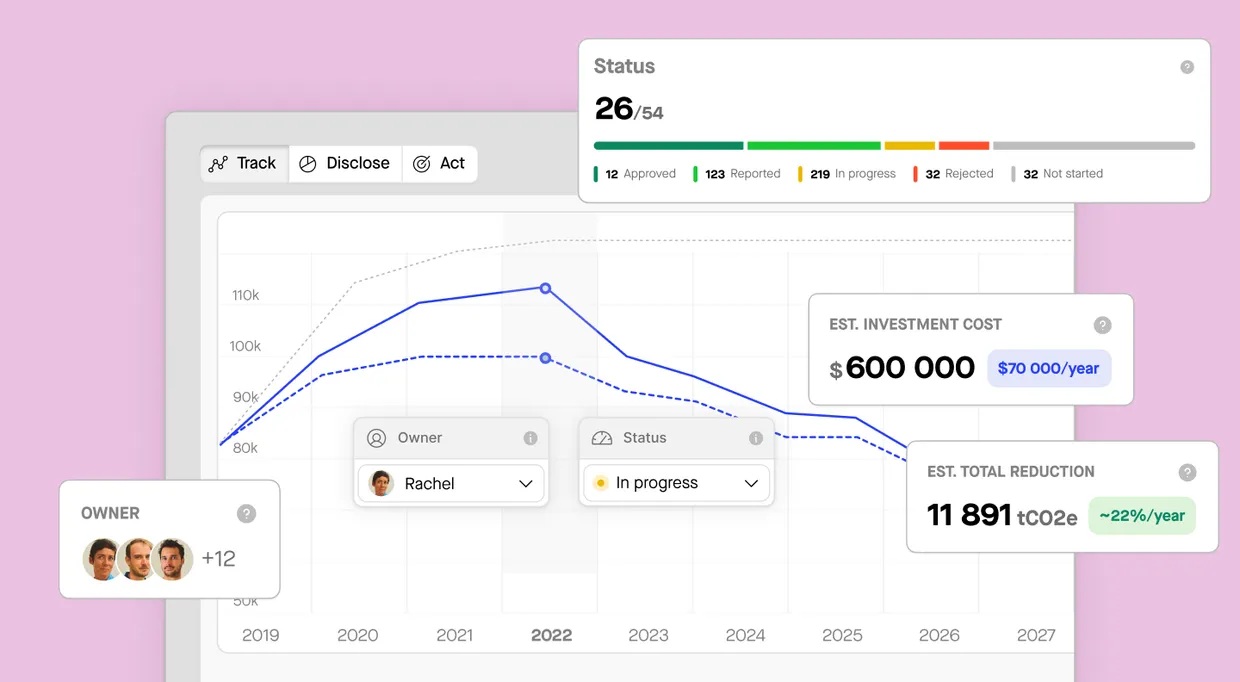
Sweep supports full carbon emissions measurement, including supplier-level Scope 3 emissions tracking across complex value chains. Suppliers can input data directly, track emissions over time, and share reduction targets, turning supplier engagement from a compliance checkbox into a strategic competitive advantage.
Greenly focuses on carbon footprint measurement and AI-driven decarbonization action plans, with limited supplier collaboration tools for large-scale supply chain management.
Regulatory coverage
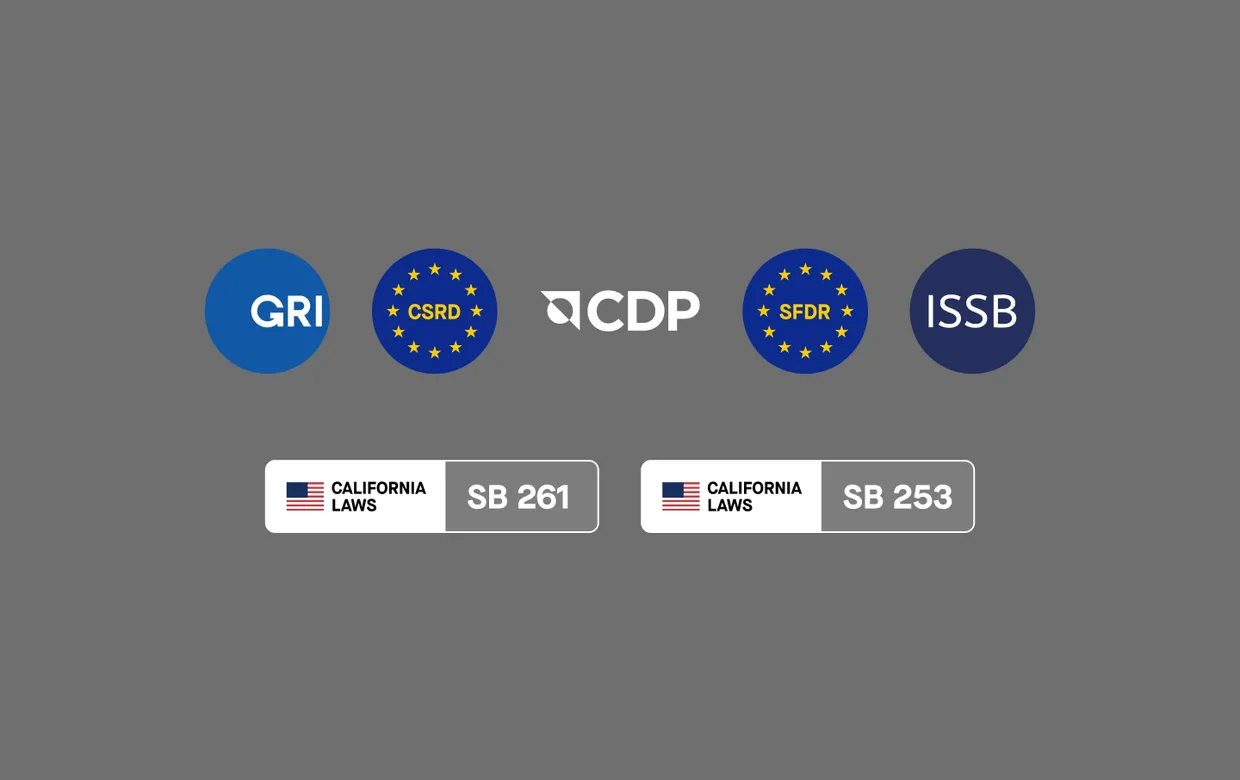
Sweep is designed for compliance with California SB 253/SB 261, CDP, GRI, ISSB, and the Corporate Sustainability Reporting Directive (CSRD) – with audit-ready carbon data and consistent standards across jurisdictions.
Greenly centers on Bilan Carbone, CSRD, and EcoVadis compliance. Its ESG reporting coverage is more limited, making it better suited to companies with narrower reporting requirements.
Collaboration tools
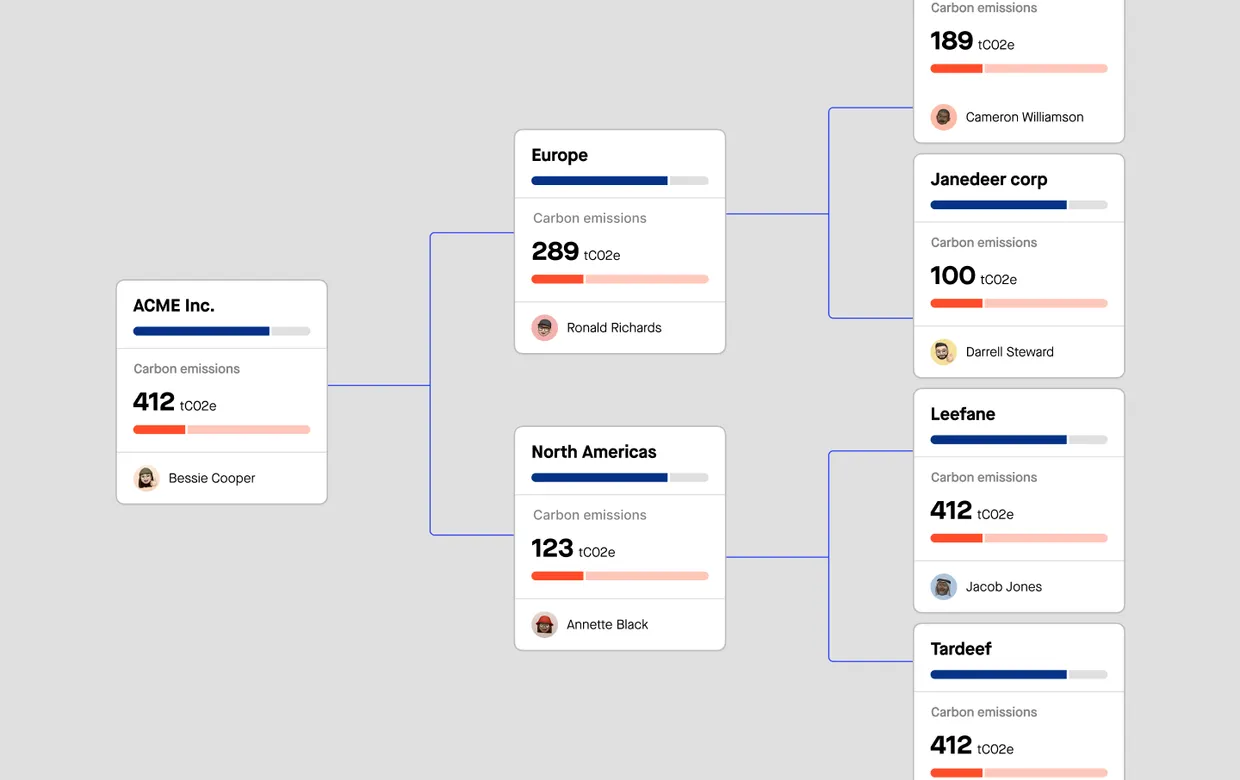
Sweep includes built-in supplier and team workflows to engage internal and external stakeholders across the value chain. Centralizing ESG data allows organizations to streamline sustainability efforts and make it easier to track compliance across multiple reporting standards.
Greenly offers employee engagement tools including training modules, but relies on more limited processes for supply chain data collection and external stakeholder coordination.
Assurance readiness
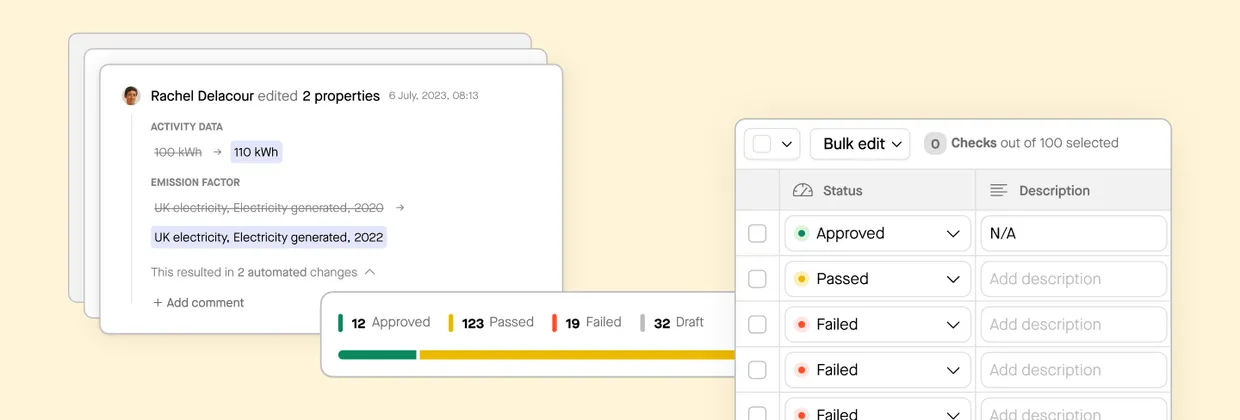
Sweep provides traceable, verifiable carbon data with full data lineage, preparing emissions data for third-party assurance under leading standards including the GHG Protocol, CSRD, and California SB 253.
Greenly offers limited data traceability, which can create challenges when preparing for third-party verification or audit-ready reporting.
AI-powered Scalability
Sweep’s AI agents are built directly into workflows, handling complex emissions data across multi-entity, multi-region organizations and delivering accurate, transparent carbon management at scale. Effective carbon accounting requires integrating data from various business applications to automate emissions tracking and enable real-time monitoring, and Sweep is built to do exactly that.
Greenly uses AI to propose decarbonization action plans and run what-if scenario simulations, which is valuable for SMEs. However, it has limited enterprise-scale automation and workflow integration for large, globally operating companies.
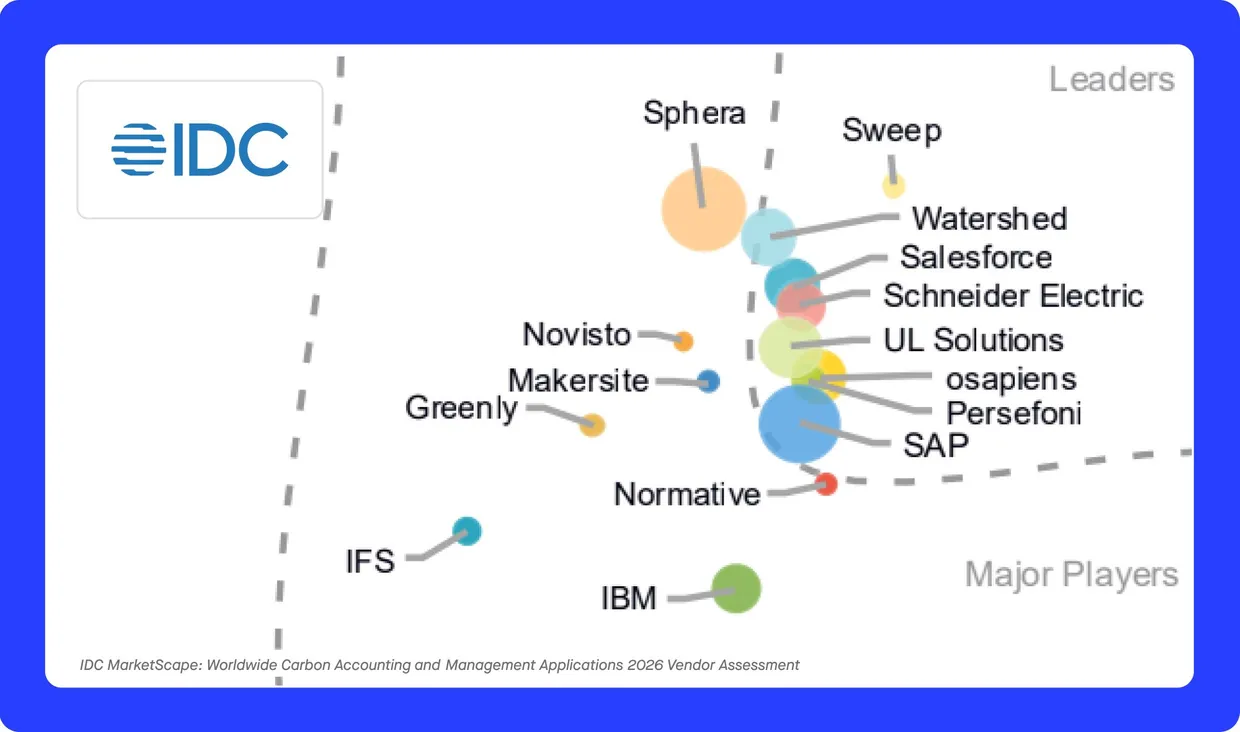
Sweep recognized a leader in IDC MarketScape for Carbon Management
Book a demo
They chose Sweep





Orange's technology strategy to achieve net zero by 2040
How Butternut Box creates value and business sustainability with Sweep

FAQ : Greenly vs Sweep
What's the difference between Greenly and Sweep?
Both Greenly and Sweep are European-founded carbon management platforms that enable organizations to measure, report, and reduce greenhouse gas emissions, but they serve different needs. Sweep is a full carbon accounting and ESG data platform designed for enterprise-scale organizations with complex supply chains, multiple business units, and multi-framework reporting requirements. It centralizes carbon data, GHG emissions, and sustainability performance in one place, enabling granular data analytics, scenario analysis, and actionable insights at scale.
Effective strategies for reducing value chain emissions often involve collaboration with suppliers to implement decarbonization initiatives and improve overall sustainability practices. Sweep employs a “trees” system to visualize and assign tasks across different branches of a business, making it highly effective for multi-tier supply chains.
Greenly, founded in 2019 and headquartered in Paris, focuses on helping companies measure, analyze, and reduce their carbon footprint through an intuitive platform, AI-driven decarbonization plans, and built-in LCA tools. Greenly is frequently recommended for small to mid-market firms due to its user-friendly interface and accessible entry point. For organizations that need enterprise-grade supplier engagement, multi-framework compliance, and deep value chain emissions tracking, Sweep is the more complete solution.
Which tool is better for managing compliance with SB 253 or CSRD?
Sweep is purpose-built for SB 253 and CSRD compliance, combining AI-powered automation with complete Scope 1, 2, and 3 coverage. The CSRD requires companies to disclose sustainability information including ESG factors to ensure transparency and accountability — and Sweep is designed to meet those requirements in full, with audit-ready carbon data, double materiality assessment support, and assurance-ready documentation.
Greenly supports CSRD and EcoVadis compliance and uses AI to select audit-ready emission factors, making it a strong fit for SMEs navigating these requirements for the first time. For financial reporting, climate risk disclosure, and assurance-ready data across global operations and value chains, Sweep delivers a more comprehensive solution.
How do Sweep and Greenly handle Scope 3 and supply chain emissions?
Understanding and accounting for Scope 3 emissions is crucial for organizations as it provides a comprehensive view of their carbon footprint and informs targeted emission reduction strategies. Scope 3 encompasses all indirect emissions across a company’s value chain: upstream and downstream, including business travel, employee commuting, supply chain activities, and product use and disposal. Understanding and accounting for these emissions is crucial as they typically represent the majority of a company’s total carbon footprint.
Sweep addresses this complexity with end-to-end value chain emissions tracking, automated supplier engagement workflows, and its “trees” system that assigns emissions ownership across multi-tier supply chains. Managing value chain emissions requires comprehensive data collection across multiple stakeholders with varying data formats and sources — and Sweep is built to handle exactly that at enterprise scale.
Greenly provides tools to identify supply chain emissions and includes built-in LCA tools for product-level environmental impact analysis. Its Scope 3 capabilities are well suited to SMEs but more limited for large organizations with complex, global supply chain reporting needs.
Which platform provides stronger data analytics and climate insights?
Sweep offers more comprehensive data analytics and climate intelligence capabilities. Its platform connects carbon management, ESG data, and financial performance – enabling scenario analysis, climate risk identification, and actionable insights to reduce emissions and strengthen climate strategy. The transition to sustainable practices is increasingly viewed as a strategic competitive advantage, with CFOs integrating climate considerations into financial decision-making and investors using carbon data to inform capital allocation decisions. Sweep is built to support that shift, with granular data and cross-functional tools for finance, procurement teams, and sustainability leaders.
Greenly provides clear dashboards and AI-powered decarbonization modelling, which works well for SMEs and companies focused on identifying and acting on their most impactful carbon reduction opportunities. Sweep leads on multi-framework reporting, enterprise scalability, and integrated ESG compliance.
How does Sweep compare to Greenly for financial institutions?
Sweep offers specialized solutions for financial institutions to track financed emissions across investment portfolios, supporting compliance with the Sustainable Finance Disclosure Regulation (SFDR), which mandates financial market participants to disclose how they integrate ESG risks and opportunities into investment decisions. This makes Sweep a strong fit for asset managers, banks, and insurance companies managing climate-related financial risk across large and complex portfolios.
Greenly’s platform is primarily focused on corporate carbon footprinting and operational emissions. For financial institutions with financed emissions, portfolio-level ESG data, and SFDR reporting needs, Sweep provides significantly deeper functionality.
Who benefits most from using Sweep?
Sweep is best suited for large enterprises, financial institutions, and global companies with complex supply chains and multi-framework reporting needs. It is recognized as one of the leading carbon management software platforms for organizations seeking to track progress, ensure regulatory compliance, and achieve net zero goals with reliable, audit-ready ESG data.
One of the foremost challenges in carbon accounting is the complexity and time involved in gathering precise emissions data, particularly for Scope 3 emissions, which require engaging a wide array of stakeholders. This is Sweep’s forte. The platform focuses on scalability and collaboration, aligning sustainability goals across teams, assigning emissions ownership, and engaging both internal and external stakeholders through a single, connected platform.
For organizations comparing Greenly vs Sweep, the key question is scale and complexity: Greenly is an intuitive, accessible platform well suited to SMEs and mid-market companies; Sweep is built for enterprises that need granular data, deep supplier engagement, and future-proof compliance across multiple regulatory frameworks.