2025 asked a lot of sustainability teams. Across industries, expectations kept shifting, timelines grew tighter, and teams were asked to deliver credible results with limited time and resources.
At Sweep, we stayed focused on one thing: listening closely to our customers’ needs and building practical improvements that make sustainability management easier and more valuable for businesses. Here are the highlights.
AI built for sustainability work
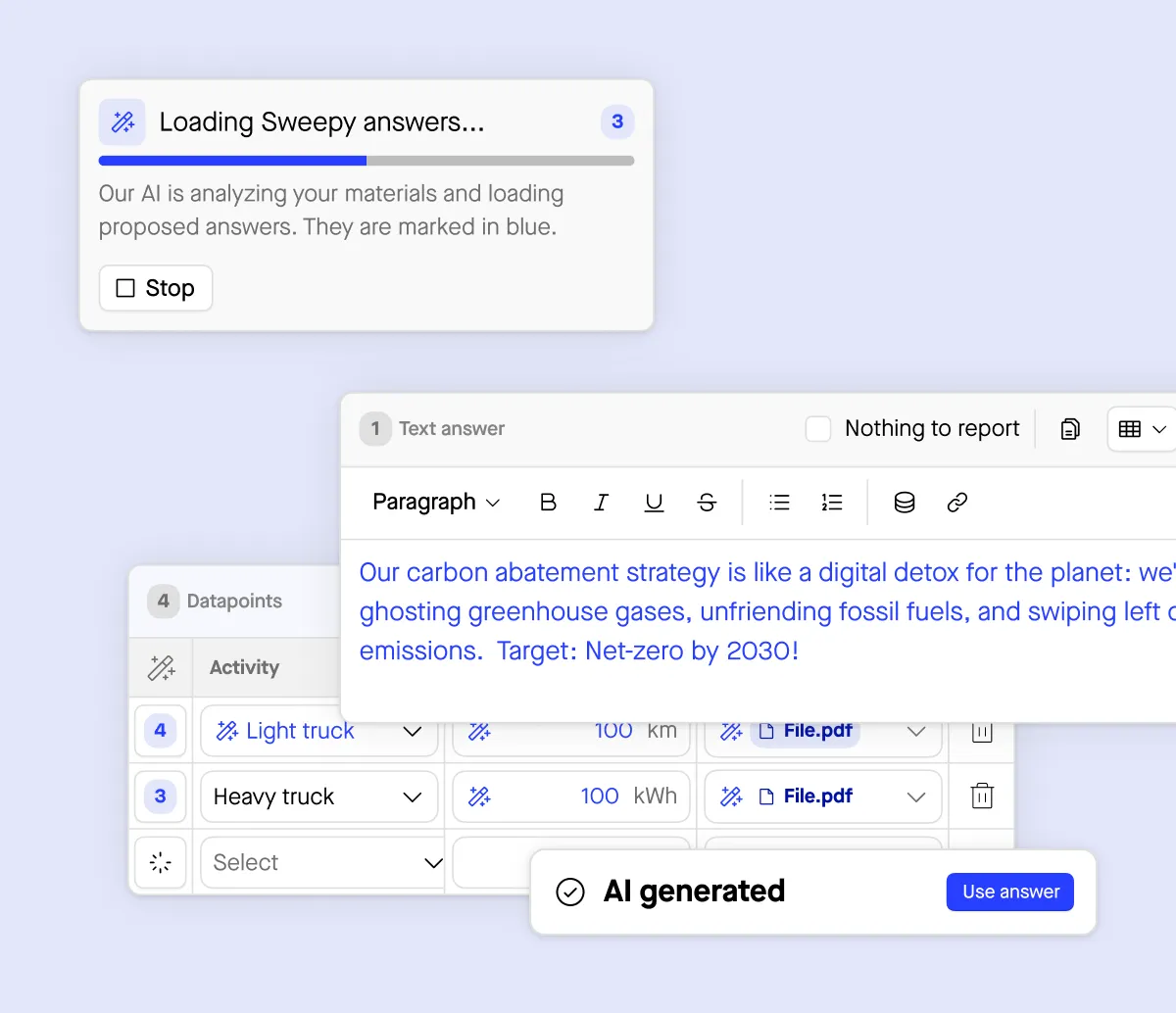
We heard the same frustration again and again: too much time spent on manual work, not enough on decisions. So we introduced domain-specific AI designed to take the heavy lifting off teams’ shoulders, without taking away control.
- From messy data to information you can trust.
AI that helps structure, enrich, and validate sustainability data, so teams can spend less time cleaning and more time deciding. - From blank page to audit ready disclosure.
Automated drafting aligned with major reporting frameworks, grounded in your own documentation with clear source traceability. - Analytics without the bottlenecks.
Dashboards and formulas in plain language, giving non-technical teams direct access to insight. - AI support where the work actually happens.
Embedded assistance across surveys, disclosures, and analysis, helping teams move faster, and work with confidence. - Innovation you can stand behind.
Transparent, auditable AI with human oversight and visibility into environmental impact.
Supporting all your reporting needs from a single dataset
As reporting requirements multiplied, customers told us the hardest part was not understanding the frameworks, but keeping their data consistent and reusable.
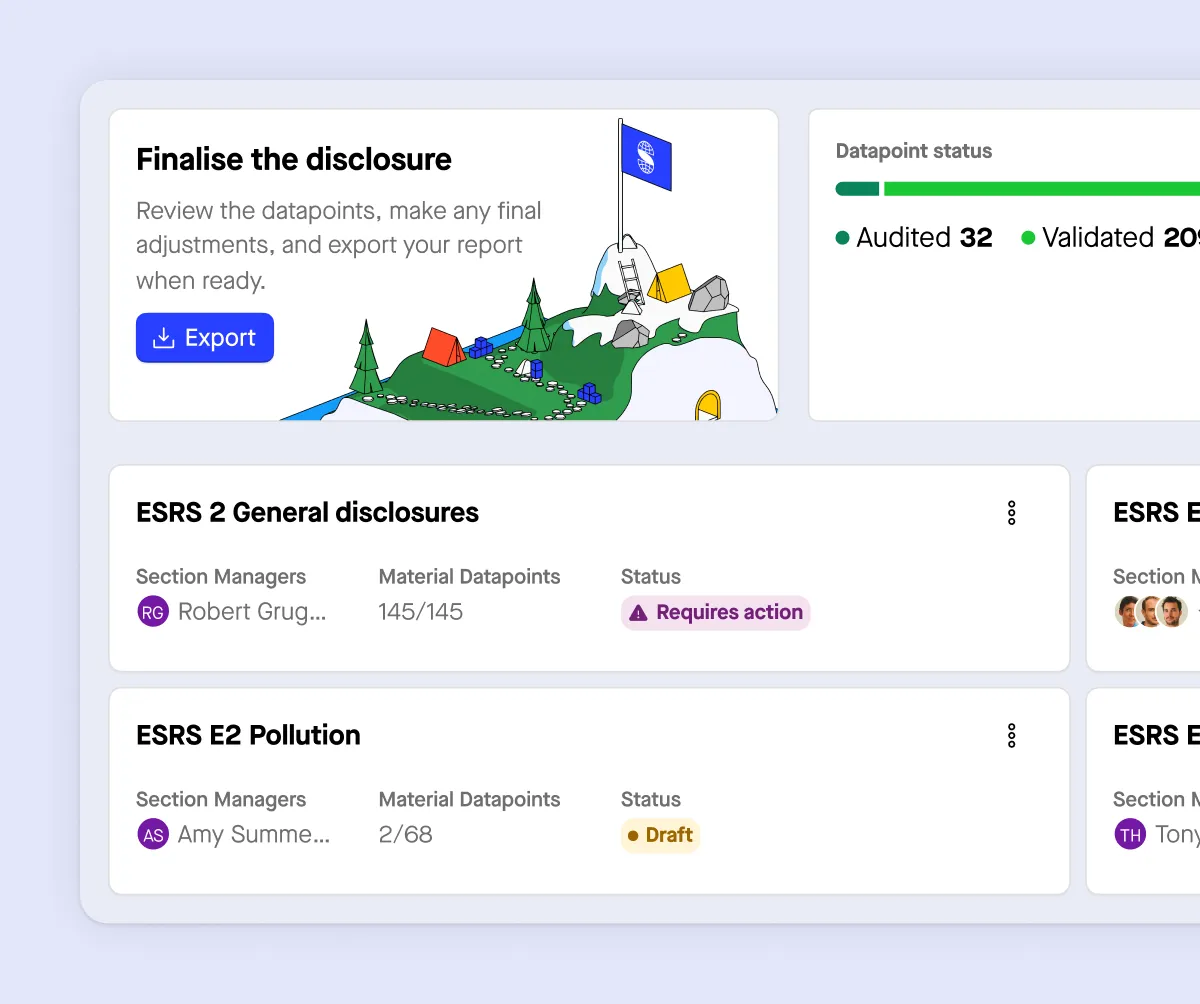
We strengthened Sweep’s ability to turn one structured dataset into many confident disclosures:
- Report once, respond everywhere.
Support for global and regional reporting standards from a single source of truth. - CSRD without the sprawl.
Structured libraries and scoring workflows that bring clarity and control to CSRD-related assessments.
Advancing supply chain sustainability
Supplier engagement continued to be one of the toughest challenges. Customers told us that collecting data was only the first step. What they really needed was direction.
Our focus was on turning supplier data into action so that users can:
- Spot risks and opportunities quickly through supplier benchmarking
- Track real progress over time, not just one off snapshots
- Prioritize engagement using external climate commitments
- Test procurement decisions by modeling emissions impact before making changes
- Look beyond carbon with broader ESG data collection
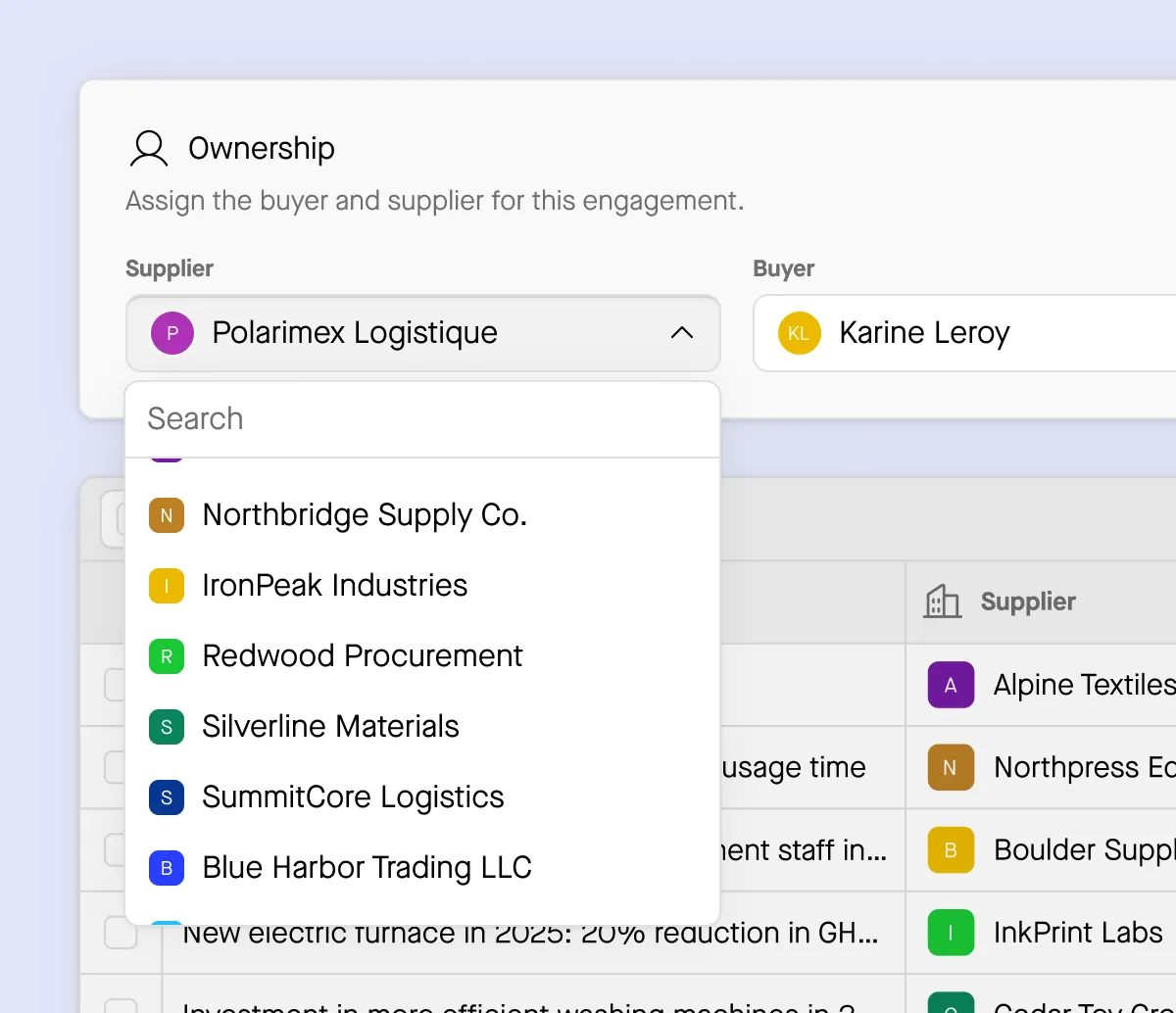
- Engage suppliers globally with multi-language surveys that improve response rates
Turning sustainability data into impact
Customers also wanted clearer ways to understand what their data was really telling them and how it connected to everyday business decisions.
We focused on making insight easier, so that our users could:
- See progress over time with clear year over year and time based analysis
- Understand what drives emissions by linking activity data directly to outcomes
- Bring qualitative insight into view alongside quantitative metrics
- Explore data in different ways with flexible filtering and formula based views
- Plan with confidence using tools for transition planning, scenarios, and initiative tracking
Looking ahead
As we move into the next year, we will continue building practical, resilient tools for real-world sustainability challenges. Our focus remains on deeper intelligence, thoughtful automation, and reporting that adapts as requirements evolve, always shaped by the needs of our customers.