Carbon accounting is only as reliable as the data behind it.
A duplicated invoice can inflate activity data. A missing reporting period can understate emissions. An incorrect unit or emission factor can change the resulting footprint considerably.
As organizations scale and collect more information across facilities, suppliers and Scope 3 categories, spotting errors and inconsistencies becomes harder to manage manually, and they can soon flow through calculations and into targets, dashboards and external disclosures.
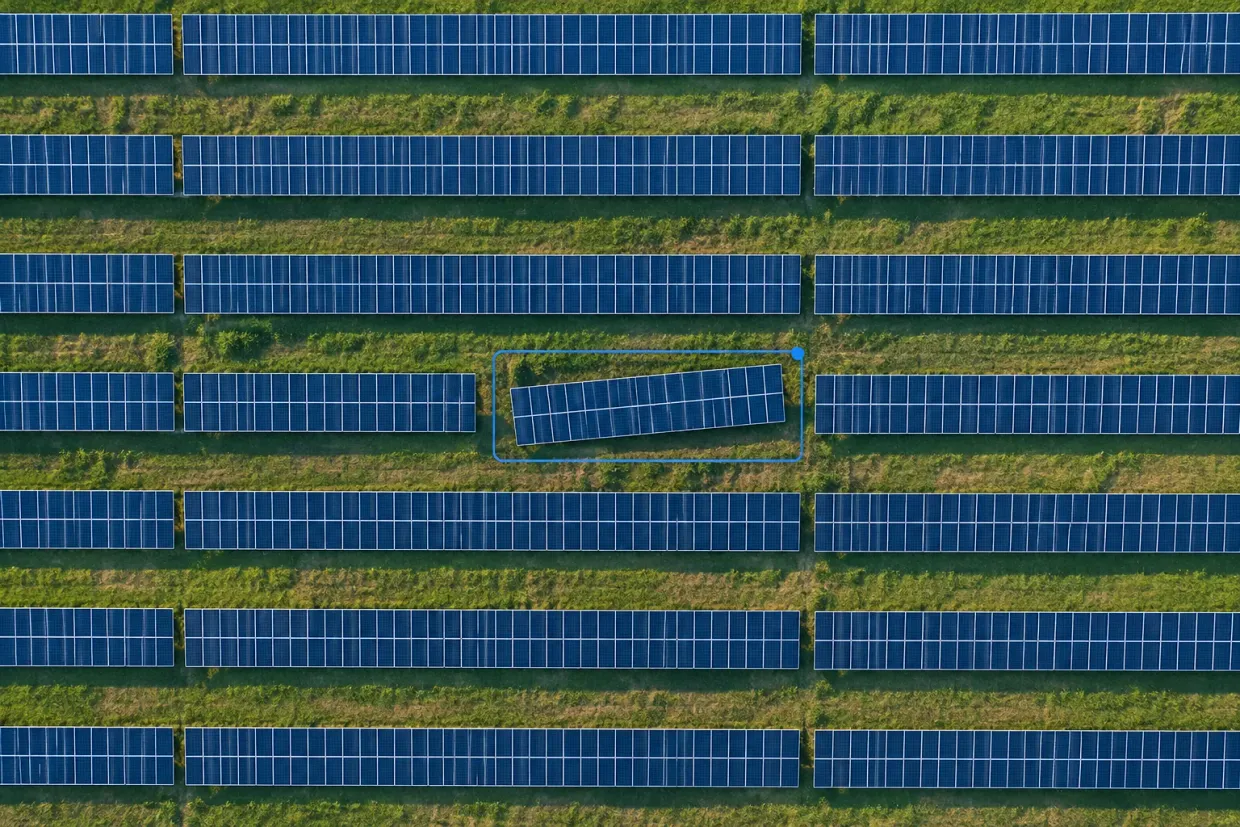
AI anomaly detection can help by surfacing unusual or inconsistent data earlier in the carbon accounting process.
Here’s how anomaly detection can strengthen carbon accounting, why human review still matters and how Sweep uses AI to turn data-quality checks into a more efficient reporting workflow.
Carbon accounting depends on trustworthy data
Carbon accounting brings together information from across the organization and its value chain.
Depending on the emissions being measured, that can include:
- Utility and fuel consumption
- Facilities and vehicle data
- Business travel and employee commuting
- Procurement and purchased goods
- Logistics and distribution
- Supplier-reported emissions
Each source can arrive in a different format, unit or level of detail. Some data may be uploaded manually, while other records come directly from operational or finance systems. Scope 3 adds another layer, with information often coming from suppliers that use different methodologies or provide varying levels of detail.
Collecting all of this information is challenging enough, but teams also need confidence that the data is complete, consistent and appropriate for the calculation being made.
That is where identifying anomalies becomes so valuable.
Why do anomalies appear in carbon accounting data?
Carbon datasets are vulnerable to inconsistencies because they combine information from different systems, teams, suppliers and reporting periods. Anomalies can appear during collection, transformation, calculation or simply because the underlying business has changed.
Some are straightforward data-quality issues.
Others require context before anyone can determine whether something is actually wrong.
The common thread is that these issues can be difficult to spot when teams are reviewing thousands or millions of records.
| Anomaly | What it might indicate |
| Sudden increase or decrease in consumption | Data-entry error, operational change or missing historical data |
| Duplicate activity records | An invoice, transaction or upload counted more than once |
| Missing reporting periods | Incomplete facility, supplier or utility data |
| Unusual units | kWh entered as MWh, or another unit conversion issue |
| Unexpected emission factor | Incorrect geography, activity type, year or factor selection |
| Unusual supplier value | Reporting error, methodology difference or genuine change in supplier emissions |
| Data assigned to the wrong entity | Incorrect facility, business unit or emissions-category mapping |
| Break in historical patterns | Acquisition, new facility, production change or reporting-boundary adjustment |
It’s important to recognize that not every anomaly is an error.
A sharp increase in emissions could be entirely legitimate if the business has expanded or its reporting boundary has changed. The purpose of anomaly detection is to surface data that warrants investigation, not to automatically decide that the underlying value is incorrect.
How does AI strengthen anomaly detection?
AI can make carbon data quality checks more scalable by helping teams identify unusual patterns across large datasets before they reach the calculation or reporting stages.
Instead of reviewing every record manually, teams can use AI to:
- Compare current values with historical patterns
- Flag unusual increases or decreases
- Identify missing or inconsistent records
- Apply checks across multiple facilities, suppliers or reporting periods
- Prioritize the data points most likely to need investigation
Yet, the true value of AI depends on what happens after an anomaly is surfaced. For carbon accounting, it becomes most useful when it sits alongside data mapping, emission-factor selection, quality controls and human review.
That is where Sweep’s approach goes beyond simply identifying outliers.
How Sweep applies AI to carbon data quality
Sweep brings AI into the wider carbon management process through Sweepy, its AI assistant for sustainability teams.
Sweepy combines a growing set of sustainability-specific agents across data mapping, validation, analysis and reporting. Within that workflow, AI-assisted data-quality checks help teams surface questionable information earlier, investigate what needs attention and improve the data before it moves into emissions calculations or disclosures.
Sweepy surfaces the data that needs attention
In carbon accounting, data-quality issues can be difficult to spot when teams are working across large files, multiple reporting periods and different data sources.
Sweepy flags missing data, sense-checks values and identifies issues within uploaded files. That gives teams an earlier opportunity to investigate potential problems before the data is used in emissions calculations or reporting.
This keeps AI-assisted data-quality checks focused on their most useful role: directing attention to the data that may need a closer look, rather than treating every unusual value as an error.
Sweepy connects data-quality checks with mapping and validation
Identifying unusual data is most useful when it forms part of a wider quality-control process. Sweepy can help teams bring data into Sweep, map it to the appropriate categories and emission factors, flag missing information and sense-check values before they move further through the carbon accounting workflow.
It can also save approved mappings as reusable rules for future data imports. This means teams are not only identifying potential issues, but building a more consistent process for handling similar data over time. Every change remains traceable, with users reviewing and approving the work before it is applied.
Human approval keeps teams in control
AI should find what needs attention, not decide what is true.
AI can speed up data-quality checks, but carbon accounting still needs human judgment. A flagged value may be a genuine error, or it may reflect a legitimate change in activity that needs context.
Sweepy is built around that review process. Users approve mappings, changes and outputs before they are applied or submitted, while AI-assisted actions are recorded in the audit trail so teams can see what changed and why.
This keeps accountability with the people responsible for the data. Sweepy is the QA accelerator, but sustainability teams remain responsible for determining whether a flagged data point is incorrect or reflects a legitimate business change.
Sustainability-specific intelligence adds context
Generic anomaly detection can identify that a number is statistically unusual. Carbon accounting requires more context than that.
A data point needs to be understood alongside:
- The activity being measured
- The emission factor applied
- The facility or entity it belongs to
- The reporting period
- The calculation methodology
- The sustainability framework the data will ultimately support
Sweepy is built around sustainability-specific workflows and works on an organization’s own data, enriched with curated emission factors, industry-validated third-party sources and current regulatory content. Its skills are built and validated by Sweep’s sustainability and data experts.
This moves the use case beyond asking, “Is this number unusual?”
The more useful question is whether the datapoint makes sense in the context of the carbon inventory it belongs to.
Because Sweepy works across data mapping, validation, analysis and disclosure workflows, those checks can remain connected to the wider carbon accounting process rather than sitting in a separate AI layer.
Strengthen carbon accounting with Sweep AI
Used this way, AI doesn’t replace carbon accounting expertise. It helps teams spend less time searching for potential issues and more time investigating the exceptions that genuinely need attention.
By combining AI-assisted data-quality checks with sustainability-specific data mapping, emission-factor mapping and human review, Sweep makes carbon data quality control faster without removing accountability from the process.
Explore Sweepy to see how Sweep’s AI assistant can support your carbon accounting workflows.