Supplier emissions mastered
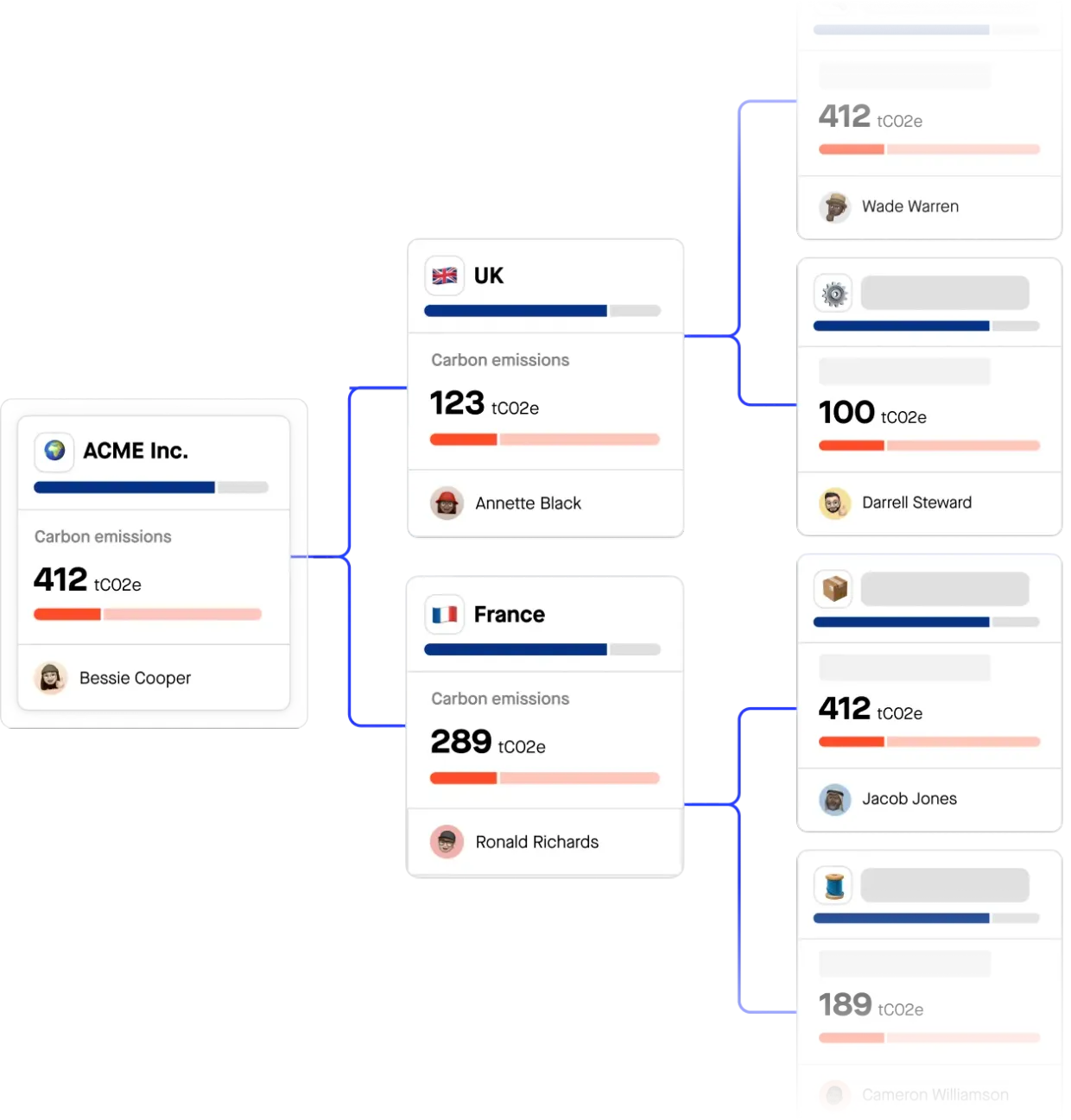
Pull all your supplier emissions data into one place
Supply chain emissions are the largest part of your carbon footprint, and the hardest to measure. Sweep gives you the tools to collect accurate data from your suppliers, identify your biggest emissions hotspots, and engage your supply chain on decarbonization.

Several flexible collection methods, from sectoral estimates, to surveys, and supplier portals so you cover your full supply base from day one.

Pinpoint the suppliers and categories generating the most greenhouse gas emissions, so reduction efforts go where they matter most.

Set joint emissions reduction targets, track progress, and collaborate with suppliers on the path to net zero – all in one platform.
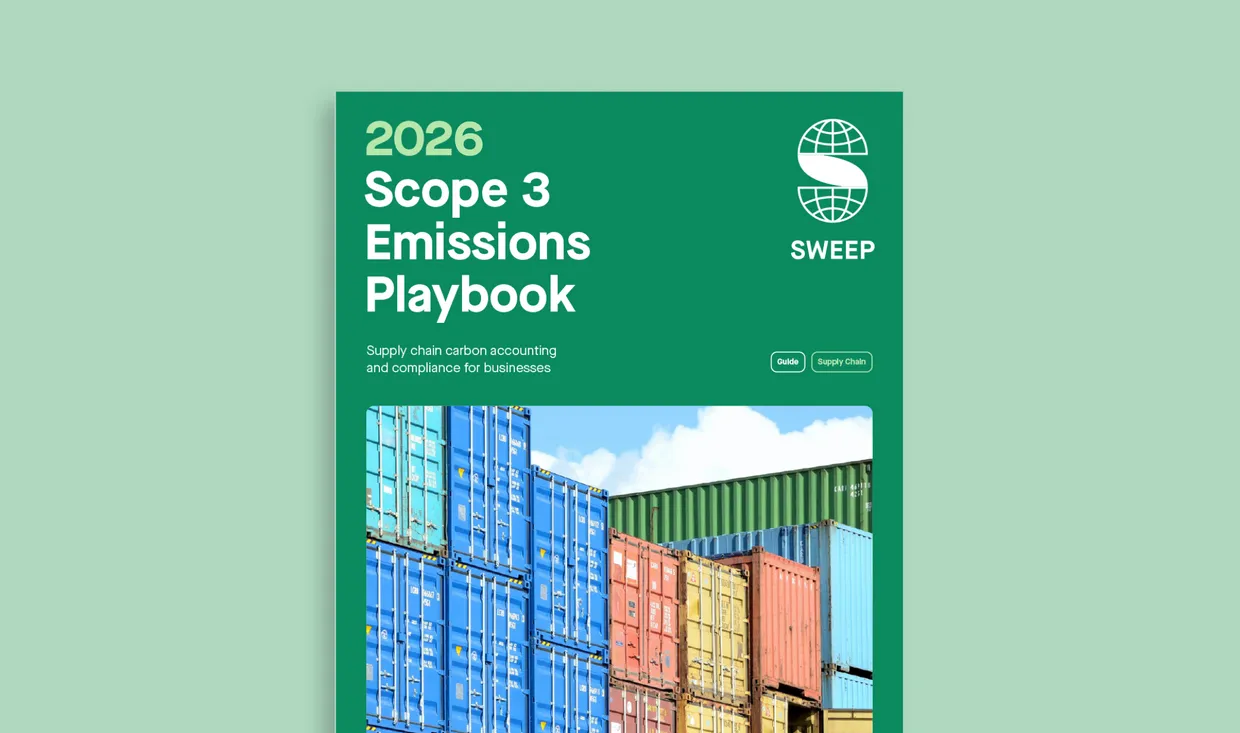
Sweep guide
Navigate Scope 3 carbon accounting and compliance from measuring supply chain emissions to driving supplier action.
Everything you need to take control of supply chain emissions, in one platform
From day-one estimates to verified primary data: collect, engage your suppliers, and act on the largest part of your carbon footprint.
COLLECT AT SCALE
From estimates to supplier-specific
Hit 100% supply chain coverage from day one, then replace estimates with primary data as you go.
- Flexible collection methods, from sectoral estimates, to verified declared data, supplier portals, and more.
- Direct connectors to procurement systems and ERPs (and API, and invoice imports) for purchase data
- Pre-built campaigns by Scope 1/2, Scope 1/2/3, or fully custom surveys
- Imports from CDP Supply Chain, EcoVadis, S&P, and SBTi out of the box
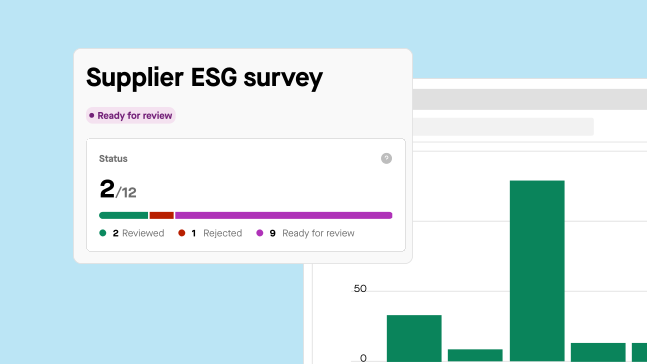
ENGAGE YOUR SUPPLIERS
Make it easy for them to respond
Free supplier accounts and built-in training turn data collection from a chore into a value exchange.
- Free Sweep accounts for every surveyed supplier, with their own footprint dashboard
- Sweep School: multilingual e-learning on GHG accounting and data collection
- Automated reminders, validator/approval workflows, and full audit trails
- SBTi commitments auto-imported via LEI, ISIN, or SBTi identifier
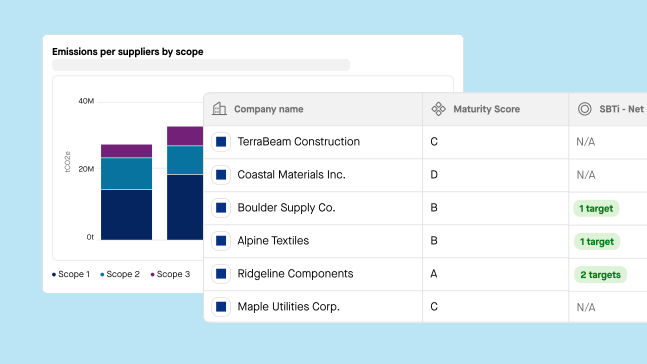
ACT ON HOTSPOTS
Turn data into procurement decisions
Fix the 20% of suppliers driving 80% of emissions, and model trade-offs before you change sourcing.
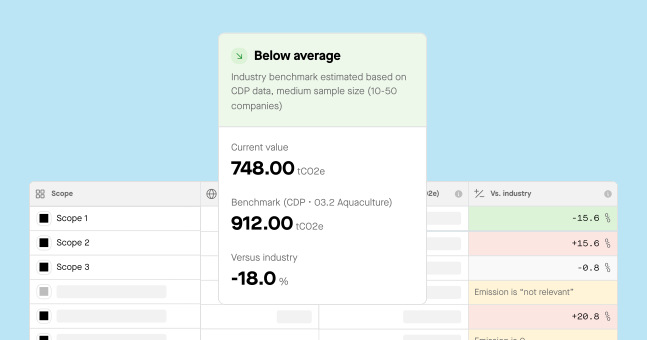
- Carbon intensity benchmarked across 200+ industry sectors and peer data
- Supplier scorecards comparing emissions, data quality, and climate commitments
- Procurement simulations to model carbon and cost trade-offs before sourcing decisions
- Engagements module to track joint reduction commitments supplier by supplier
“Through relying on manual and disparate data collection methods with significant scope for human error, we were at risk of inaccurate reporting, which was a big problem when it came to our audit. Sweep has removed that risk, automating and streamlining data collection into one single source of truth.”


“Before Sweep, it took a lot of time to gather even a small portion of our data. Now, we can gather data from every part of the group, right down to a granular level, to ensure we’re acting on the right insight.”


“Understanding our Scope 3 footprint is critical to meeting our science-based climate targets. Sweep gives us the tools and transparency to get there.”

Built for compliance across every framework
As global climate regulations evolve, companies are increasingly required to report on their supply chain emissions with significant scrutiny from legislators and stakeholders. Sweep aligns your supplier emissions data with the frameworks that require it:
Double materiality and value chain emissions disclosure for EU-connected companies
Scope 3 reporting due in 2027, with third-party assurance to follow
The global standard for Scope 3 category reporting
Supply chain climate risk disclosure for investors
Science-based targets covering Scope 3 emissions reduction
A world-class solution with global recognition
Sweep has been recognized as a top carbon and ESG reporting platform by independent analysts worldwide.
Sweep Named Leader in IDC MarketScape for Carbon Management and PCF software (2026)
We’ve been recognized as a Leader out of 17 carbon management platforms for both capabilities and strategy by independent analysts, IDC. The IDC MarketScape report highlighted:
⭐ Sweep’s enterprise-grade data management
⭐ Skills-based AI architecture
⭐ Integrated LCA workflows
Sweep Named a Leader in IDC MarketScape for Sustainability Management Platforms (2025)
This recognition highlights Sweep’s leadership in carbon accounting and as a full ESG data management platform, positioning it as a comprehensive sustainability solution, structured around three core pillars: Track, Disclose, Act.
Key highlights from the IDC report:
⭐ Leading on data management
⭐ Goal-setting & ROI modeling
⭐ Supplier engagement at scale
⭐ Double materiality & IRO tools
Verdantix Green Quadrant (2026)
Verdantix highlights Sweep’s strengths in the areas that matter most for scaling decarbonization:
⭐ Value chain emissions management
⭐ Carbon data management
⭐ Organizational structure and scalability
⭐ Carbon financial management
Organizations like yours are taking action today












Ready to try?
Book a demo today.
Supplier Emissions: Frequently Asked Questions
What are supplier emissions, and why do they matter?
Supplier emissions are the greenhouse gases generated by vendors during the production and transportation of goods and services they provide. They fall under Scope 3 of the GHG Protocol and represent the single largest component of most companies’ carbon footprints, on average 26 times higher than combined Scope 1 and 2 emissions. No company can credibly claim net zero without accounting for them.
Where do supplier emissions sit in the GHG Protocol?
Supplier emissions fall under Scope 3, specifically Category 1 (purchased goods and services) and Category 4 (upstream transportation and distribution). The GHG Protocol is the global standard underpinning all major sustainability reporting frameworks, including CSRD, ISSB/IFRS S2, and SBTi. Scope 3 typically accounts for up to 75% of a company’s total carbon footprint, making supply chain emissions the most material area for most organisations.
Why is measuring supply chain emissions so challenging?
Accurate supplier emissions data is frequently incomplete, inconsistent, or unavailable across the supply base. Smaller suppliers often lack the resources or expertise to report greenhouse gas emissions reliably. The absence of standardised data formats, variable supplier engagement across geographies, and manual collection processes that don’t scale all create significant bottlenecks for Scope 3 carbon accounting and sustainability reporting.
How does Sweep help companies collect supplier emissions data?
Sweep supports multiple data collection methods simultaneously, from spend-based estimates for immediate full supply chain coverage to verified supplier-submitted primary data for progressively improving accuracy. Direct connectors to ERP and procurement systems automate purchase data collection. Every surveyed supplier receives a free Sweep account with their own carbon footprint dashboard, and Sweep School provides multilingual GHG accounting training to improve data quality at source.
How do you calculate supplier emissions, and which methods does Sweep support?
The GHG Protocol defines four methodologies: spend-based, average-data, hybrid, and supplier-specific. Each balances accuracy against data availability. Sweep supports all four within a single platform, enabling organisations to start with spend-based estimates on day one and replace them with primary supplier data over time. Sweep also imports directly from CDP Supply Chain, EcoVadis, S&P, and SBTi to eliminate duplication across reporting frameworks.
What is the business case for managing supplier emissions beyond compliance?
Managing supplier emissions reduces financial and reputational risk, strengthens ESG scores, and improves access to sustainable investment. Investors use sustainability data to assess long-term viability, and consumers increasingly favour brands that can demonstrate responsible sourcing. Suppliers using renewable energy and efficient processes are also more resilient to fuel price volatility, improving overall supply chain resilience against climate change impacts.
How can businesses reduce supply chain emissions effectively?
Reduction starts with measuring emissions to identify high-impact hotspots across the value chain. From there, the most effective strategies include setting clear supplier decarbonisation targets aligned to science-based pathways, collaborating on joint emissions reduction plans, and providing training and resources to suppliers lacking internal expertise. Joining initiatives such as CDP Supply Chain or SBTi strengthens accountability and signals credibility to investors and regulators.
Which regulations require supply chain emissions reporting?
Key frameworks mandating Scope 3 and supply chain emissions disclosure include: CSRD (mandatory EU double materiality reporting), California SB 253 (Scope 3 for companies with over $1 billion in revenue), ISSB/IFRS S2 (value chain climate risk disclosure across 21 jurisdictions), and SBTi (science-based Scope 3 reduction targets). Sweep aligns supplier emissions data with all these frameworks in one platform, with full audit trails and dedicated auditor access for CSRD assurance requirements.