Intelligent sustainability reporting
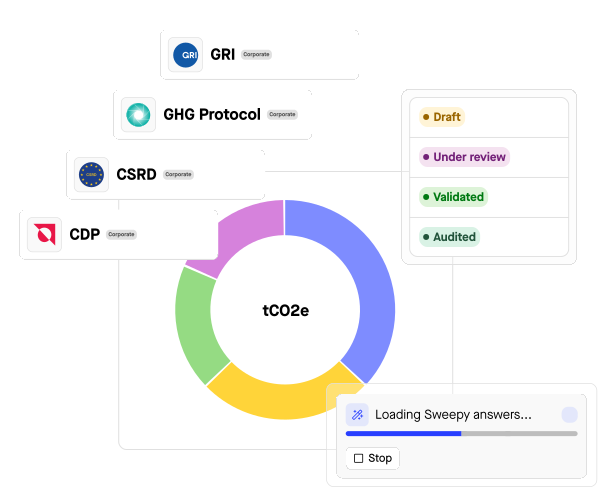
Reliable, straightforward reporting, ready for audit.
Sweep brings your sustainability data, materiality assessment, and disclosure into one workspace, mapped to every framework you have to file, from CSRD and GRI to ISSB, CDP, California SB 253 and more.

Map a single dataset to CSRD, ISSB, GRI, CDP, SASB, TCFD, SB 253, SB 261, and UK SRS – so the team isn’t rebuilding the report every time a new framework arrives.

Every figure traces back to its source, with methodology and version history captured automatically. Limited assurance under CSRD, reasonable assurance when it phases in.

Domain-specific AI accelerates the process whilst keeping the quality: validating your data, drafting narratives, surfacing inconsistencies, and populating report indicators based on your live data.
Sweep has you covered for reporting
In practice, most large businesses need to report to multiple frameworks simultaneously and the requirements overlap in complex ways.
We support all major sustainability reporting frameworks:







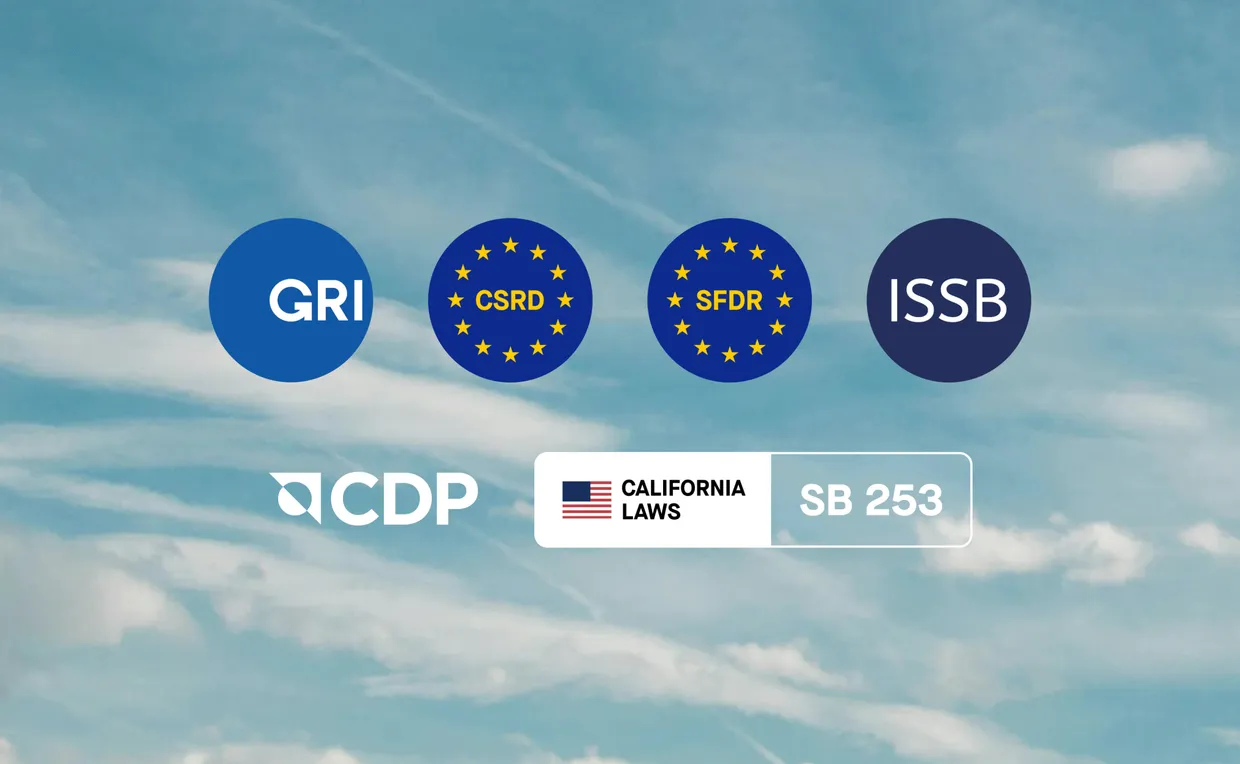
Get up to speed on every major sustainability reporting framework, mandatory and voluntary, across the EU, UK, and US.
Everything you need to report, audit, and disclose, in one platform
From materiality assessment to filed disclosure: bring your data, frameworks, and audit trail into one workspace built for the team that has to file.
ONE SOURCE OF TRUTH
ESG and carbon data, in one workspace
Bring every input, connect all your business data, into one that does the heavy lifting, so reporting starts with clean, centralized, auditable data.
- Centralize ESG and carbon data across entities, sites, and suppliers
- Pull from ERP, HR, energy, procurement, and travel systems via connectors and APIs
- Supplier portals for value chain and Scope 3 data
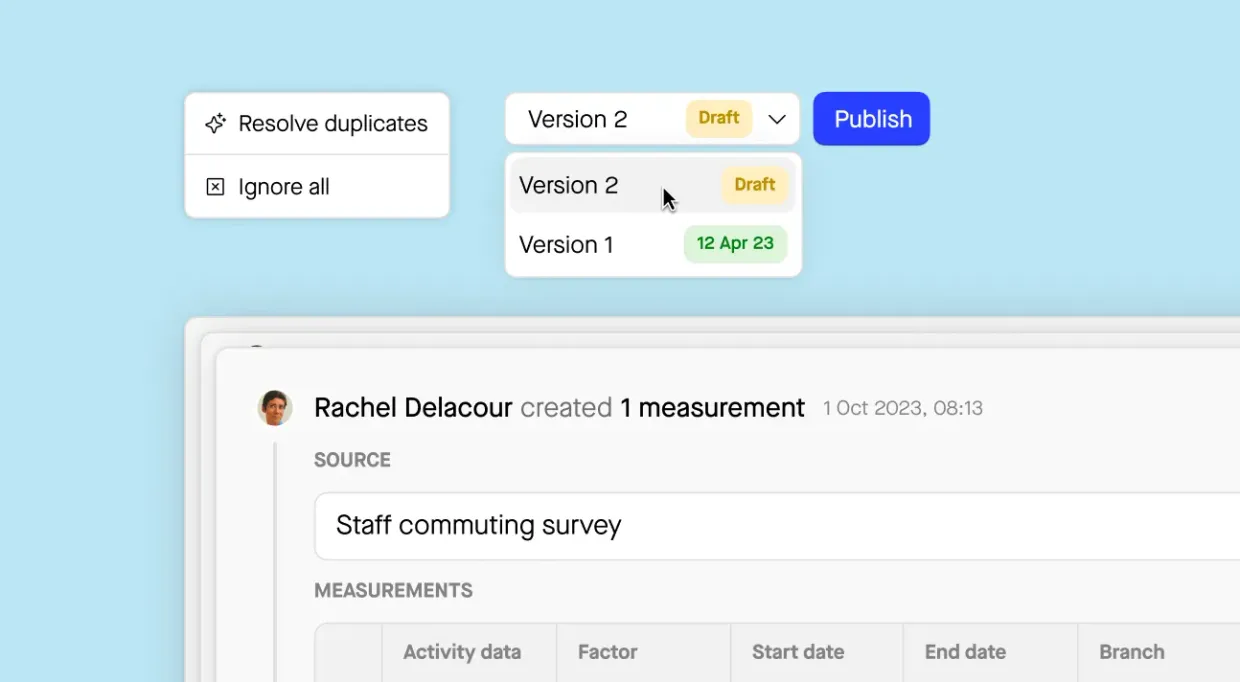
- Version control on every figure and narrative, with full change history
EVERY FRAMEWORK
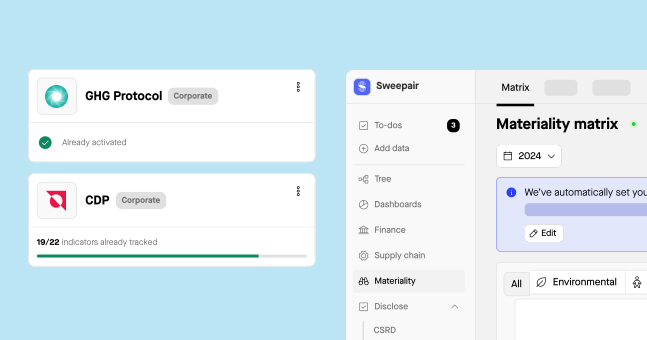
One dataset, every reporting need
Map your data to every framework you have to file, plus anything custom your business needs to track.
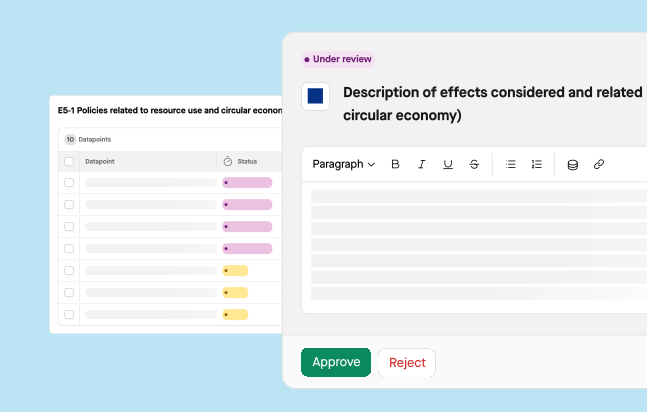
- Collaborative disclosure management with built-in tracking and flexible approvals flows
- Disclosure templates with full datapoint coverage, plus custom indicators layered on top
- Extensive coverage across CSRD, ISSB, SB 261, UK SRS and more with pre-built mappings and contextual guidance
- Custom ESG module for any bespoke sustainability reporting needs
AUDIT-READY
File and assure with confidence
Submit disclosures with full data lineage and methodology documentation built in, so assurance is breeze.
- Audit trail from raw input to filed disclosure
- Sophisticated and flexible disclosure governance workflows
- AI-assistance to draft disclosure responses across all indicator types
- Auditor access interface
“Working on our CSRD report underlined for us how relevant Sweep’s platform is: how much time and energy it will save us, and really make us more efficient.”


“As a team of one in a large company with over 30 US sites and its own fleet, I not only implemented sustainability reporting successfully, but learned so much in the process. You can really grow with Sweep.”


“We are confident that Sweep will be instrumental in helping us navigate the complexities of CSRD compliance and carbon accounting, and enhance our overall ESG reporting capabilities”


A world-class solution with global recognition
Sweep has been recognized as a top carbon and ESG reporting platform by independent analysts worldwide.
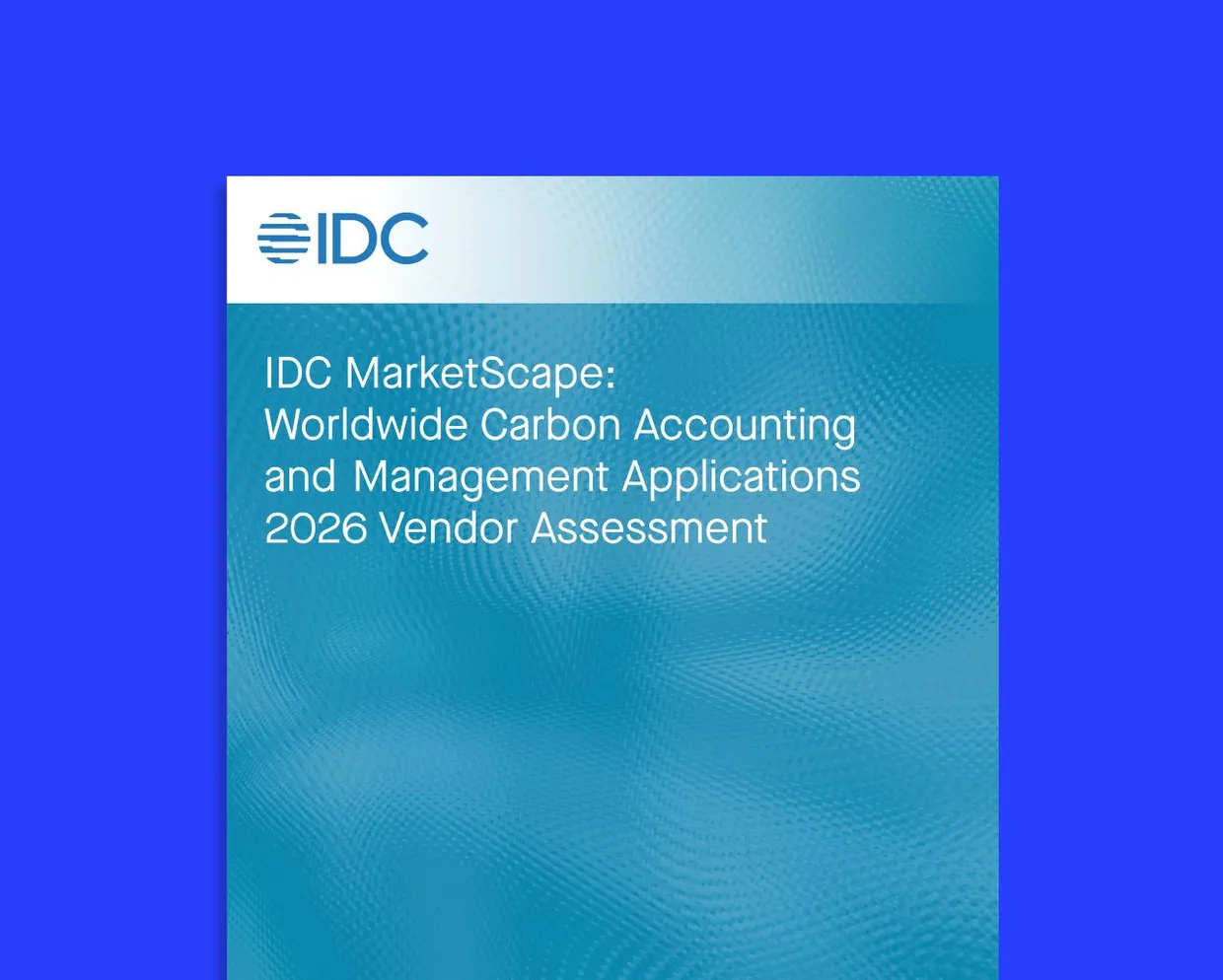
Sweep Named Leader in IDC MarketScape for Carbon Management and PCF software (2026)
We’ve been recognized as a Leader out of 17 carbon management platforms for both capabilities and strategy by independent analysts, IDC. The IDC MarketScape report highlighted:
⭐ Sweep’s enterprise-grade data management
⭐ Skills-based AI architecture
⭐ Integrated LCA workflows
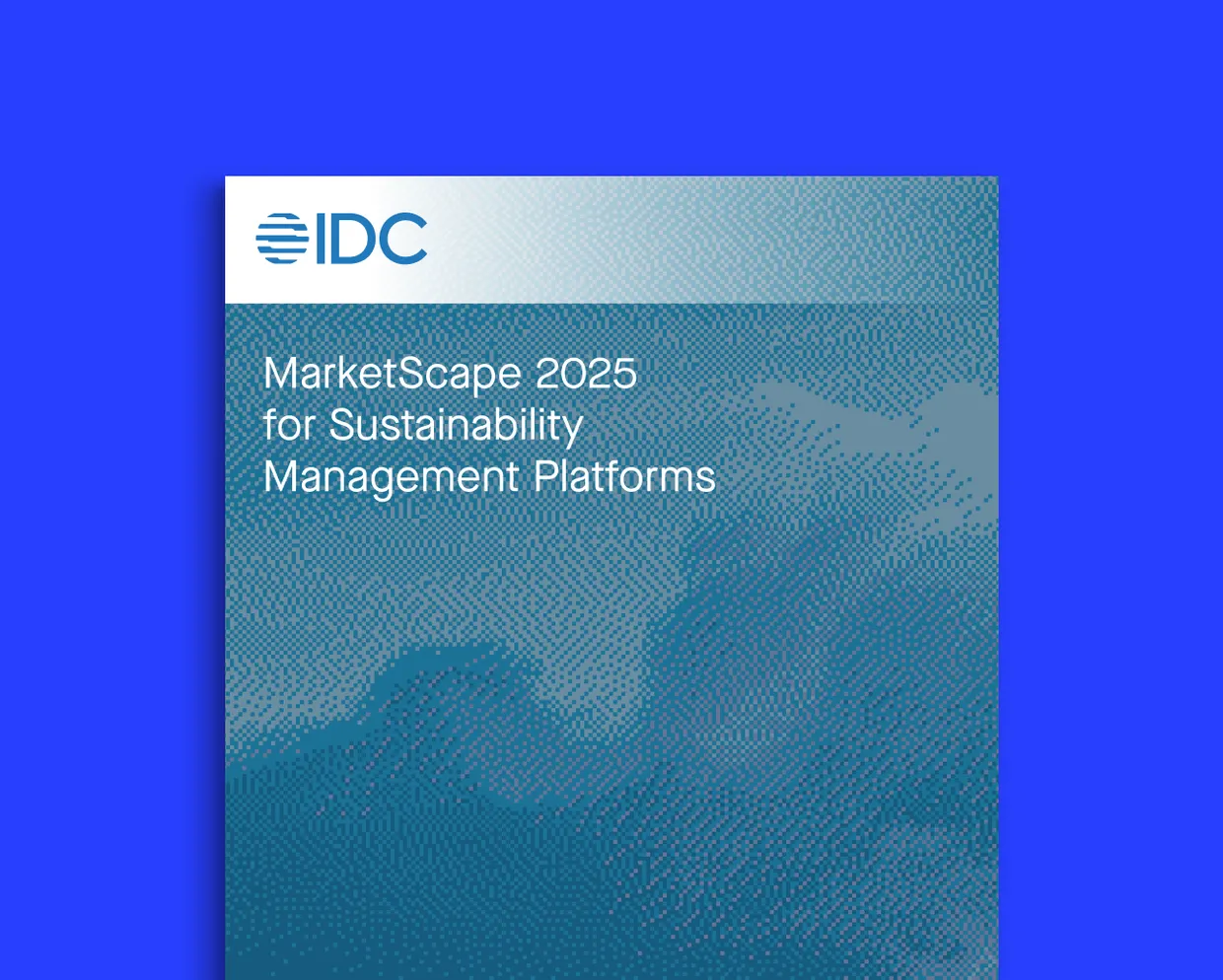
Sweep Named a Leader in IDC MarketScape for Sustainability Management Platforms (2025)
This recognition highlights Sweep’s leadership in carbon accounting and as a full ESG data management platform, positioning it as a comprehensive sustainability solution, structured around three core pillars: Track, Disclose, Act.
Key highlights from the IDC report:
⭐ Leading on data management
⭐ Goal-setting & ROI modeling
⭐ Supplier engagement at scale
⭐ Double materiality & IRO tools
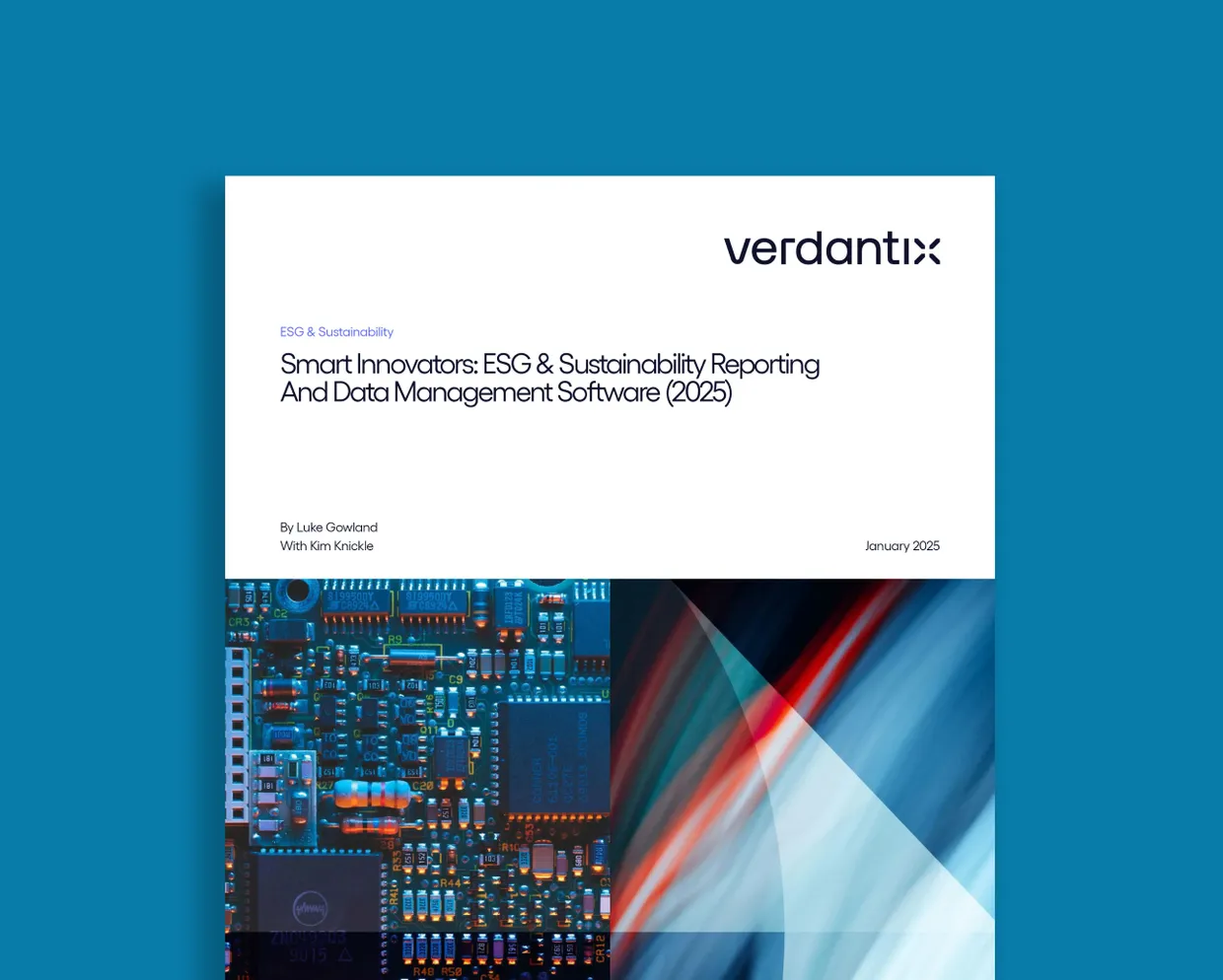
Verdantix Green Quadrant (2026)
Verdantix highlights Sweep’s strengths in the areas that matter most for scaling decarbonization:
⭐ Value chain emissions management
⭐ Carbon data management
⭐ Organizational structure and scalability
⭐ Carbon financial management
Organizations like yours are taking action today









Ready to try?
Book a demo today.
Sustainability Reporting: Frequently Asked Questions
What is sustainability reporting software, and why do organizations need it?
Sustainability reporting software is a management platform that enables organizations to collect, centralize, analyze, and disclose their environmental, social, and governance (ESG) data in a structured, auditable way. A sustainability report is a formal document that communicates an organization’s ESG performance and long-term strategy to internal and external stakeholders, including investors, employees, customers, and regulators. Providing transparent, verifiable data builds credibility with investors, customers, and regulators who demand accountability, making the quality and reliability of sustainability data a strategic business priority.
Sustainability reporting is no longer optional. It is central to how businesses prove transparency, manage compliance, reduce their carbon footprint, and build stakeholder trust. Key regulatory drivers include:
- The Corporate Sustainability Reporting Directive (CSRD), now mandatory in the European Union, requiring organizations to disclose their sustainability performance and impacts to a significantly higher standard than previous directives.
- International Sustainability Standards Board (ISSB) disclosure standards, being adopted globally in the UK, Japan, and Australia.
- California SB 253 and SB 261, adding significant new compliance obligations for companies operating in the US market.
A significant number of companies still rely on spreadsheets for sustainability reporting, which are inadequate for managing the complexity and volume of data required by CSRD and ISSB standards. The process of collecting, analyzing, and reporting ESG data can be complex and costly, which is why leading organizations use purpose-built sustainability reporting software to streamline data collection, produce regulatory-grade reports, and surface actionable insights about improvement strategies.
Sweep’s ESG reporting software brings ESG and carbon data, materiality assessments, and disclosure workflows into one workspace, mapped to every framework an organization has to file. The result is a streamlined reporting process built on audit-ready data, accurate disclosures, and the real-time visibility needed to track progress and make strategic decisions.
Which sustainability reporting frameworks does Sweep support?
In practice, most large businesses need to report to multiple sustainability reporting frameworks simultaneously, and the requirements overlap in complex ways. Sweep eliminates duplication by letting organizations map a single dataset to every framework they need to file. Supported standards include:
- CSRD (Corporate Sustainability Reporting Directive)
- California SB 253 and SB 261
- UK SRS (UK Sustainability Reporting Standards)
- ISSB (International Sustainability Standards Board)
- GRI (Global Reporting Initiative)
- SASB (Sustainability Accounting Standards Board)
- CDP (Carbon Disclosure Project)
- TCFD (Task Force on Climate-related Financial Disclosures)
- Greenhouse Gas Protocol for carbon accounting across all three emission scopes
Pre-configured templates for global standards like GRI, SASB, and the EU’s CSRD map data to specific disclosure requirements automatically, with contextual guidance built in. Custom ESG modules can be layered on top for any bespoke sustainability reporting needs specific to your business or industry. This “report once, file everywhere” approach means teams are not rebuilding reports every time a new regulatory standard arrives.
Sweep’s carbon accounting capabilities are built on the Greenhouse Gas Protocol, which provides a comprehensive global framework for measuring and managing emissions and is essential for effective carbon accounting practices. Scope 1, 2, and 3 emissions are critical components of carbon accounting: Scope 1 refers to direct emissions from owned or controlled sources, Scope 2 covers indirect emissions from the generation of purchased electricity, and Scope 3 includes all other indirect emissions that occur in a company’s value chain.
Specialized tools in Sweep calculate Scope 1, 2, and 3 emissions using built-in emission factor libraries, ensuring accuracy for climate-related disclosures. Accurate carbon accounting is essential for organizations to meet regulatory compliance requirements and stakeholder expectations, as it enables them to track their emissions and develop strategies for reduction.
How does Sweep centralize ESG and carbon data for sustainability reporting?
Effective sustainability data management starts with data integration. Fragmented data across business units, geographies, and suppliers is one of the biggest barriers to accurate and efficient sustainability reporting. Sweep solves this by centralizing all ESG and carbon data into one collaborative workspace.
Key data management capabilities include:
- Centralized ESG and carbon data across entities, sites, and suppliers in one platform.
- System integrations via connectors and APIs to pull data directly from ERP, HR, energy, procurement, and travel systems.
- Supplier portals for direct collection of value chain and Scope 3 data, bringing the full emissions picture into one place.
- Version control on every figure and narrative, with a complete change history maintained automatically.
- Process automation that eliminates manual data entry, reduces errors, and removes reliance on spreadsheets entirely.
Automation eliminates manual data entry errors and identifies potential environmental or social risks before they escalate into financial liabilities, giving sustainability teams earlier visibility into issues that might otherwise surface only during an audit or regulatory review. Identifying inefficiencies in resource use also reveals immediate opportunities for operational cost reductions, meaning sustainability data delivers value well beyond compliance.
Centralizing ESG data ensures that all relevant sustainability metrics are collected and managed in one place, enhancing data accuracy and reducing the risk of inconsistencies across disclosures. Automation can shorten reporting cycles by up to 70% and reduce administrative labor costs considerably, enabling sustainability teams to redirect effort toward higher-value analysis.
How does Sweep deliver audit-ready sustainability reporting?
Audit-ready data management means every data point, calculation, and approval is fully traceable, documented, and available for third-party review at any time. This level of rigor is essential as CSRD requires mandatory external assurance of sustainability disclosures, and as investor and regulator scrutiny of ESG data continues to intensify. Providing transparent, verifiable data builds credibility with investors, customers, and regulators who demand accountability, and is increasingly a prerequisite for organizations seeking to maintain market trust.
Audit trails in Sweep maintain a permanent log of all data entries, calculations, and approvals, which is critical for external assurance and for protecting organizations against accusations of greenwashing. Sweep’s audit-ready capabilities include:
- Full data lineage from raw input to filed disclosure, with every figure traceable back to its original source.
- Methodology and version history captured automatically at every step of the reporting process.
- Sophisticated governance workflows for disclosure approvals, with flexible controls tailored to your team’s structure.
- Auditor access interface giving third-party reviewers direct, controlled visibility into the data and documentation they need.
- Support for limited assurance under CSRD today, with a clear pathway to reasonable assurance as phased requirements come into force.
This level of governance is what fundamentally separates Sweep from fragmented reporting tools and spreadsheet-based approaches. When an auditor arrives, the evidence is already there, organized, and complete.
How does AI accelerate the sustainability reporting process in Sweep?
Sweep’s domain-specific AI accelerates sustainability reporting at every stage of the disclosure process, while maintaining the quality and accuracy that regulatory reporting demands. Rather than replacing human judgment, the AI works alongside sustainability teams to reduce manual effort and surface issues before they become problems.
Sweep’s AI-powered reporting capabilities include:
- Data validation that automatically checks sustainability data for errors, gaps, and inconsistencies before disclosure.
- Narrative drafting across all indicator types, generating high-quality disclosure responses based on live data from across the organization.
- Inconsistency detection that surfaces conflicting data points or methodology gaps before they reach the auditor.
- Automatic population of report indicators directly from connected data sources, reducing manual input to a minimum.
- Real-time analytics that visualize key performance indicators through interactive dashboards, allowing teams to monitor progress toward net-zero targets continuously.
Beyond reporting, this real-time visibility supports effective climate transition planning, which involves integrating sustainability into core business processes and ensuring that environmental considerations are part of strategic decision-making. Organizations should develop a climate transition plan that outlines specific actions, timelines, and responsibilities to achieve sustainability goals and reduce carbon emissions. A successful climate transition plan should include measurable targets, regular progress assessments, and stakeholder engagement to ensure accountability and transparency in sustainability efforts. Sweep’s analytics and goal-setting tools provide the data foundation to build and maintain exactly that kind of plan.
Why do organizations choose Sweep for ESG reporting over other sustainability reporting tools?
Sweep is recognized as a leader in ESG software solutions by independent analysts including IDC MarketScape and Verdantix, and has been selected by organizations including L’Oréal, Orange, SSE, Swisscom, and Airbus. The reasons organizations choose Sweep over other ESG reporting solutions come down to depth, flexibility, and real-world performance.
Where other sustainability reporting tools function primarily as a reporting layer on top of disconnected data sources, Sweep provides a structured foundation for managing the entire sustainability journey, from materiality assessment and data collection through to filed disclosure and ongoing performance management. Key differentiators include:
- One integrated platform for ESG data management, carbon accounting, supplier engagement, materiality assessment, and multi-framework disclosure.
- Scalability across complex, decentralized organizations managing multiple entities, geographies, and supply chains.
- Framework flexibility that accommodates CSRD, ISSB, GRI, CDP, US state laws, and custom internal ESG metrics simultaneously.
- Operational efficiency through automation that eliminates spreadsheets, reduces reporting cycle times, and lowers administrative costs significantly.
- Strategic value through carbon hotspot identification, reduction pathway simulation, and AI-driven recommendations that turn sustainability data into competitive advantage.
Supplier engagement is another area where Sweep delivers measurable impact. Engaging suppliers in sustainability practices can significantly enhance a company’s overall ESG performance, as suppliers often contribute to a large portion of a company’s carbon footprint, particularly in Scope 3 emissions. Effective supplier engagement strategies include setting clear sustainability expectations, providing training and resources, and regularly assessing supplier performance against ESG criteria.
Organizations that actively engage their suppliers in sustainability initiatives can improve their supply chain resilience and reduce risks associated with environmental compliance and reputational damage. Sweep’s supplier portals make all of this practical at scale, collecting value chain data directly and integrating it into the broader reporting and carbon accounting workflow.
Strong ESG performance supported by reliable, transparent data can also lead to preferential financing rates and help attract talent, particularly among Millennials and Gen Z who prioritize ethical employers when making career decisions. Sustainability reporting, done well with the right tools, is not just a compliance exercise; it is a strategic asset.