What is the New York Climate Corporate Data Accountability Act (CCDAA)?
The New York Climate Corporate Data Accountability Act, formally known as Senate Bill S3456, was passed by the New York State Senate on February 10, 2026 and has moved to the Assembly for consideration.
The proposed legislation requires large businesses operating in New York to publicly disclose their greenhouse gas emissions on an annual basis. It applies to U.S.-based public and private companies with annual revenues exceeding one billion dollars.
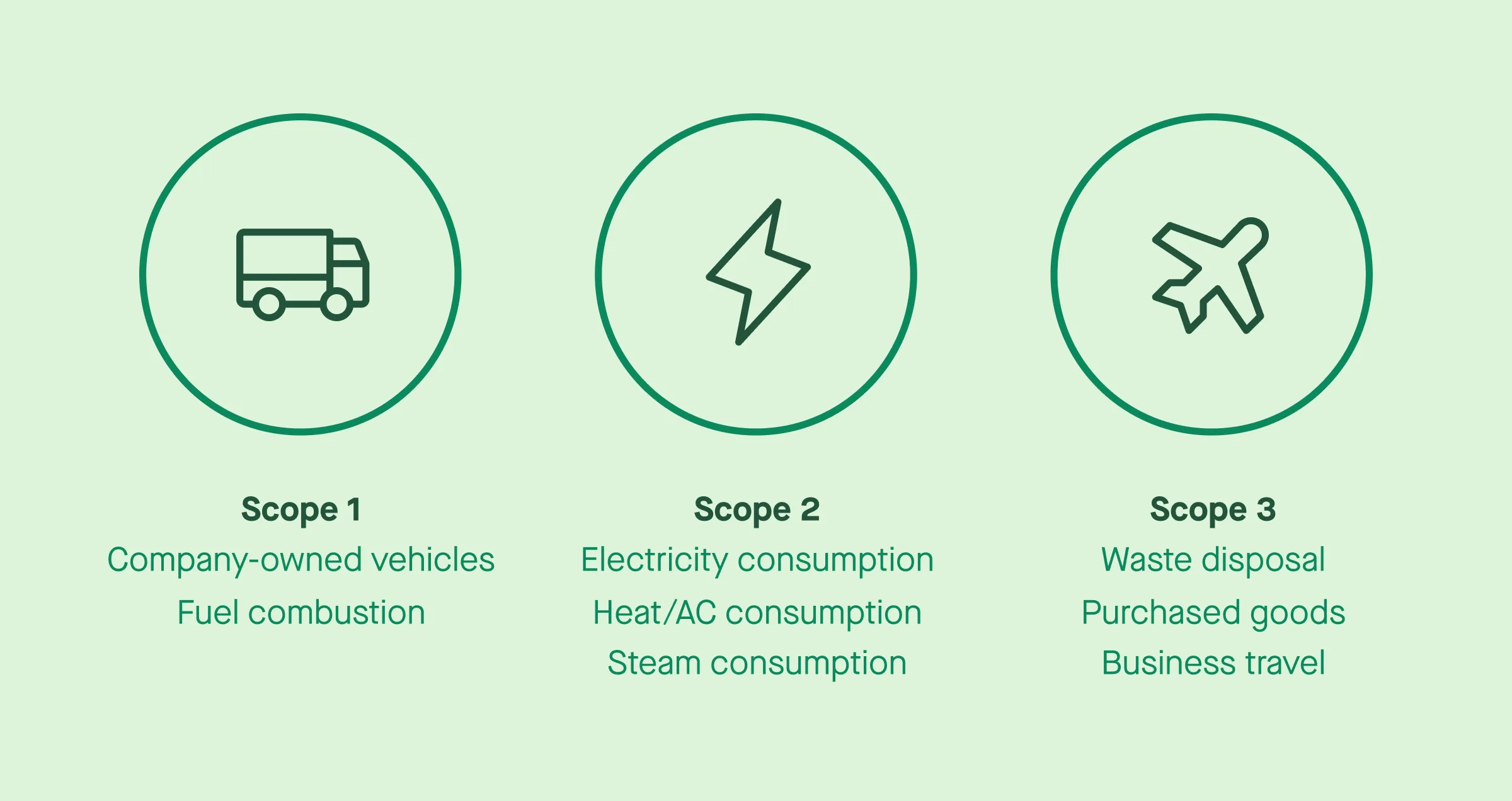
The Act mandates that reporting entities prepare an annual report detailing emissions across three scopes:
- Scope 1 emissions are all direct greenhouse gas emissions that stem from sources that a reporting entity owns or directly controls, regardless of location.
- Scope 2 emissions are indirect greenhouse gas emissions from electricity purchased and used by a reporting entity, regardless of location.
- Scope 3 emissions are indirect greenhouse gas emissions from activities across a company’s value chain that the reporting entity does not own or directly control.
By requiring Scope 3 reporting, the Act addresses long-standing concerns that corporate climate disclosures do not capture the full climate impact of business activities.
Emissions must be calculated using greenhouse gas protocol standards, including the Greenhouse Gas Protocol Corporate Standard, supporting consistency with international reporting requirements and comparable disclosures across jurisdictions.
All emissions reports will be made public via a centralized digital platform, enabling public oversight and allowing stakeholders to compare corporate climate performance.
What is the timescale?
The Act introduces a phased timeline to ease businesses into compliance.
Key timing points include:
- The Act will take effect starting in 2027
- Companies will report emissions from the prior fiscal year (2026 data)
- Annual reporting is required across Scope 1, Scope 2, and Scope 3 emissions
Independent verification is mandatory. Verification requirements include:
- Third-party verification of emissions data for accuracy and completeness
- Verification for Scopes 1 and 2 beginning at limited assurance
- A transition to reasonable assurance by 2032
How does the Act compare to California’s SB 253?
The New York Climate Corporate Data Accountability Act is similar to California’s Climate Corporate Data Accountability Act (SB 253), and both aim to establish consistent standards for climate disclosures.
Shared features include:
- Applicability to companies with more than $1 billion in annual revenues
- Mandatory reporting of Scope 1, Scope 2, and Scope 3 emissions
- Alignment with greenhouse gas protocol standards
- Independent third-party verification
- Public disclosure of emissions data
Key differences include administration. In New York, oversight sits with the New York Department of Environmental Conservation, embedding the Act within environmental conservation law and state finance law. California’s law has faced legal challenges from the U.S. Chamber of Commerce, while New York’s legislation is still moving through the state process.
For companies already preparing for SB 253, much of that work can be reused to meet New York’s requirements.
How does this Act differ from New York’s GHG Reporting Program?
Although both focus on greenhouse gas data, the two frameworks serve different purposes.
New York’s GHG Reporting Program:
- Applies primarily to facilities and suppliers emitting 10,000 metric tons CO₂e or more
- Operates at the facility or supplier level
- Supports state-level emissions tracking and environmental conservation
The Climate Corporate Data Accountability Act:
- Applies at the company level
- Targets large corporations based on revenue thresholds
- Requires full value chain and Scope 3 reporting
- Focuses on public disclosure, corporate accountability, and climate-related financial risks
Some organizations may be subject to both programs, increasing the need for coordinated reporting systems.
What are the next steps for in-scope companies?
Companies operating in New York with revenues above one billion dollars should begin preparing now.
Key actions include:
- Confirming Scope 1 and Scope 2 boundaries based on ownership and control
- Mapping value chain activities to identify Scope 3 emissions
- Reviewing existing emissions reporting processes and data gaps
- Identifying where industry average data, proxy data, or secondary data sources may be required
- Preparing for independent verification and assurance engagement
Accurate data collection is essential for third-party assurance audits. Non-compliance may result in financial penalties and can also damage reputation and stakeholder trust.
How can ESG software help?
Meeting the Act’s requirements manually will be difficult, particularly for companies with complex operations or supply chains.
ESG software can help organizations:
- Build full carbon inventories aligned with greenhouse gas protocol standards
- Collect and manage emissions data across entities and suppliers
- Support reporting across New York, California, and international frameworks
- Maintain audit-ready documentation for third-party verification
- Track emissions trends and climate-related risks over time
As mandatory climate disclosure expands across states, digital platforms provide a practical way to support compliance while improving transparency and corporate accountability.
Summary
The New York Climate Corporate Data Accountability Act represents a significant step in corporate climate accountability, with implications that extend beyond New York’s borders. By requiring large businesses to disclose verified emissions data across all three scopes, the legislation pushes companies toward more rigorous, standardized reporting practices that align with global sustainability standards.
As state-level climate regulation continues to evolve, New York’s approach is likely to influence how corporate climate transparency is regulated across the U.S. For in-scope companies, early preparation will be key to meeting compliance expectations while building more reliable, decision-ready climate data systems.