Carbon Accounting at Sweep
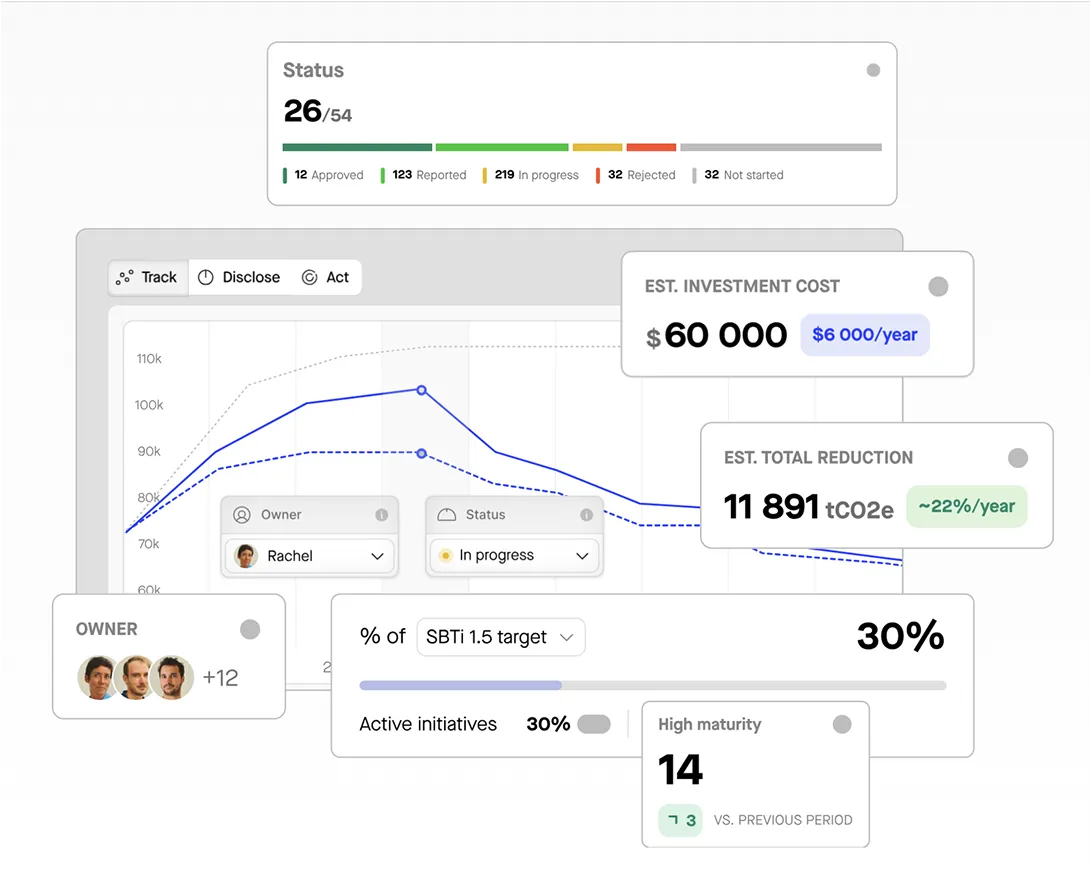
How carbon accounting works at Sweep
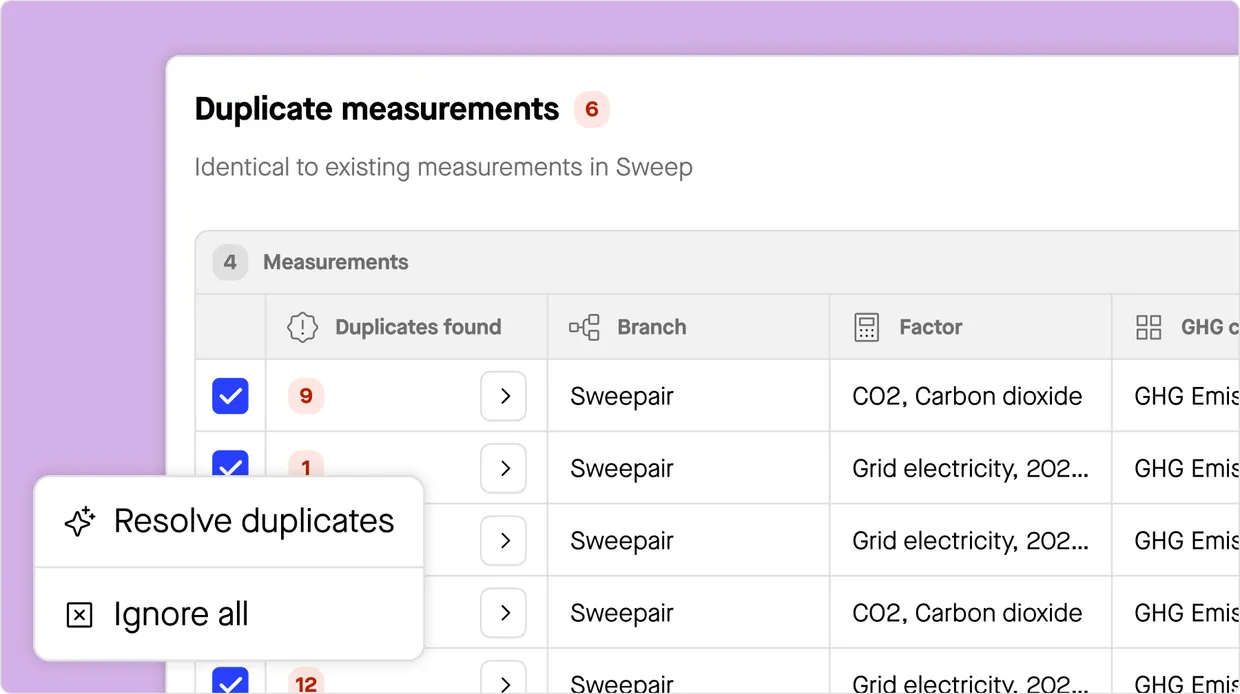
Automated emissions data collection
- Replace manual, error-prone processes with automated data flows from internal systems, utility providers, and supply chains
- Capture both direct emissions from fuel combustion and indirect greenhouse gas emissions from energy, travel, and purchased goods
- Combine activity data and financial data for accurate, organization-wide visibility and improved data quality
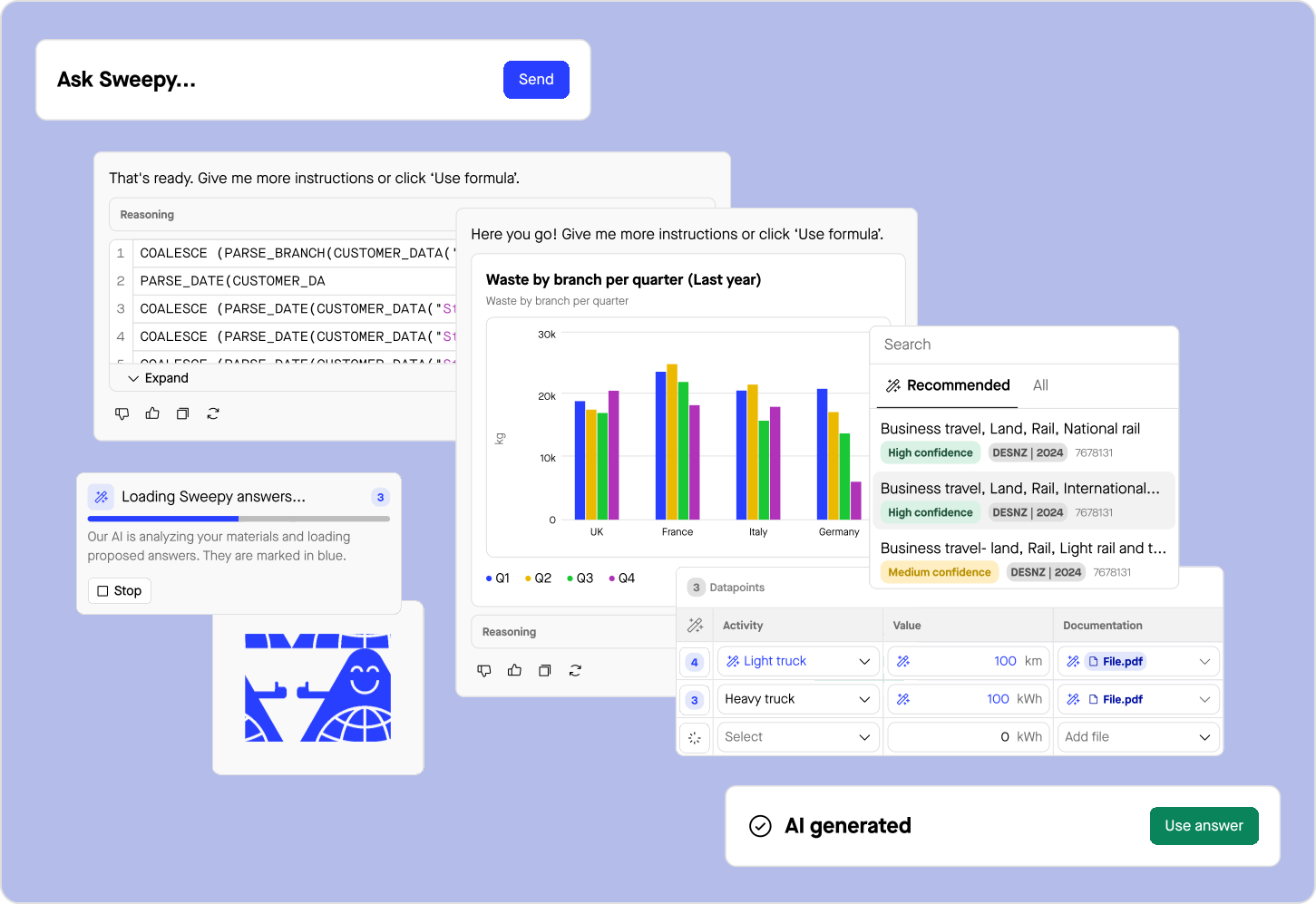
Accurate emissions calculations
- Apply verified emission factors and proven carbon accounting methods — including activity-based, spend-based, and hybrid methods
- Calculate carbon dioxide equivalent (CO₂e) for every emissions source and greenhouse gas
- Automate complex emissions calculations to ensure consistent, audit-ready results across your GHG emissions inventories
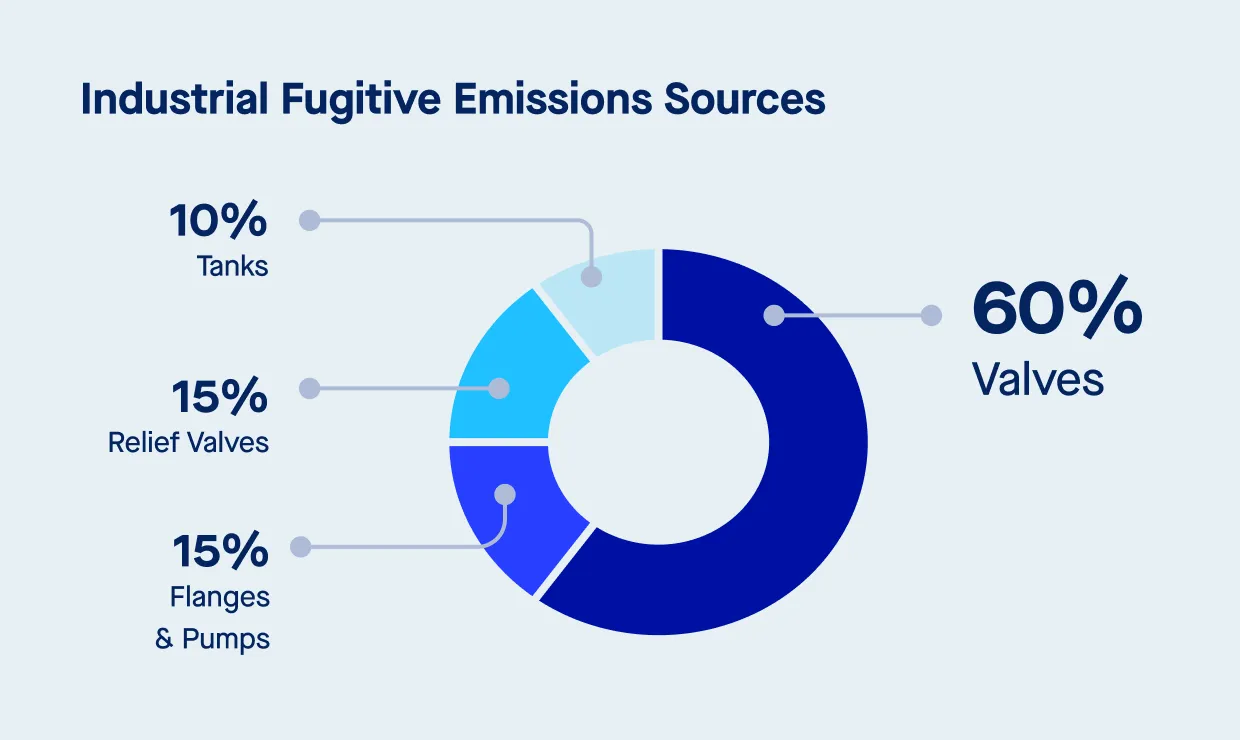
Complete Scope 1, 2, and 3 coverage
- Track all greenhouse gas emissions – from direct emissions (on-site energy use, company vehicles) to indirect emissions (purchased electricity, heat, and cooling)
- Measure Scope 3 value chain emissions, including purchased goods, logistics, and product use
- Get full visibility into your carbon footprint across the entire organization and supply chain
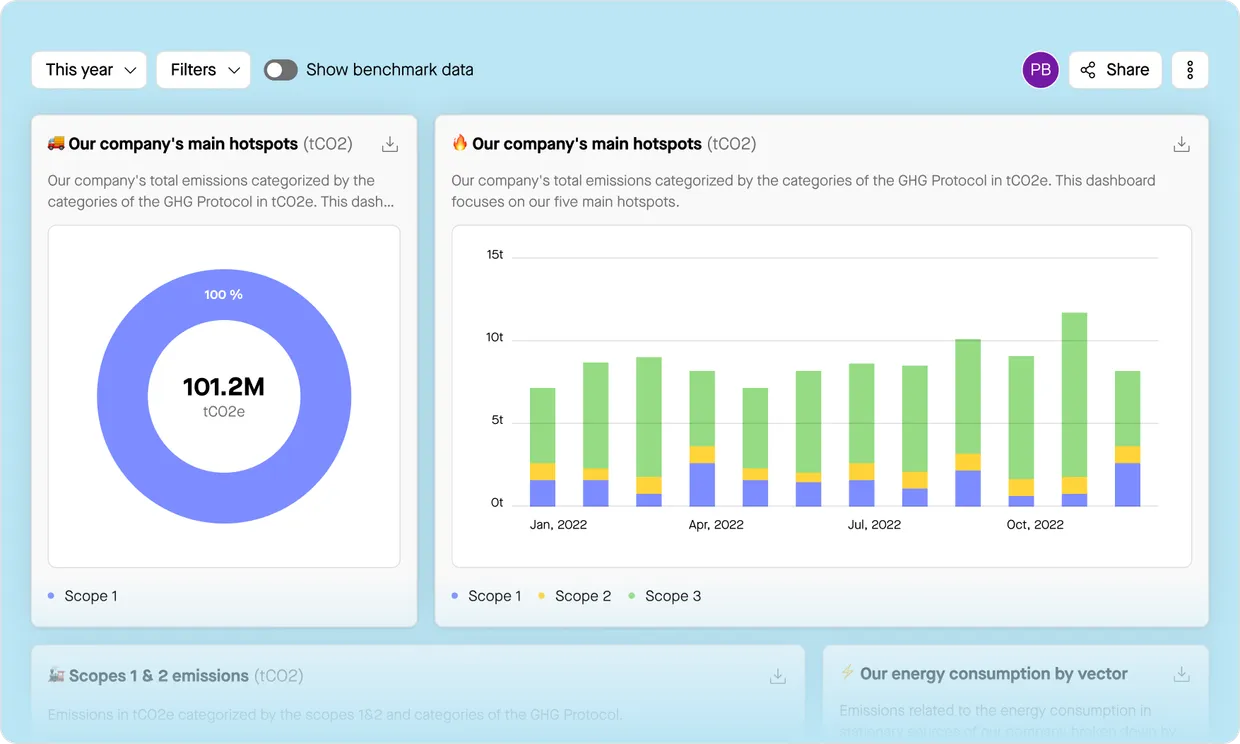
Audit-ready data
- Follow global carbon accounting standards from the World Resources Institute, the World Business Council for Sustainable Development, and the Environmental Protection Agency
- Ensure full traceability of every emission factor, calculation, and data source
- Generate annual carbon accounting reports and carbon disclosures aligned with the GHG Protocol, SASB principles, and global sustainability standards
Progress tracking
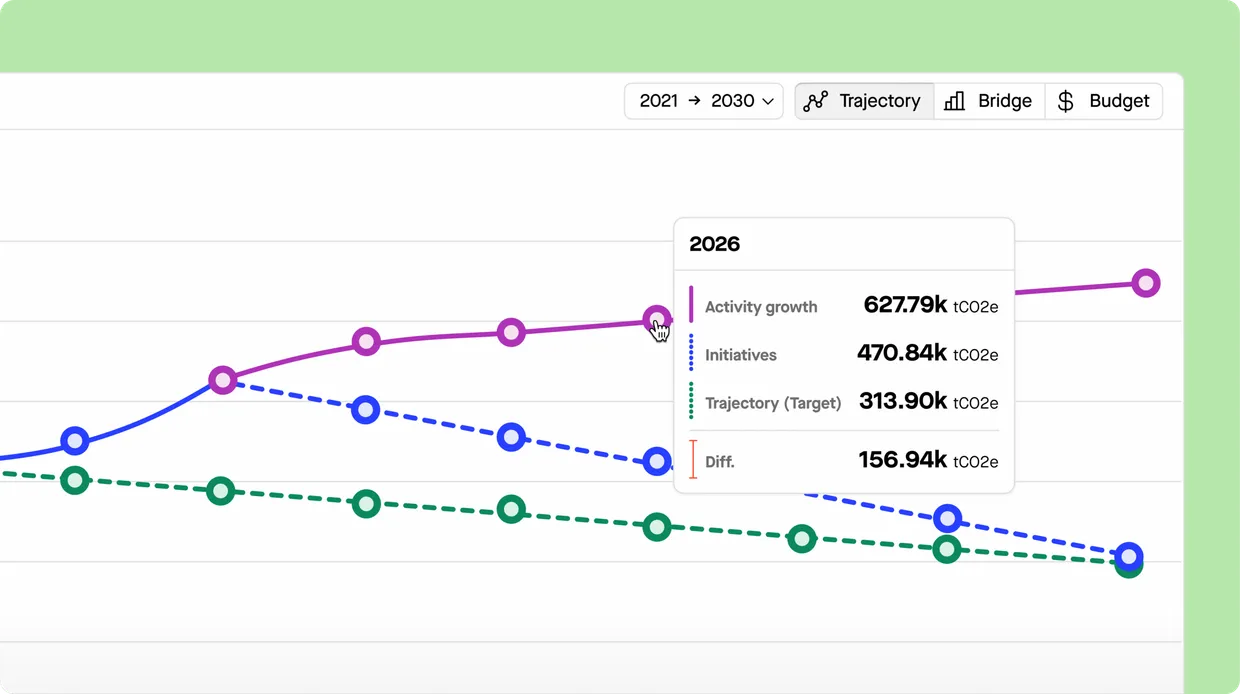
- Turn carbon data into clear insights to guide emissions reduction and net zero strategies
- Model climate impact scenarios, assess future carbon emissions, and track the effectiveness of reduction initiatives
- Connect data across business units and supply chains to identify high-impact areas for reducing carbon emissions and achieving measurable cost savings
- Monitor residual emissions to stay on course toward net zero emissions
Leading companies trust Sweep to navigate their sustainability journey

Orange's technology strategy to achieve net zero by 2040

See why businesses choose Sweep
Analyst reports
Sweep Named a Leader in IDC MarketScape 2025 for Sustainability Management Platforms
This recognition highlights Sweep’s leadership in carbon accounting and as a full ESG data management platform, positioning it as a comprehensive sustainability solution, structured around three core pillars: Track, Disclose, Act.
Key highlights from the IDC report:
- Leading on data management
- Goal-setting & ROI modeling
- Supplier engagement at scale
- Double materiality & IRO tools
Verdantix's Smart Innovators: ESG & Sustainability Reporting And Data Management Software (2025)
Verdantix names Sweep a top 3 ESG and sustainability reporting solution in their Smart Innovators report.
Sweep received “strong” or “market-leading” rankings across all 10 evaluation criteria, including:
- ESG data acquisition
- Organizational structure management
- Sustainability performance management
IDC MarketScape: Worldwide Carbon Accounting and Management
IDC MarketScape positions Sweep as a leader in worldwide sustainability and carbon management software.
It particularly recognized us for:
- Robust, AI-driven data management
- Data security and ingestion
- Advanced analytics for informed decision-making
Insights from Sweep's carbon experts



See why companies choose Sweep
Centralize your ESG data, streamline reporting processes, and deliver verifiable carbon reductions, all in one powerful platform.














FAQs: Carbon accounting at Sweep
What does carbon accounting involve?
Carbon accounting is the process of measuring and reporting an organization’s greenhouse gas emissions. Carbon accounting work involves quantifying greenhouse gas emissions to support sustainability initiatives and regulatory compliance. It includes direct emissions from burning fossil fuels, indirect emissions from purchased electricity, and supply chain emissions known as Scope 3.
Using standard emission factors, companies calculate total GHG emissions in carbon dioxide equivalent (CO₂e) to understand their carbon footprint. Greenhouse gas accounting is a systematic process for measuring and reporting all greenhouse gas emissions, ensuring transparency and supporting climate impact assessments.
Sweep automates the entire carbon accounting process, ensuring consistent alignment with the GHG Protocol and providing accurate, traceable results.
What are the business benefits of carbon accounting?
Effective carbon accounting helps organizations:
- Identify where they can reduce emissions and lower energy costs
- Strengthen risk management and prepare for climate-related risks
- Improve data accuracy and decision-making through real-time emissions data
- Build transparency with stakeholders through reliable carbon reporting
- Contribute to sustainable development while progressing toward net zero emissions
- Enable financial institutions to meet investor expectations and regulatory requirements for ESG reporting and sustainability risk management
With Sweep, carbon accounting enables businesses to move from reporting to real, measurable impact.
Why is a carbon accounting platform useful?
Manual carbon accounting often relies on spreadsheets and inconsistent inputs. A carbon accounting platform like Sweep automates data collection, standardizes emission factors, and delivers accurate carbon accounting at scale.
These platforms can also manage renewable energy certificates (RECs), allowing organizations to attribute cleaner energy sources to their electricity consumption under the market-based method.
It provides a single source of truth for GHG accounting, helping companies manage emissions reporting, maintain data quality, and stay compliant with global sustainability standards. This makes it easier for organizations to measure their carbon dioxide emissions, compare performance over time, and focus on reducing carbon emissions.
What is the difference between carbon accounting and ESG data management?
Carbon accounting focuses exclusively on quantifying and managing greenhouse gas emissions – including carbon dioxide and other greenhouse gases such as methane and nitrous oxide. Carbon accounting enables organizations to quantify their carbon footprints for products, operations, and supply chains.
ESG data management encompasses a wider set of sustainability indicators, covering governance, diversity, and social impact. ESG data management involves collecting and leveraging sustainability data for comprehensive reporting and performance improvement.
In practice, accurate corporate carbon accounting provides the foundation for reliable ESG reporting, supplying the carbon data needed for financial accounting, emissions tracking, and net zero planning.