What is extended producer responsibility (EPR)?
The core principle of producer responsibility
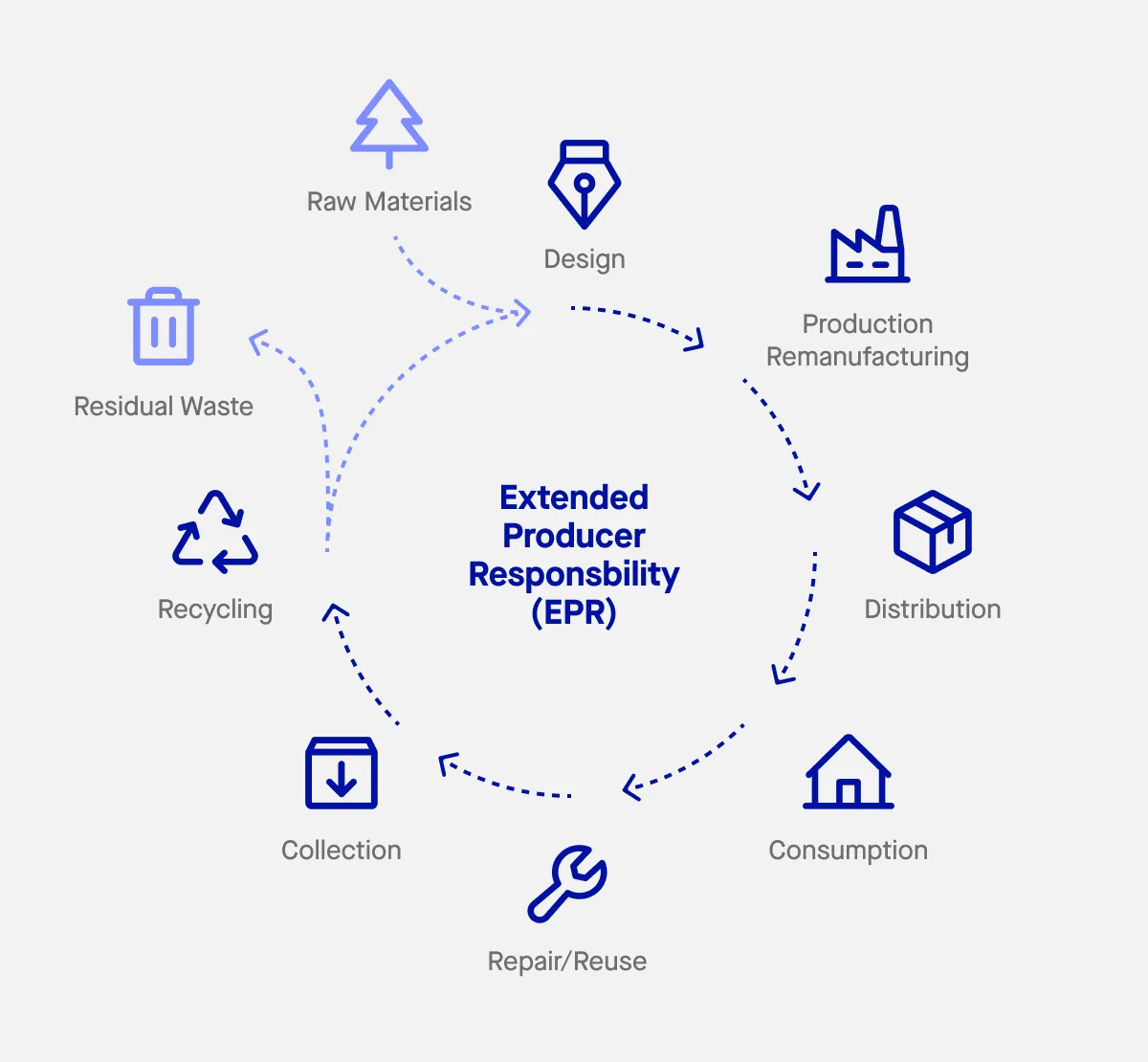
Extended producer responsibility (EPR) is a policy approach that makes producers responsible for their products along the entire lifecycle, including at the post-consumer stage, which helps achieve environmental goals such as recycling targets.
The principle of EPR is that manufacturers have the greatest control over product design and marketing, which gives them the responsibility to reduce toxicity and waste in their products. You design it. You sell it. You’re best positioned to make it sustainable, recyclable, and safe.
EPR policies create financial incentives for manufacturers to design products that minimize waste management costs and contain safer materials, thereby promoting sustainable product design. When brand owners are held responsible for end of life management, they suddenly care a lot more about whether their packaging can actually be recycled.
How EPR shifts financial responsibility
Historically, local governments and taxpayers paid for waste management. Municipalities collected waste, sorted recyclable materials, processed everything, and covered all costs through local taxes.
EPR shifts the financial responsibility of managing a material throughout its entire lifecycle to the brands that produce the material. Extended producer responsibility (EPR) generates funding from producers that helps pay for the collection, sorting, and recycling of waste products, thereby reducing overall waste management costs for local governments.
EPR can reduce public spending by shifting waste management costs to producers, potentially lowering local taxes. Instead of taxpayers funding recycling programs, producers pay fees based on the materials they put into the market. Those fees fund collection infrastructure, sorting facilities, and recycling processes.
EPR vs. traditional waste management policies
Traditional waste management policies treat waste as a public problem. Governments manage it. Taxpayers fund it. Producers aren’t directly accountable for what happens after sale.
EPR flips this model. Producers become financially responsible for the entire lifecycle of their products. This financial responsibility creates powerful incentives to reduce packaging, use recyclable materials, and design products that generate less waste.
The principle of EPR supports the transition from a linear economy, characterized by a ‘take-make-waste’ model, to a circular economy that emphasizes product reuse, recycling, and sustainable design.
Which US states have EPR laws?
EPR began with a focus on specific waste streams but is rapidly expanding to include textiles, mattresses, and pharmaceuticals. As of 2026, multiple US states have enacted EPR legislation covering various product categories.
Packaging EPR laws
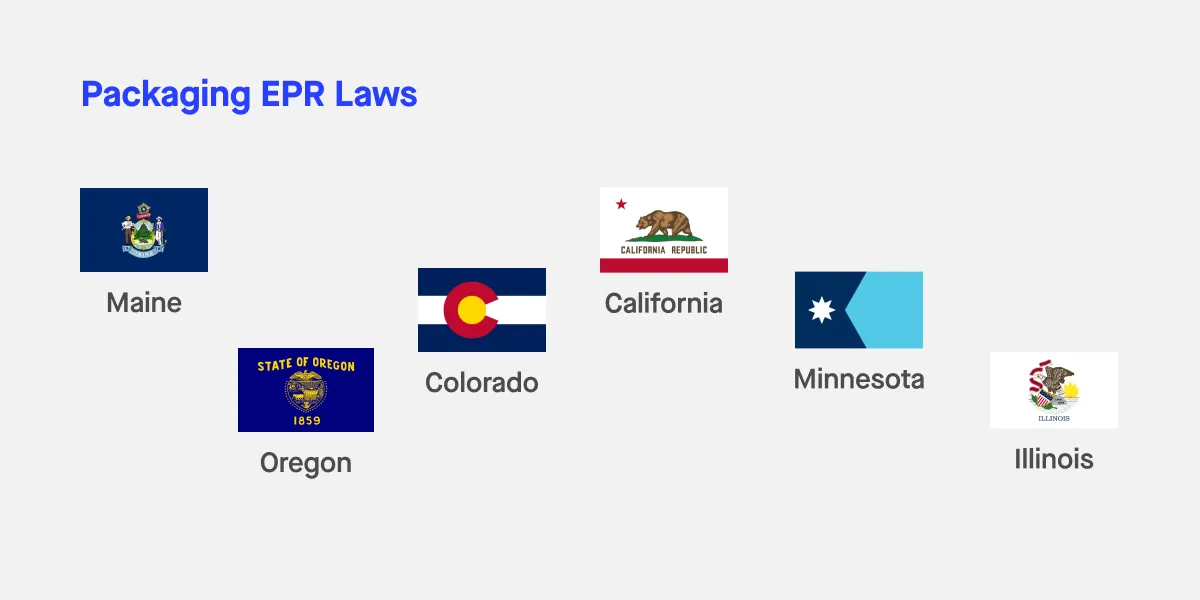
Maine: Enacted the first statewide packaging EPR law in the USA in 2021. The law requires packaging producers to join a producer responsibility organization (PRO) that manages recycling programs and reimburses municipalities for recycling costs. Implementation began in 2024.
Oregon: Passed the Recycling Modernization Act in 2021, creating an EPR program for packaging and printed paper. Producers must participate in a PRO that funds statewide recycling infrastructure. The program launched in 2025.
Colorado: Enacted producer responsibility for recycling in 2022. The law establishes a PRO-run program that provides statewide recycling services and reimburses local governments for existing recycling costs. Implementation is ongoing through 2026.
California: Passed SB 54 in 2022, creating the most comprehensive packaging EPR program in the USA. The law requires producers of single-use packaging and foodservice ware to participate in a PRO, fund recycling infrastructure, and achieve ambitious recycled content targets. Full implementation runs through 2032.
Minnesota: Enacted packaging EPR legislation in 2024, requiring producers to fund collection and processing of packaging materials. The program emphasizes rural access to recycling services.
Illinois: Passed EPR for packaging in 2024, with implementation beginning in 2026. The law requires producer funding for statewide recycling infrastructure and municipal reimbursement.
Paint EPR programs
Paint EPR is more established than packaging in the USA. Ten states plus Washington D.C. have paint stewardship programs requiring paint manufacturers to fund collection and recycling of leftover paint.
States with paint EPR laws include: California, Colorado, Connecticut, Maine, Minnesota, Oregon, Rhode Island, Vermont, Washington, and Washington D.C. These programs typically operate through a producer-funded organization that manages paint collection sites, transportation, and processing.
Electronics EPR laws
Approximately 25 states have EPR regulations for waste electronics. These laws require manufacturers of electronics like computers, televisions, and mobile devices to fund collection and recycling programs.
Electronics EPR addresses hazardous waste in component parts, recovers valuable raw materials, and reduces environmental impacts from improper disposal. Many countries have implemented electronics EPR, and US states are following similar models.
Emerging EPR categories
EPR schemes are expanding to new product categories across US states:
Batteries: Several states require battery producers to fund collection and recycling programs for single-use and rechargeable batteries.
Mattresses: California, Connecticut, and Rhode Island have mattress EPR programs that fund collection and recycling infrastructure.
Textiles: California and New York are exploring textile EPR legislation to address fashion waste.
Pharmaceuticals: Several states are considering EPR for unused medications to prevent environmental contamination and protect human health.
Solar panels: As solar installations age, states are examining EPR for end of life products in the renewable energy sector.
How EPR laws work: Compliance requirements for producers
Registration and reporting obligations
EPR laws typically require producers to register with state agencies, report on the products and materials they sell in the state, and provide data on weights, material types, and sales volumes.
For example, if you’re a brand owner selling packaged goods in California, you must register with the California Department of Resources Recycling and Recovery (CalRecycle), report annual packaging data, and join an approved producer responsibility organization.
Failure to register can result in penalties, fines, and restrictions on selling products in the state. Governments use this data to calculate fees, track compliance, and measure progress toward recycling targets.
Joining a producer responsibility organization (PRO)
Producers may delegate their EPR responsibilities to a third party, known as a producer responsibility organization (PRO), which manages the recycling and waste management processes on their behalf.
PROs are nonprofit or for-profit entities that act on behalf of multiple producers. They collect fees from member companies, use those funds to build recycling infrastructure, contract with waste management companies, and report to state agencies.
Joining a PRO is often mandatory under EPR legislation. In packaging EPR states, for instance, all covered producers must participate in an approved PRO. The PRO handles operational complexity while producers pay fees based on the materials they introduce into the market.
Fee structures and eco-modulated fees
EPR programs fund operations through fees charged to producers. Fee structures vary but typically base costs on material type, weight, and recyclability.
Eco-modulated fees mean that harder-to-recycle materials incur higher penalties, while sustainable designs receive credits. If your packaging uses single-material recyclable formats, you pay lower fees. If you use multi-layer non-recyclable films, you pay significantly more.
This fee structure creates direct financial incentives for sustainable product design. EPR incentivizes “Eco-Design” by motivating producers to design products that are more durable, repairable, and easier to recycle.
Extended producer responsibility (EPR) encourages companies to design more sustainable and recyclable products and manufacturing processes, making them accountable for their products throughout their entire lifecycle. When sustainable design lowers your costs and unsustainable design raises them, behavior changes fast.
Performance targets and recycled content requirements
Many EPR laws establish recycling performance targets and recycled content mandates. California’s SB 54, for example, requires producers to achieve specific recycling rates and incorporate minimum percentages of recycled materials into packaging.
These targets push the market toward a circular economy. EPR promotes a circular economy by funding the infrastructure for material recovery, turning waste back into valuable feedstock for new production. EPR reduces resource extraction by increasing the availability of recycled materials, thus reducing reliance on virgin resources.
Producers must track progress toward targets, report results, and adjust practices to meet requirements. Failing to hit targets can trigger additional fees or regulatory action.
Reporting and compliance verification
EPR regulations require regular reporting on materials sold, fees paid, and recycling performance. States audit this data to verify compliance.
You’ll need systems to track what products you sell in which states, calculate material weights, determine applicable fees, submit reports on time, and maintain documentation for audits. This administrative burden is significant, especially for businesses operating across multiple states with different EPR laws.
Environmental and economic benefits of EPR
Improved recycling rates and waste reduction
EPR systems can improve recycling rates and reduce overall waste management costs by shifting the financial responsibility of managing a material throughout its lifecycle to the brands that produce it.
EPR policies can lead to increased recycling rates, which in turn pushes more recyclable materials out of disposal and back into economic use, driving down greenhouse gas generation while spurring economic growth. When producers fund better collection infrastructure, consumers find it easier to recycle. EPR often funds better local collection infrastructure, simplifying recycling for residents and improving accessibility.
Effectiveness of EPR requires consumer participation in proper sorting and disposal processes, necessitating public education. EPR programs typically include consumer outreach to teach proper recycling behavior, which improves material quality and system performance.
Supporting the circular economy
The primary goal of EPR is to promote a circular economy by incentivizing sustainable design and ensuring funding for recycling infrastructure. EPR encourages companies to design more sustainable and recyclable products and manufacturing processes, which is essential for achieving a circular economy model.
A circular economy keeps materials in use rather than discarding them as waste. Products become raw materials for new products. Packaging gets recycled into new packaging. Component parts get recovered and reused. This reduces demand for virgin raw materials, lowers environmental impacts from extraction and manufacturing, and creates economic value from waste streams.
EPR impacts environmental sustainability by aligning economic incentives with eco-friendly outcomes. When producers pay for waste management, they have strong financial reasons to reduce waste, use recyclable materials, and design for circularity.
Climate and environmental benefits
EPR helps reduce pollution and emissions by increasing recycling rates, leading to lower greenhouse gas emissions. Recycling materials requires less energy than producing virgin materials from raw materials. Higher recycling rates mean lower energy consumption and fewer emissions.
Beyond climate benefits, EPR addresses other environmental concerns. It reduces hazardous waste in landfills, protects human health by ensuring proper disposal of electronics and batteries, prevents contamination of water and soil from improper waste disposal, and reduces pressure on natural ecosystems from resource extraction.
Economic benefits for local governments and businesses
For local governments, EPR generates significant financial relief. Extended producer responsibility (EPR) generates funding from producers that helps pay for the collection, sorting, and recycling of waste products, thereby reducing overall waste management costs for local governments.
EPR can reduce public spending by shifting waste management costs to producers, potentially lowering local taxes. Municipalities receive reimbursement for recycling services, reducing the burden on local budgets and freeing resources for other priorities.
For businesses, EPR creates challenges but also opportunities. Companies that invest in sustainable product design reduce their EPR fees, gain competitive advantages in sustainability-conscious markets, meet consumer demand for environmentally responsible products, and position themselves ahead of regulations in other countries following similar paths.
EPR legislation is expanding in many countries. The European Union has comprehensive EPR schemes. Other countries across Asia, Latin America, and Africa are implementing producer responsibility policies. US businesses selling globally will increasingly face EPR requirements and broader sustainability reporting obligations such as the Corporate Sustainability Reporting Directive, making early adoption strategically valuable.
How businesses should comply with EPR laws
Assess which EPR laws apply to your business
Start by understanding which states you sell in and which products you sell. Different EPR laws and emerging sustainability reporting rules like the Corporate Sustainability Reporting Directive (CSRD) cover different products and materials. If you sell packaged goods in California, Maine, Oregon, or Colorado, you’re likely covered by packaging EPR. If you manufacture electronics, paint, or batteries, check for category-specific EPR regulations in the states where you operate.
Review the definitions in each law. EPR legislation often defines “producer” broadly. It can include manufacturers, brand owners, importers, and retailers selling under private labels. If you sell products under your own brand – even if a third party manufactures them – you may be the responsible party under EPR laws.
Register and join a producer responsibility organization
Once you’ve identified applicable laws, register with the relevant state agencies and join approved producer responsibility organizations. Most EPR programs require participation in a PRO.
Research which PROs operate in each state. Some states have multiple PROs to choose from. Others designate a single organization. Evaluate PRO fee structures, services provided, compliance support, and track records.
Complete registration before deadlines. Missing registration deadlines can result in penalties and jeopardize your ability to continue selling in the state.
Track and report material data across your supply chain
EPR compliance requires detailed data on materials, weights, and sales volumes. You need systems to track products sold in each state, material composition of packaging and products, weights of each material type, and any use of recycled content.
This data comes from across your value chain. Work with suppliers to obtain material specifications. If you buy packaged goods from manufacturers, get detailed packaging data. If you design packaging, work with packaging suppliers to understand exact material weights and compositions.
Implement data management systems to centralize this information. Manual tracking in spreadsheets doesn’t scale when you’re reporting across multiple products, materials, and states. ESG and sustainability software platforms can automate much of this data collection and reporting burden.
Design for circularity and reduced fees
EPR policies create financial incentives for manufacturers to design products that minimize waste management costs and contain safer materials, thereby promoting sustainable product design. Use those incentives to drive more sustainable product design.
Work with packaging designers and product engineers to reduce material use, switch to recyclable materials, eliminate multi-layer packaging that can’t be recycled, increase recycled content, and simplify product disassembly for end of life recovery.
Every improvement in recyclability and sustainability reduces your EPR fees. Over time, these savings can be substantial – especially as EPR programs expand and fee structures become more sophisticated.
Monitor regulatory developments
EPR legislation is evolving rapidly. New states are passing laws. Existing programs are updating guidance and expanding requirements. Fee structures change. Recycled content targets increase.
Stay informed about regulatory developments in states where you operate. Subscribe to updates from state agencies, join industry associations that track EPR policy, and allocate resources to monitor and respond to regulatory changes.
Being proactive about compliance is less expensive than scrambling to catch up after missing deadlines or violating regulations.
How sustainability software helps with EPR compliance
Centralized data management across the value chain
EPR compliance requires tracking materials, weights, sales, and fees across multiple products and jurisdictions. ESG sustainability software centralizes this data in one platform, eliminating the need to manage dozens of spreadsheets.
Modern platforms integrate with your ERP, procurement, and sales systems to automatically pull product and material data. This automation reduces manual work, improves data accuracy, and ensures you have the information needed for EPR reporting.
Automated EPR fee calculations
Different states have different fee structures. Different materials incur different fees. Calculating what you owe requires complex analysis of material weights, recyclability, and state-specific fee schedules.
Specialized ESG and sustainability software automates these calculations. The platform applies the correct fee structures based on where you sell, what materials you use, and current regulatory requirements. This reduces errors and ensures you pay the right amounts.
Reporting and compliance documentation
EPR programs require regular reports submitted to state agencies and PROs. These reports must include detailed breakdowns of materials, sales volumes, fees paid, and progress toward performance targets.
Sustainability and CSRD reporting platforms generate EPR reports in the formats required by different states and organizations. You maintain audit trails showing data sources, calculations, and submissions that support compliance with detailed frameworks like the European Sustainability Reporting Standards. This documentation is critical when agencies audit your compliance.
Scenario analysis for sustainable design decisions
EPR fees create financial incentives for sustainable product design. CSRD-ready sustainability software lets you model different design scenarios to understand fee impacts.
What if you switched from multi-layer plastic to recyclable cardboard? What if you increased recycled content from 30% to 50%? The software calculates how these changes affect your EPR fees, helping you make data-driven decisions about sustainable product design.
Tracking regulatory changes across jurisdictions
Keeping up with EPR legislation across multiple states is a full-time job. Sustainability and CSRD compliance platforms track regulatory changes, update fee structures when states publish new guidance, alert you to new compliance deadlines, and help you stay ahead of evolving requirements.
This proactive monitoring reduces compliance risk and ensures you’re always working with current information for frameworks such as the European Sustainability Reporting Standards (ESRS).
EPR is here to stay: Preparing for the future
Extended producer responsibility (EPR) requires manufacturers to take responsibility for their products throughout the entire lifecycle, including post-consumer stages, which helps achieve environmental goals such as recycling targets. In the USA, EPR is no longer experimental policy. It’s becoming the standard approach to managing packaging waste, electronics, and other materials.
More states will pass EPR laws. Existing programs will expand to new product categories. Fee structures will become more sophisticated, with stronger incentives for sustainable design and higher penalties for hard-to-recycle materials.
For US businesses, the question isn’t whether to comply with EPR. It’s how to comply efficiently while turning EPR requirements into competitive advantages. Companies that invest in sustainable product design, implement robust data tracking systems, and use technology to manage compliance will reduce costs, meet consumer expectations, and position themselves for success as EPR legislation expands.
Start by understanding which EPR laws already affect your business. Assess your current products and materials. Identify opportunities to improve recyclability and reduce fees. Invest in systems that centralize data and automate compliance. And treat EPR not as a regulatory burden, but as an opportunity to build a more sustainable, efficient, and profitable business in a circular economy.