The measurement and reporting structure
The CCF reporting structure adheres to a well-established GHG protocol framework, organized into three scopes that encompass 26 emissions categories. These cover emissions from energy, employee travel, purchased goods, and more. For consistency, companies follow this structured reporting framework regardless of industry.
In contrast, product carbon footprints align with a life cycle assessment approach.
Each phase of the product’s life is considered and measured to produce an accurate footprint for the product itself, including its carbon emissions. This life cycle assessment helps organizations evaluate the GHG emissions from cradle to gate and across the product’s use and disposal phases, offering insights into potential emissions reductions within the product’s journey.
Boundaries in CCF and PCF
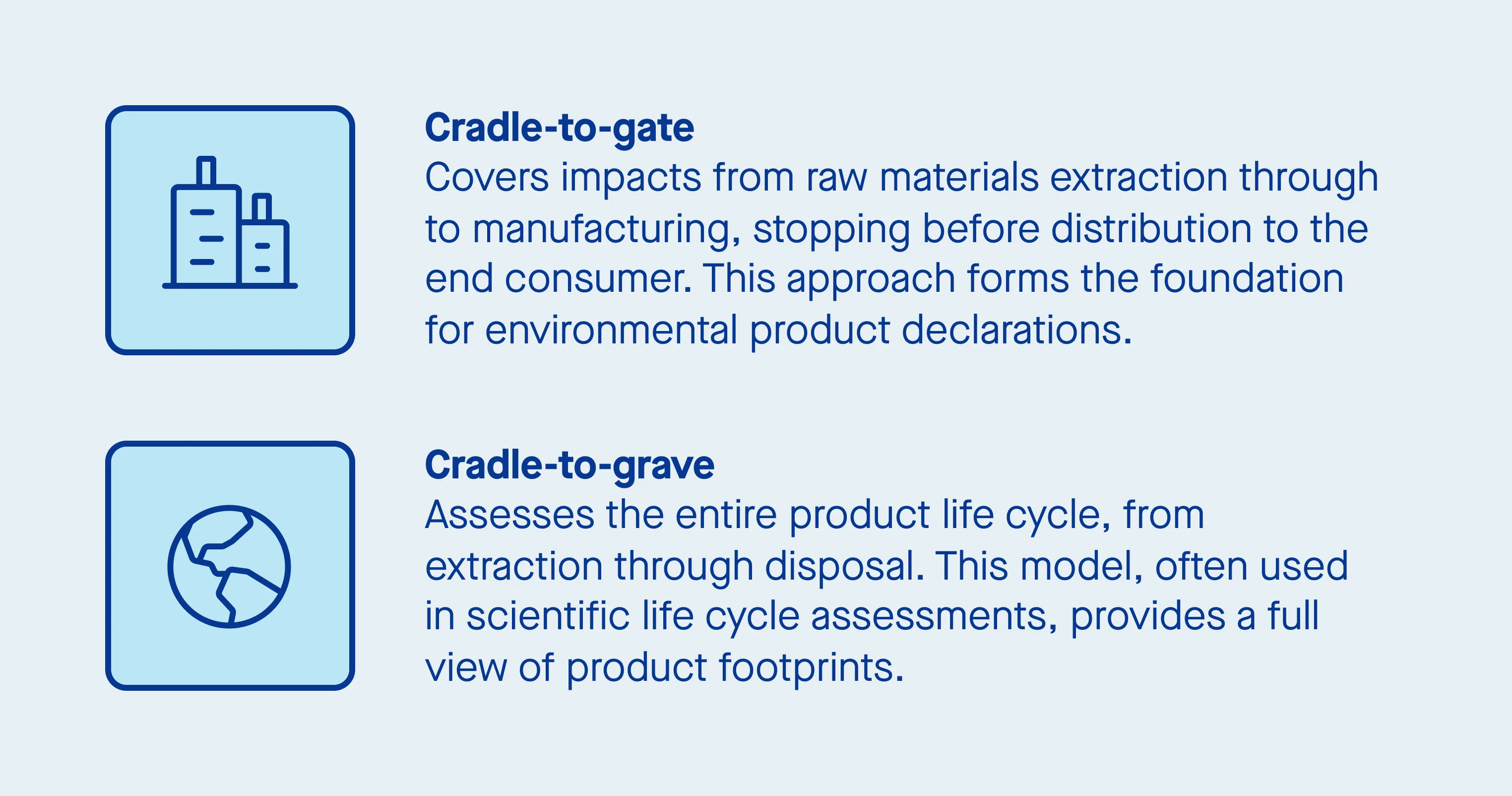
A key difference between PCF and CCF is the scope of boundaries. While CCF covers emissions across the value chain, product carbon footprint boundaries are tied to the product’s life stages. PCF is measured using two approaches:
Reporting periods
Corporate carbon footprints are generally calculated annually to track emissions performance and support reporting requirements.
Product carbon footprints may need updating when changes to materials, manufacturing processes, suppliers, or energy sources materially affect the results. The appropriate review frequency depends on the purpose of the assessment, relevant standards, and applicable reporting requirements.
Product carbon footprints can provide valuable data for calculating a company’s Scope 3 emissions, which cover indirect emissions across its upstream and downstream value chain.
For example, a manufacturer supplying steel components to an automotive company may calculate the cradle-to-gate carbon footprint of each component. The automotive company can then use this supplier-specific data, along with the quantity purchased, to estimate Scope 3, Category 1 emissions.
What is Scope 3, Category 1?
Scope 3, Category 1 (Purchased goods and services) covers upstream greenhouse gas emissions associated with the goods and services a company purchases, excluding emissions accounted for in other categories. Product carbon footprints (PCFs) can support these calculations by providing supplier-specific, cradle-to-gate emissions data, which businesses can combine with purchased quantities to estimate their Category 1 emissions.
This relationship also works in reverse. While corporate carbon accounting provides an overview of emissions across an organization, businesses may need more detailed product-level data to understand which materials, suppliers, and manufacturing processes contribute most to their footprint.
However, PCF and CCF calculations aren’t directly interchangeable. Product footprints may use different system boundaries, reference units, and allocation methods, so businesses must account for these differences when incorporating product-level emissions data into corporate inventories.
Combining both approaches helps businesses connect product-level emissions insights with wider corporate reporting and decarbonization decisions.
Benefits of PCF and CCF
The CCF allows companies to meet reporting requirements for frameworks like SBTi, CDP, and CSRD, which set the standard for transparent emissions tracking and reporting.
With a quantified corporate footprint, businesses can develop targeted decarbonization plans, set science-based emissions reduction targets, and engage departments such as finance, operations, and procurement to achieve climate goals.
Product carbon footprints provide valuable insights for both manufacturers and retailers, although the benefits vary depending on whether a business produces, purchases, or sells products.
For retailers: Supplier selection and Scope 3 reporting
PCF data helps retailers evaluate suppliers based on their emissions performance, identify lower-carbon sourcing opportunities, and improve visibility into the environmental impact of purchased products.
Supplier-specific PCFs can also support Scope 3, Category 1 calculations and provide data for relevant sustainability reporting and product-related regulatory requirements.
For manufacturers: Product improvements and commercial opportunities
For manufacturers, product carbon footprints help identify emissions hotspots across materials and production processes, supporting more targeted decarbonization and ecodesign decisions.
Providing reliable product-level emissions data can also help manufacturers respond to customer procurement requirements, strengthen tender and RFP submissions, and demonstrate progress towards lower-carbon products.
How Sweep helps businesses manage PCF and CCF data
Sweep, the sustainability intelligence platform, helps manufacturers and retailers calculate and manage product and corporate carbon footprints.
When emissions data from operations, products, and suppliers are visible in a unified platform, businesses can support consistent carbon accounting, reporting, and decarbonization decisions.
For retailers: Evaluate suppliers and improve Scope 3 data
Sweep helps retailers collect and structure emissions data across their supplier networks, using supplier-specific information alongside estimates where primary data is unavailable.
By connecting product-level emissions data with procurement information, retailers can assess supplier performance, identify emissions hotspots, and improve the accuracy of their Scope 3 calculations. These insights can also support responsible sourcing decisions and relevant sustainability reporting requirements.
For manufacturers: Calculate PCFs and identify production hotspots
Sweep supports product carbon footprint calculations at SKU level, helping manufacturers assess emissions associated with materials, production processes, and product supply chains.
With consistent calculation methods and emissions factors, manufacturers can identify opportunities to reduce product emissions and maintain auditable PCF data to support customer requests, procurement processes, and tender submissions.
Book a demo to discover how Sweep can support your product and corporate carbon accounting.