As sustainability reporting matures, the challenge is no longer limited to producing disclosures or calculating emissions.
Organizations need systems that can coordinate sustainability data across suppliers, business units, finance teams, operational teams, and regulatory requirements while keeping that information usable for decision-making.
This shift has expanded the sustainability software landscape. Some platforms are built around carbon accounting and decarbonization, while others focus on reporting, governance, or enterprise-scale data management.
Sweep is one of the platforms designed to bring these areas together within a connected sustainability system. This guide explores platforms commonly evaluated alongside Sweep and how they differ across carbon management, sustainability reporting, operational workflows, and sustainability data management.
What is Sweep and how does it work?
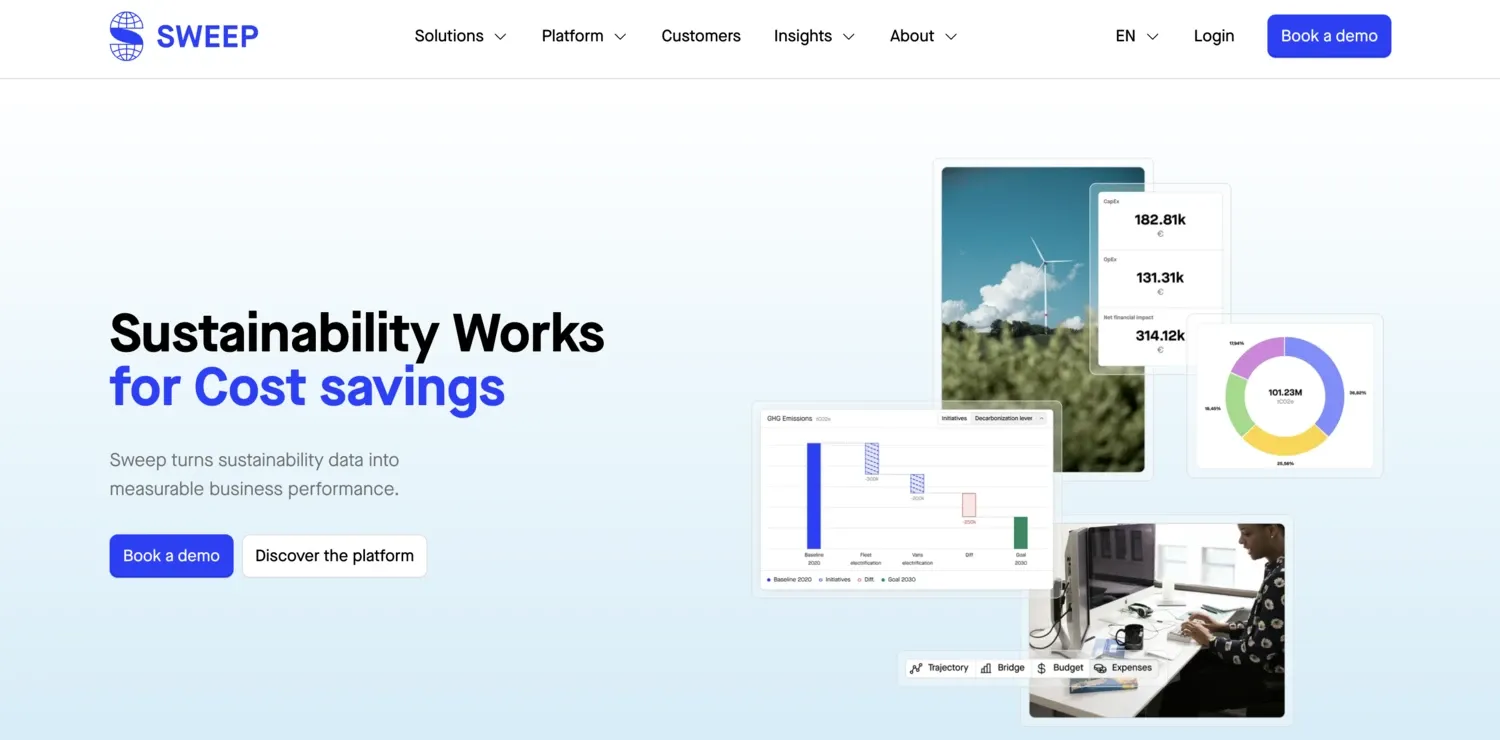
Sweep is a sustainability intelligence platform designed to help organizations turn sustainability data into business intelligence that can be used across reporting, operations, and decision-making. It is typically used by organizations managing complex sustainability programs across multiple teams, suppliers, entities, and reporting frameworks.
The platform is built around workflow-driven sustainability management, supporting teams by:
- Tracking carbon and ESG data across business units, suppliers, and operational activities
- Understanding Scope 3 emissions across complex value chains and financed activities
- Meeting disclosure requirements across frameworks such as CSRD, TCFD, GRI, ISSB, SB 253 and SB 261 and other reporting standards
- Measuring financed emissions and connecting sustainability data with investment and portfolio activities
- Supporting data-driven sustainability strategies through centralized sustainability insights and operational workflows
- Automating repetitive sustainability tasks with Sweep’s agentic AI, including validation, reporting support, and workflow coordination
This approach allows organizations to connect sustainability reporting with operational decision-making, cross-functional collaboration, and measurable business performance.
When organizations evaluate platforms similar to Sweep
Organizations evaluating sustainability platforms are usually balancing multiple priorities, from carbon accounting and ESG reporting to operational workflows, supplier engagement, and sustainability strategy.
The decision often depends on where sustainability complexity sits within the organization.
Carbon accounting takes priority
For some organizations, the immediate challenge is building a defensible emissions footprint across Scope 1, 2, and 3 emissions. This can shift the focus toward platforms designed for detailed carbon accounting, financed emissions analysis, and decarbonization planning.
Reporting and assurance requirements increase
As disclosure requirements expand, sustainability reporting becomes more closely tied to governance, auditability, and finance-led reporting processes. Organizations may prioritize platforms built around structured reporting controls and assurance-ready data management.
Sustainability data becomes fragmented
Large organizations frequently manage ESG and carbon data across multiple systems, suppliers, regions, and business units. Centralizing and standardizing that information becomes a key operational requirement as reporting obligations scale.
Sustainability workflows expand across teams
As sustainability programs mature, responsibility for data collection and validation extends beyond sustainability teams into procurement, finance, operations, and supply chain functions. This increases the need for coordinated workflows and shared operational ownership.
Sustainability data supports broader business decisions
For some organizations, sustainability data evolves beyond reporting into a source of operational and strategic insight. Data may be used to identify inefficiencies, reduce supply chain risk, prioritize reduction initiatives, and support long-term business planning.
5 Alternatives to Sweep
The platforms below are commonly evaluated alongside Sweep, depending on whether organizations prioritize carbon accounting, ESG reporting, enterprise data management, or operational sustainability workflows.
Carbon accounting and climate platforms
Persefoni
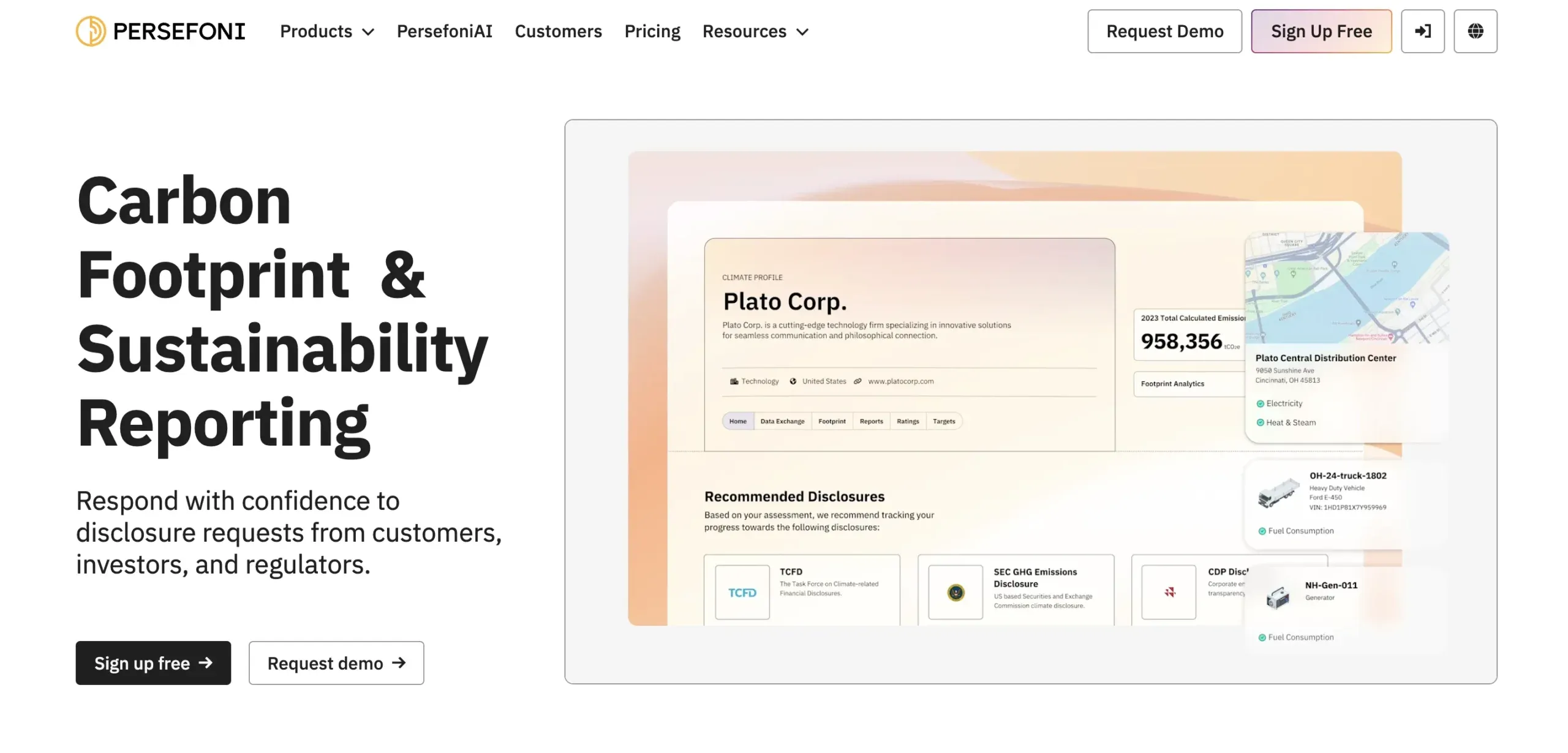
Persefoni is a carbon accounting and sustainability reporting platform designed to help organizations measure, manage, and disclose greenhouse gas emissions. It is positioned around assurance-grade carbon accounting, with a strong focus on Scope 1, 2, and 3 emissions reporting, regulatory disclosures, and financed emissions analytics.
Best suited for
Organizations prioritizing carbon accounting, financed emissions measurement, and regulatory climate disclosures
Key features
- Scope 1, 2, and 3 carbon footprint measurement and analytics
- Sustainability and regulatory emissions reporting
- Financed emissions accounting for financial services organizations
- Supplier engagement and decarbonization management workflows
- AI-assisted emissions analysis and anomaly detection through PersefoniAI
Considerations
- Primarily focused on carbon accounting rather than broader ESG management workflows
- Sustainability operations outside emissions reporting may require additional systems
- Operational collaboration workflows are less central than reporting and accounting processes
Watershed
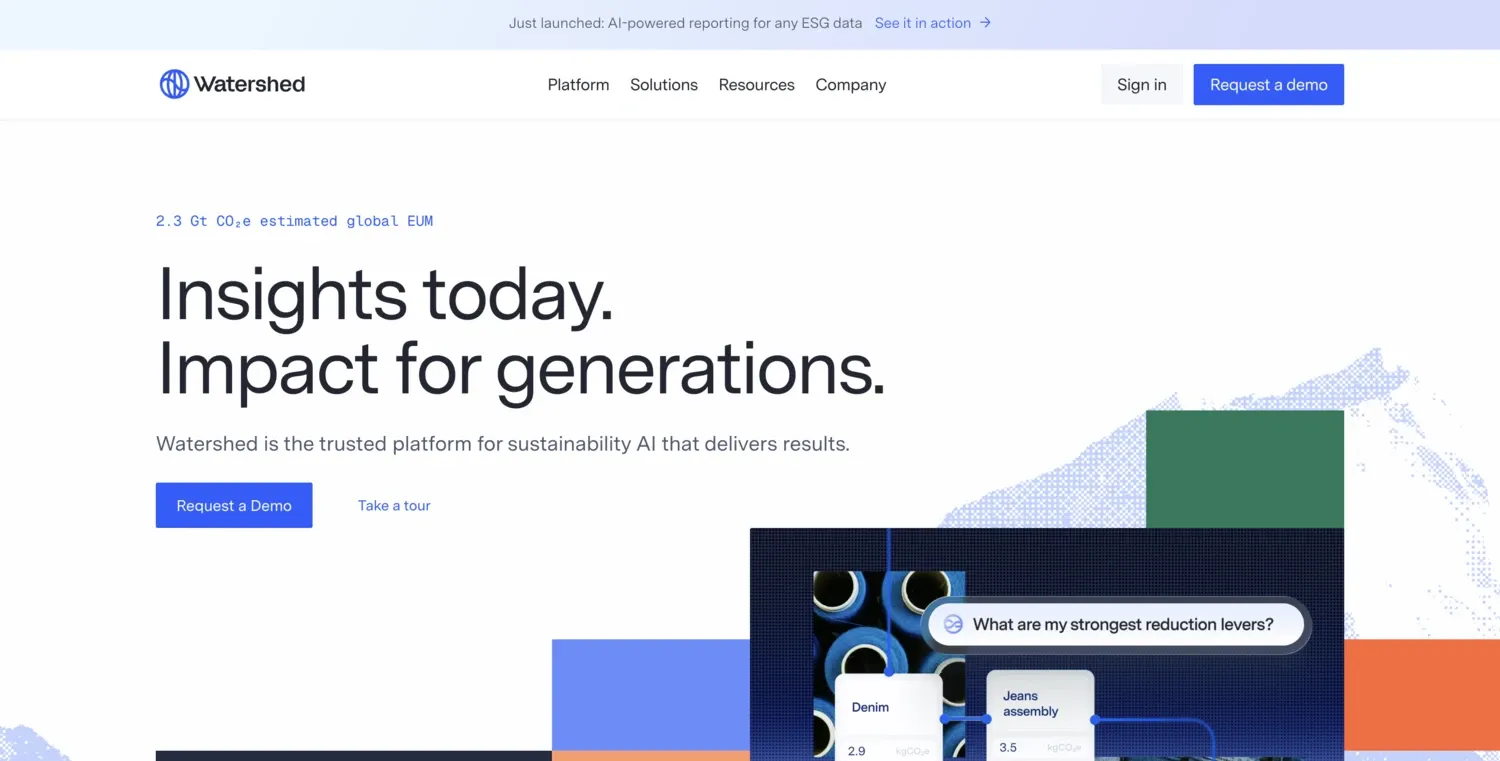
Watershed is a sustainability AI platform focused on carbon management, climate intelligence, and enterprise decarbonization. It combines carbon accounting with AI-assisted sustainability analysis, helping organizations identify emissions hotspots, model reduction opportunities, and support climate-related decision-making.
Best suited for
Organizations focused on decarbonization strategy, climate intelligence, and enterprise-scale emissions management
Key features
- Scope 1, 2, and 3 emissions accounting and climate reporting
- AI-assisted emissions analysis and sustainability insights
- Decarbonization planning and scenario modeling
- Supplier engagement and supply-chain emissions visibility
- Audit-ready climate disclosures and reporting support
Considerations
- Climate and carbon management remain the primary platform focus
- Broader ESG workflows and operational sustainability management may require additional tooling
- Enterprise implementation and sustainability program maturity can impact adoption complexity
ESG reporting and compliance platforms
Workiva
Workiva is an AI-powered platform for finance, risk, and sustainability reporting. It is designed to help organizations manage structured disclosures across financial and non-financial reporting requirements within a connected, audit-ready reporting environment.
The platform is centered around governance, collaboration, and disclosure workflows, particularly in enterprise environments where sustainability reporting is closely aligned with finance and compliance teams.
Best suited for
Organizations prioritizing ESG reporting, governance, and audit-ready disclosure management
Key features
- Connected reporting across financial and ESG disclosures
- ESG reporting aligned with frameworks such as CSRD, TCFD, and SEC requirements
- Governance controls, audit trails, and reporting workflows
- Collaboration tools for finance, sustainability, and compliance teams
- AI-assisted reporting, summarization, and workflow support
Considerations
- Primarily focused on reporting workflows rather than operational sustainability management
- Carbon accounting capabilities may require integrations or additional tooling
- User experience and implementation complexity can increase in large enterprise environments
Enterprise sustainability and ESG management platforms
Envizi
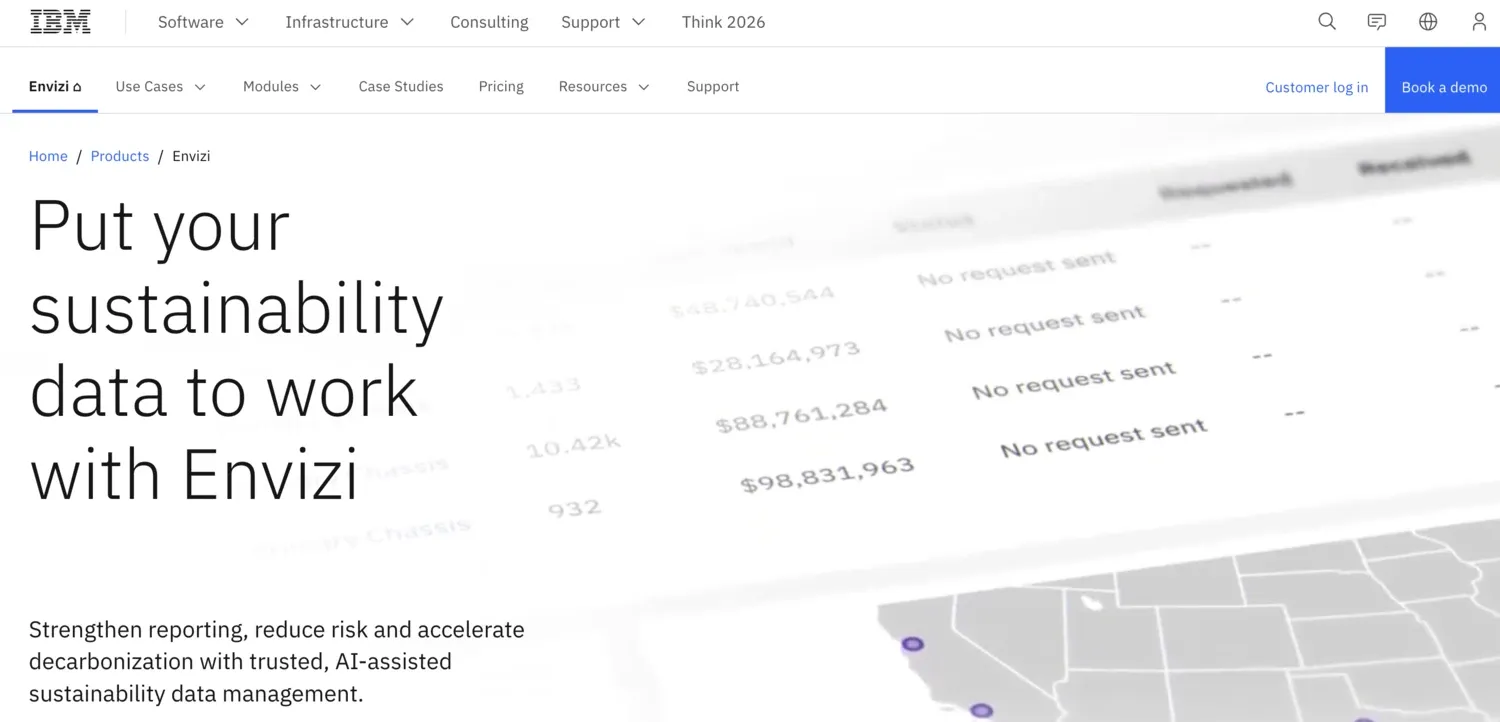
IBM Envizi is an enterprise ESG data and reporting platform designed to help organizations centralize sustainability data across large operational environments. It combines ESG data ingestion, reporting, auditability, and emissions management within a compliance-focused reporting architecture.
Best suited for
Large enterprises needing centralized ESG data management and compliance-ready sustainability reporting
Key features
- Automated ESG data ingestion across enterprise systems and suppliers
- Flexible organizational modeling and sustainability reporting structures
- Scope 3 emissions analytics and supply-chain emissions visibility
- Finance-grade validation, governance, and auditability workflows
- ESG reporting and disclosure management across multiple frameworks
Considerations
- Enterprise implementation and system integration can be resource-intensive
- Reporting and governance workflows are more central than operational sustainability collaboration
- Cost and deployment complexity may be less suitable for smaller organizations
Plan A
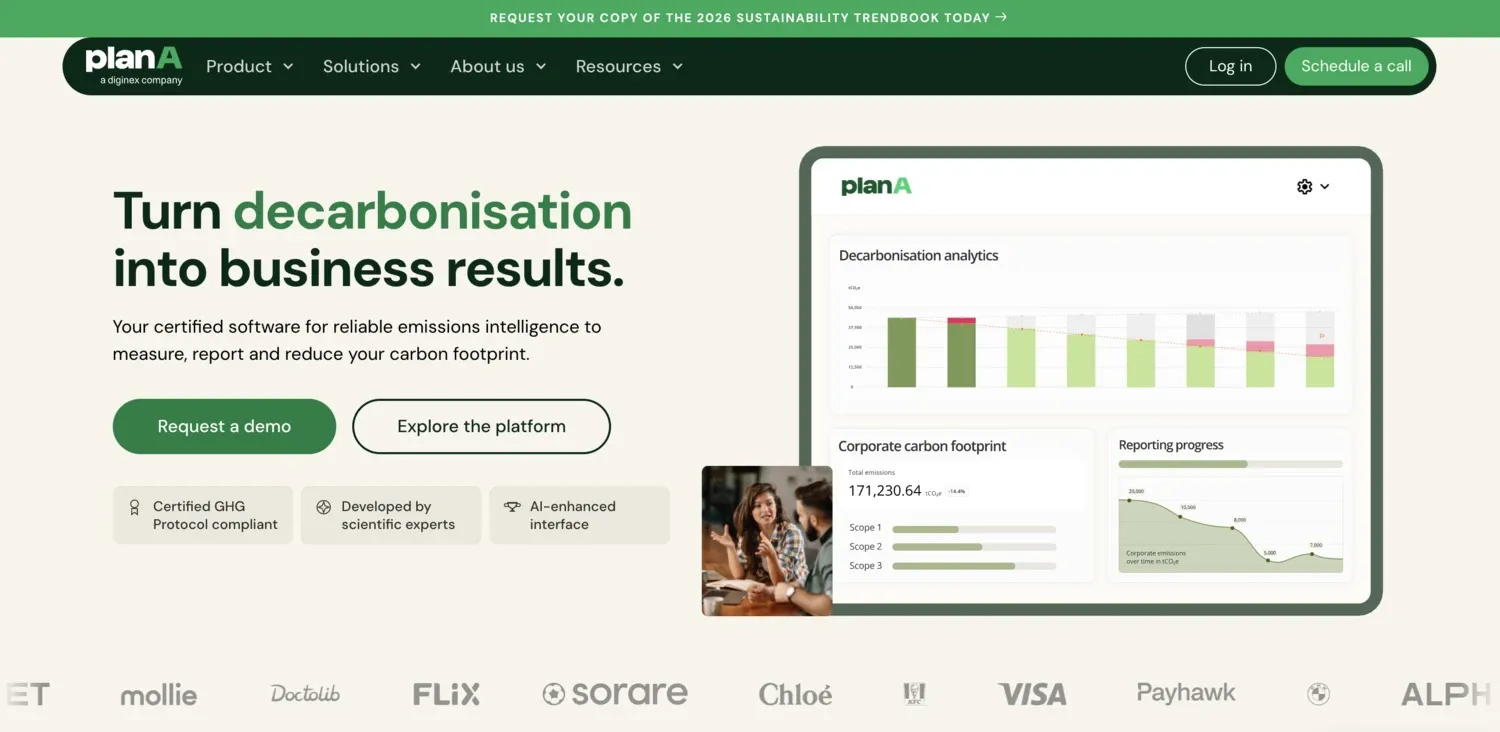
Plan A is a sustainability management platform that combines carbon accounting, ESG reporting, and transition planning within a single operational system.
The platform combines emissions management with broader sustainability planning, making it relevant for organizations looking to connect climate initiatives with operational sustainability goals.
Best suited for
Organizations looking to combine carbon management, ESG reporting, and sustainability planning within a single platform
Key features
- Scope 1, 2, and 3 carbon accounting and emissions tracking
- ESG reporting across multiple disclosure frameworks
- Decarbonization planning and sustainability target tracking
- Sustainability performance analytics and operational insights
- Workflow support for sustainability collaboration and reporting
Considerations
- May offer less enterprise depth than larger sustainability infrastructure platforms
- Governance and reporting controls may differ from finance-oriented reporting systems
- Complex multinational reporting environments may require additional customization
How to choose the right platform
Choosing the right software or platform depends on where sustainability complexity sits within the organization and how sustainability data is used across reporting, operations, and decision-making.
- If your priority is carbon accounting, financed emissions measurement, and climate disclosures, carbon-focused platforms such as Persefoni may provide the depth needed for emissions reporting and decarbonization analysis
- If sustainability programs are centered around climate intelligence, reduction planning, and supplier emissions visibility, platforms such as Watershed may be a strong fit
- If ESG reporting is closely tied to finance, governance, and audit workflows, reporting-centric platforms such as Workiva may better align with disclosure and compliance requirements
- If sustainability data needs to move across operations, procurement, supply chain, finance, and sustainability teams, workflow-driven platforms become increasingly important for coordination and ongoing data management
- If organizations are looking to connect carbon data, ESG reporting, operational workflows, and sustainability strategy within a single system, integrated sustainability platforms may offer a more scalable long-term approach
Connecting sustainability data, workflows, and reporting
Sustainability platforms are evolving beyond standalone reporting and carbon accounting tools. As sustainability programs become more operational, organizations increasingly need systems that can connect disclosures, emissions data, supplier engagement, workflows, and business decision-making within a single environment.
Different platforms approach this challenge from different angles. Some prioritize carbon accounting and climate intelligence, while others focus on reporting governance or enterprise ESG data management.
Sweep is designed to connect these areas through a workflow-driven sustainability intelligence platform that links carbon and ESG data with reporting, operations, and strategy. This allows organizations to move beyond fragmented sustainability processes and build a more connected approach to sustainability management across the business.
Want to explore how Sweep supports sustainability reporting with its all-in-one platform? Book a demo today.