Sustainability in Action 2026: New Report from Sweep and Capgemini

Read the report

Sweep Named a Leader in IDC MarketScape 2026 for Carbon Management

Get the report

Sweep named a Leader in the Verdantix 2026 Green Quadrant for enterprise carbon management

Get the report

California EPR (SB 54): What businesses need to know

Business Recycling California
Category
Blog
Last updated
November 11, 2026

California’s extended producer responsibility (EPR) law is changing how businesses manage and pay for packaging waste in the state. With regulations already in effect and further requirements approaching in 2027, companies selling products into California need to understand their obligations as soon as possible.

Under Senate Bill 54 (SB 54), affected businesses face new reporting responsibilities, packaging fees, and targets for reducing waste. 

But does your business need to comply, and how much could it cost?

This guide explains California’s EPR requirements, key deadlines, potential costs, and the steps businesses can take to prepare.

What is California’s EPR law (SB 54)?

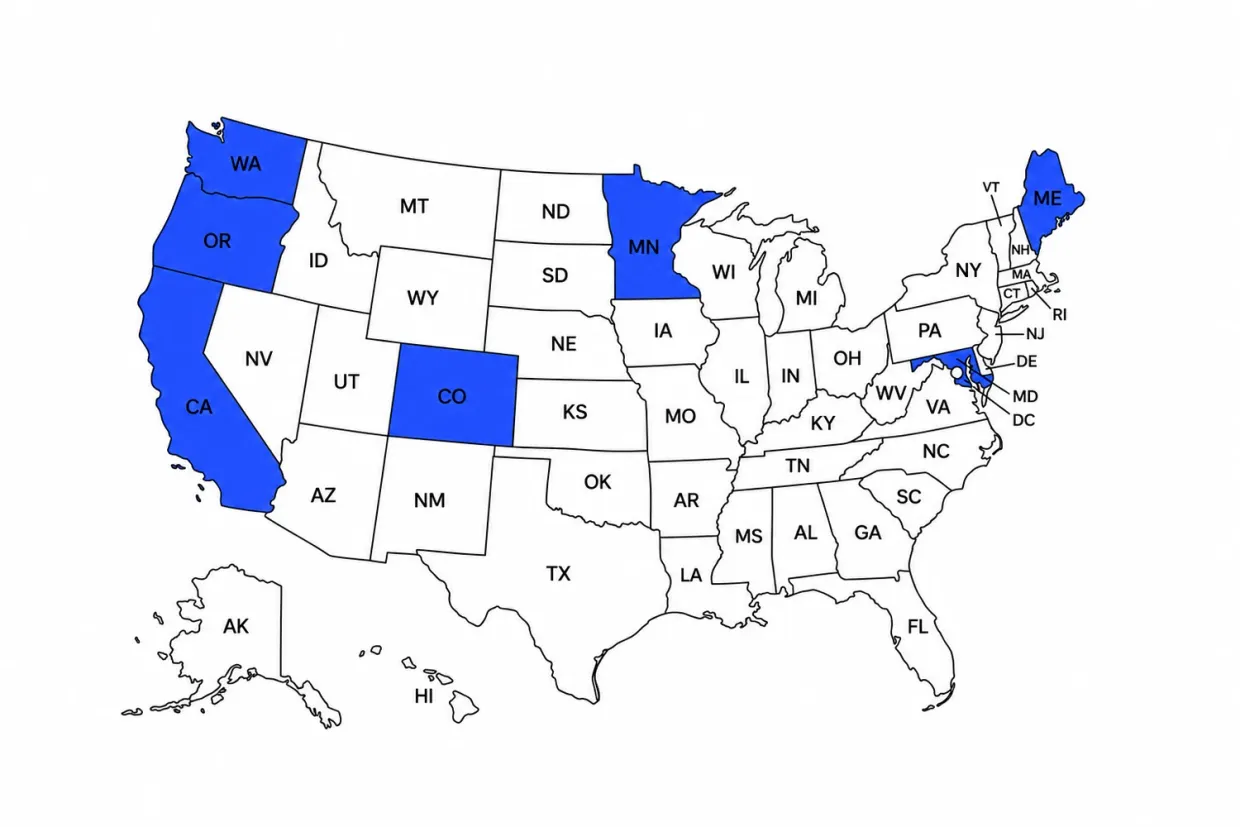
California’s Senate Bill 54 (SB 54), officially known as the Plastic Pollution Prevention and Packaging Producer Responsibility Act, was enacted in 2022 to reduce packaging waste and improve recycling across the state. 

Its permanent regulations took effect on May 1, 2026.

The legislation establishes California’s largest extended producer responsibility (EPR) program, shifting more responsibility for managing single-use packaging and plastic food service ware from consumers and local governments to the businesses producing them.

Under the program, producers generally participate through Circular Action Alliance (CAA), California’s first approved producer responsibility organization (PRO), while the California Department of Resources Recycling and Recovery (CalRecycle) oversees implementation and compliance.

SB 54 also requires producers to contribute $5 billion over 10 years, beginning in 2027, to address plastic pollution and support communities disproportionately affected by its environmental impacts.

What are California’s packaging reduction targets?

SB 54 establishes a series of statewide targets to reduce covered single-use plastics, measured against a 2023 baseline:

  • By January 1, 2027: 10% reduction, including at least 2% through reuse or refill
  • By January 1, 2030: 20% reduction, including at least 4% through reuse or refill
  • By January 1, 2032: 25% reduction, including at least 10% through reuse, refill, or eliminating plastic components

By 2032, California aims to achieve a 65% recycling rate for covered single-use plastics and to ensure that 100% of covered packaging and plastic food service ware are recyclable or compostable.

Individual producers are not required to meet the statewide targets on their own, but they contribute through their participation and packaging decisions, such as transitioning to reusable or refillable alternatives.

Who needs to comply with California EPR?

California’s SB 54 applies to businesses responsible for covered packaging and single-use plastic food service ware sold or distributed in the state. This can include companies headquartered outside California, as obligations depend on where products are sold or delivered, not where a business is based.

Who qualifies as a producer under SB 54?

Under SB 54, producer responsibility follows a hierarchy, meaning if a business doesn’t meet the criteria at one level, responsibility moves to the next.

Manufacturer

⬇

The company manufacturing the product, provided it owns or holds qualifying rights to the relevant brand or trademark in California

Brand owner or exclusive licensee

The qualifying brand or trademark owner, or exclusive licensee, if the manufacturer doesn‘t meet the criteria

⬇

Seller or distributor

The business selling or distributing the product in or into California if no qualifying producer is identified above

Once the responsible producer has been identified, the next step is to determine which packaging materials fall within the scope of SB 54.

Which packaging materials are covered?

SB 54 covers a wide range of single-use packaging materials, including:

  • Plastics: Bottles, films, wrappers, and other plastic packaging
  • Paper and cardboard: Cartons, boxes, and other paper-based packaging
  • Glass and metals: Jars, containers, cans, and other covered packaging
  • Plastic food service ware: Certain disposable cups, plates, containers, and utensils

Coverage depends on how the material is used and whether it meets California’s definition of covered material.

Which businesses are exempt from California EPR?

Businesses with less than $1 million in gross annual sales may qualify for a small-producer exemption from most reporting and fee requirements. However, they must register through CalRecycle’s Packaging Extended Producer Responsibility System (PEPRS) and apply for the exemption.

Certain materials are also excluded, including qualifying prescription drug and medical device packaging, beverage containers subject to separate recycling laws, and other specified categories.

Importantly, an exemption from reporting or fees doesn’t necessarily remove every obligation under SB 54. Eligible small producers must still plan for the law’s longer-term requirements for recyclable or compostable packaging.

What are the key California EPR deadlines?

California’s SB 54 regulations took effect on May 1, 2026, but the law’s requirements are being phased in. Producers have already faced initial registration, reporting, and early fee requirements, while further packaging reduction and recycling targets are scheduled through 2032.

The timeline below outlines the main milestones businesses should be aware of.

●

MAY 1, 2026
Permanent SB 54 regulations take effect
California’s packaging EPR regulations become legally effective

●

AUGUST 2026
Early producer fee invoicing
CAA schedules initial invoices to help fund program development

○

JANUARY 1, 2027
Full program implementation begins
Covered producers generally must participate in an approved PRO plan, or follow an approved independent compliance pathway, to continue selling or distributing covered materials in California. The first 10% statewide source-reduction milestone also falls on this date

○

JANUARY 1, 2028
30% recycling target
California’s first scheduled statewide recycling-rate milestone for covered single-use plastics

○

JANUARY 1, 2030
20% reduction and 40% recycling
Further statewide packaging reduction and recycling milestones

○

JANUARY 1, 2032
Final scheduled packaging targets
25% source reduction, 65% recycling and 100% recyclable or compostable covered packaging and plastic food service ware

How are California EPR fees calculated?

Under SB 54, producers pay fees based on the types and quantities of covered packaging they place on the California market. CAA’s 2027 California Producer Fees Schedule provides preliminary rates that businesses can use to estimate their potential costs.

For example, the following estimates show how much a producer could pay for 1,000 pounds of different packaging materials.

Packaging material Estimated 2027 fee
Cardboard without plastic components $30
Glass bottles without plastic components $20
Clear PET plastic bottles $410 + component fees
Polypropylene flexible film $560 + component fees

Note: The 2027 rates remain preliminary pending regulatory approval, and actual producer fees will depend on reported quantities, material classifications, and applicable adjustments.

Plastic packaging incurs additional charges beyond the base material fee, including contributions to California’s Plastic Pollution Mitigation Fund and reuse initiatives. These are included in the plastic estimates above, apart from the per-component charges.

The schedule also incorporates eco-modulated fees, including a 5% reduction for qualifying materials with high recycling rates and a 5% increase for materials that are both non-recyclable and non-compostable.

In 2027, producers are scheduled to receive two annual fee invoices, with 50% invoiced in January and the remaining 50% in July. The Plastic Pollution Mitigation Fund contribution will be invoiced separately in January.

How can businesses prepare for SB 54 compliance?

Preparing for California EPR compliance starts with understanding your responsibilities and organizing the packaging information needed for reporting. Businesses subject to SB 54 should take the following steps:

  1. Confirm your obligations: Review California’s producer definitions, covered materials, and exemptions to establish which requirements apply to your business.
  2. Register with the appropriate organization: Complete any required registration with CalRecycle and participate in Circular Action Alliance (CAA), unless following an approved alternative compliance pathway.
  3. Collect packaging data: Identify the materials, weights, and quantities of covered packaging placed on the California market, working with suppliers where necessary.
  4. Centralize your data: Consider using sustainability management software to bring packaging information and supplier records together, identify missing data, and reduce reliance on disconnected spreadsheets.
  5. Prepare for reporting and fees: Follow CAA and CalRecycle guidance on reporting categories, submission deadlines, and producer payments.
  6. Maintain supporting records: Keep packaging specifications, supplier documentation, reported figures, and payment records organized for future reporting and verification.

What packaging data should businesses collect?

Accurate packaging data is essential for understanding EPR obligations and estimating producer fees. Businesses may need information from product development, procurement, sales, and external suppliers to build a complete picture of the packaging they place on the California market.

The following table outlines the key information to collect.

Data category What to collect
Packaging materials Material types, such as plastic, cardboard, glass, and metal, including individual packaging components
Packaging weights Weight of each material or component, ideally recorded by product or SKU
California distribution volumes Quantities of covered products and packaging sold or distributed into California
Supplier specifications Material composition, packaging specifications, and supporting documentation from suppliers
Recycled content Information about recycled materials used in packaging, where relevant to reporting requirements
Source reduction Records of packaging redesigns, material reductions, and changes to packaging weights over time
Reporting records Submitted reports, supporting calculations, and documentation of applicable fee payments

How can Sweep support California EPR readiness?

Meeting California’s EPR requirements involves collecting and maintaining accurate packaging information across multiple suppliers, value chains, products, and internal systems. 

Managing this data can become a serious challenge as reporting requirements evolve.

Sweep, a sustainability intelligence platform, helps businesses centralize their sustainability data and maintain traceable, defensible records to support preparation for SB 54 reporting requirements.

Sweep’s AI assistant, Sweepy, can also help teams analyze sustainability data, identify gaps, and generate insights, making it easier to work with information collected across the business.

With California’s EPR regulations already in effect and further requirements approaching in 2027, businesses need to prepare for growing reporting demands and potential packaging costs. The earlier they establish reliable data management processes, the better positioned they’ll be to respond to changing obligations.

Sweep can help businesses take that next step, bringing sustainability data, supplier collaboration, and AI-powered insights together in one place. By improving visibility and reducing the time spent gathering information across disconnected systems, businesses can approach California’s evolving EPR requirements with greater confidence and focus more attention on improving their packaging strategies.

Sweep can help

Sweep makes sustainability work for your business. Not the other way round. We connect all your sustainability data and turn it into business intelligence to help you unlock performance – from compliance and risk reduction, all the way to cost-savings, and market differentiation.

With Sweep, you can:

  • Lower costs through real-time tracking and insights
  • Strengthen supply chains with end-to-end visibility and engagement
  • Deliver audit-ready sustainability and climate reporting with confidence
  • Make sustainability intelligence available to everyone to optimize the business
See how we can help you on your sustainability journey