How are companies reacting to the framework?
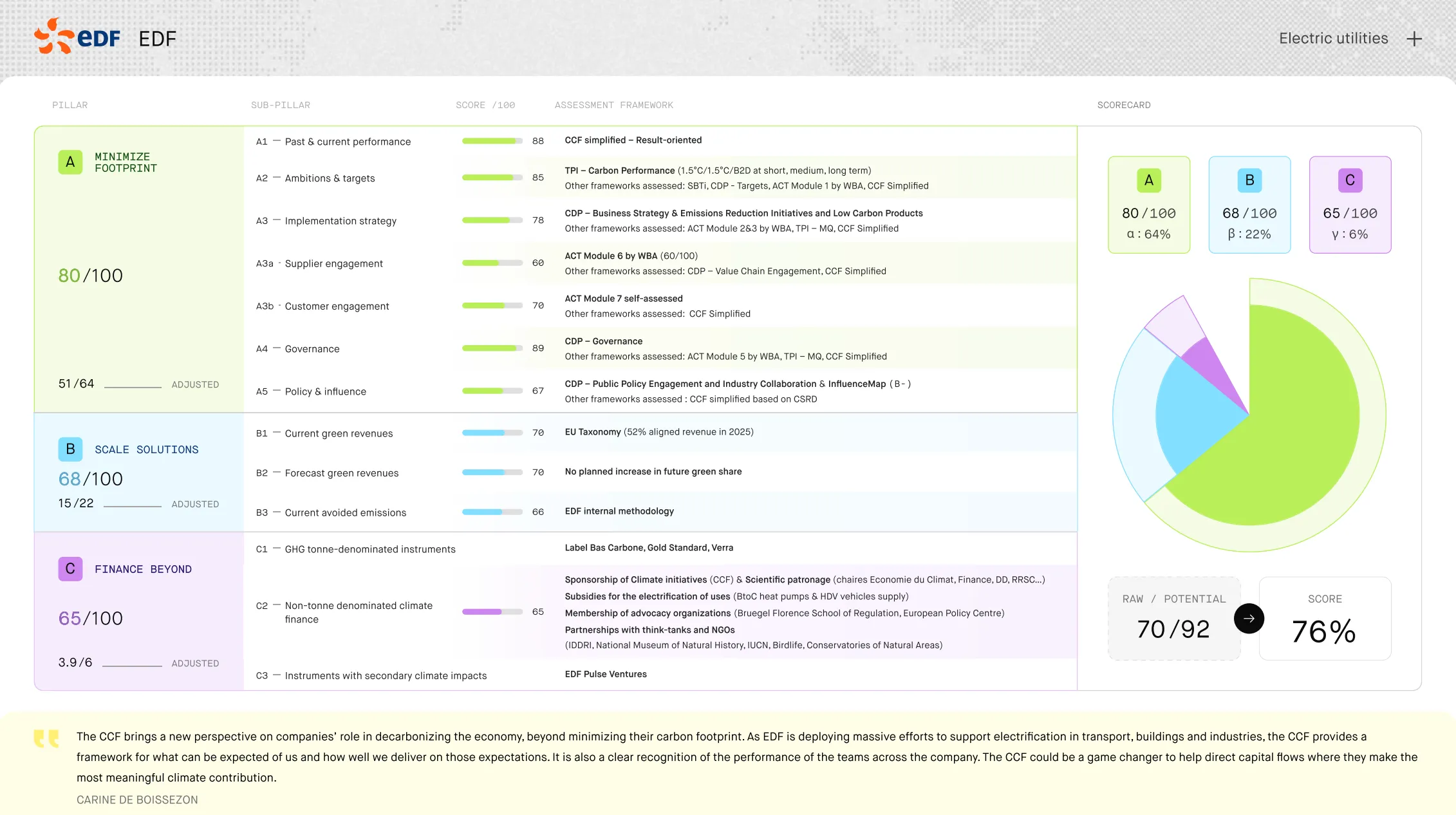
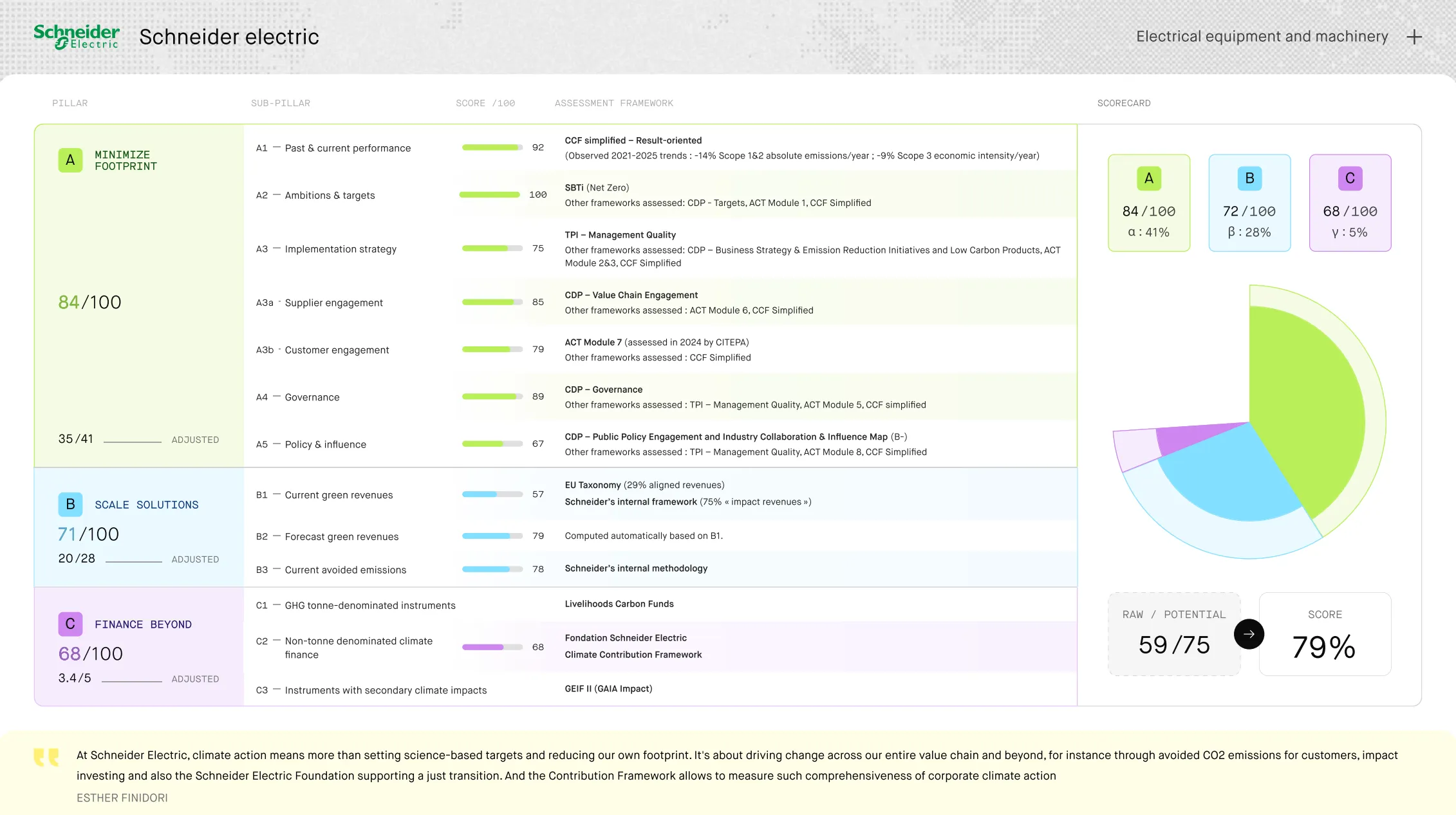
Two things keep coming up. First, companies feel the framework finally reflects everything they do, not just their greenhouse gas inventory. Second, it’s forcing them to dust off levers they’d shelved because they were too hard to measure, levers the CCF now actually rewards. On top of that, the scorecards are refreshingly actionable: one glance, and you know exactly where to focus next.
Should we take these early results with a grain of salt?
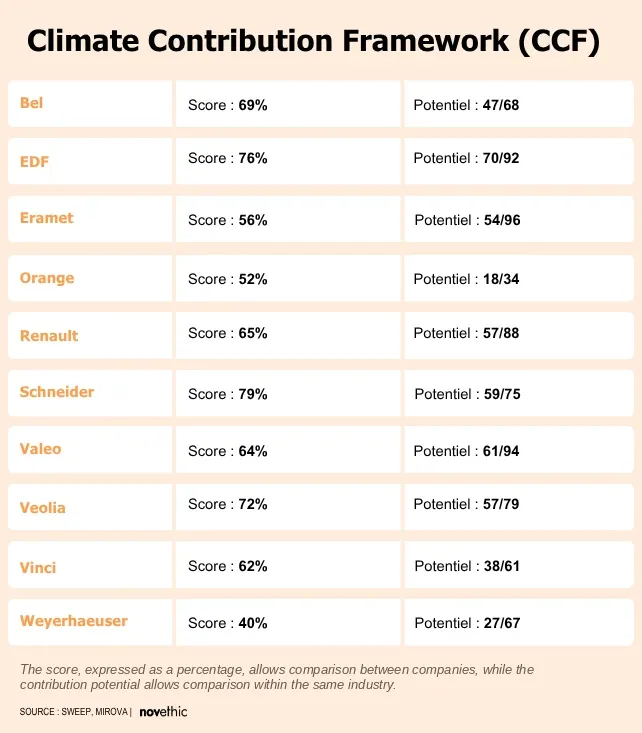
Yes, for two reasons. These are early adopters, companies already ahead of the curve, so it’s no surprise the scores look strong. And as more non-European companies get scored, the maturity gap with their European counterparts will likely become much clearer.
Pillar C looks like the weakest spot for most companies. Why does acting now matter so much?
Because waiting for the fantasy of company-wide net zero before funding climate projects simply isn’t good enough. Bel is the standout example here, scoring 96 out of 100 on this pillar: buying carbon credits, backing climate initiatives, taking equity stakes in companies protecting peatlands in the Jura, the list goes on. What makes it credible is that this C score always sits right next to the A and B scores, so there’s no hiding behind external financing while doing nothing about your own emissions. If anything, the CCF is built to call out greenwashing.