
The Corporate Sustainability Reporting Directive (CSRD) has introduced more detailed sustainability reporting requirements for companies operating in the EU.
Organizations must collect, validate, and report environmental, social, and governance (ESG) data in line with the European Sustainability Reporting Standards (ESRS), while demonstrating audit readiness and double materiality assessments.
Managing these requirements manually can quickly become challenging, particularly for organizations reporting across multiple entities, business units, or supply chains. CSRD reporting software helps centralize sustainability data, automate workflows, improve data quality, and streamline compliance processes.
This guide reviews five leading CSRD software platforms for 2026, comparing their reporting capabilities, materiality assessment tools, audit features, and sustainability data management functionality.
Top 5 CSRD software platforms
When navigating the complexities of CSRD compliance, having the right software platform is essential to streamline ESG data management and reporting.
The following five CSRD software platforms offer stellar support and robust tools to help ensure compliance with evolving sustainability regulations.
| Platform | Best for | Key strengths |
| Sweep | Large organizations and multi-entity reporting | Double materiality assessments, sustainability data management, CSRD reporting workflows |
| Watershed | Carbon and climate reporting programs | Carbon accounting, audit-ready governance, expert support |
| Greenly | Mid-market organizations starting CSRD reporting | AI-assisted assessments, ESG reporting and environmental reporting |
| Position Green | ESG management and compliance programs | ESG reporting, carbon accounting and sustainability performance management |
| Coolset | SMEs and growing businesses | Carbon accounting, CSRD reporting, ease of use |
1. Sweep – CSRD reporting made simple
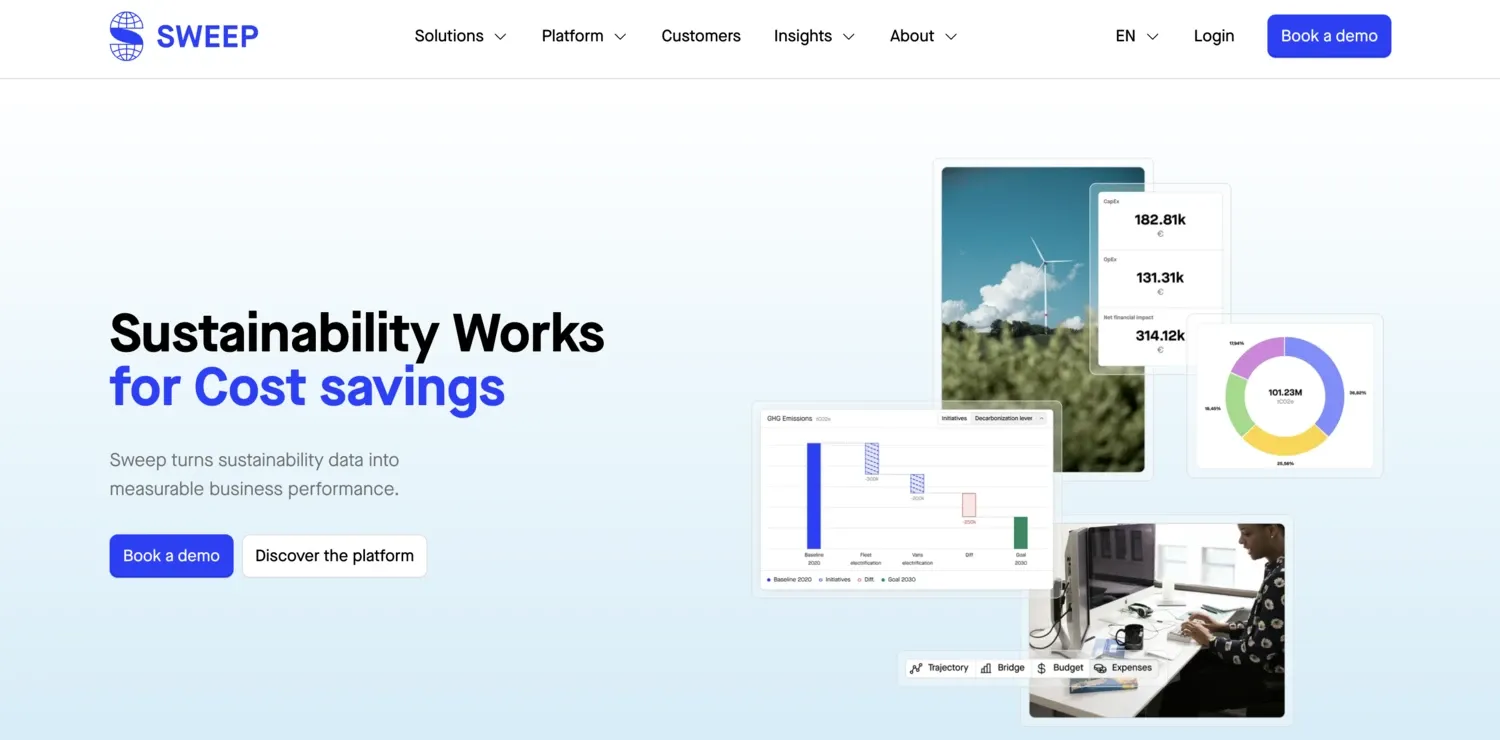
Sweep offers an all-in-one sustainability data management platform that helps organizations streamline CSRD reporting, automate ESG workflows, and leverage AI-assisted capabilities for data collection and analysis.
- Materiality assessment: Conduct a double materiality assessment tailored to your industry, focusing on critical sustainability topics like financial impact and impact thresholds.
- Gap assessment and data: Automate gap analysis and stakeholder engagement through surveys and file imports, improving governance by defining clear roles.
- Data validation: Sweep’s advanced workflow helps validate or reject data points, ensuring consistency and accuracy in sustainability reports.
- Audit readiness: Maintain detailed audit trails, correct data inconsistencies, and track changes across the platform.
- CSRD reporting: Compile and export material indicators in the required format, ensuring compliance with European Sustainability Reporting Standards (ESRS).
Why Sweep?
Sweep is ideal for large companies managing complex sustainability data, offering robust tools for streamlining the entire reporting process, from gap assessments to submission.
The platform was also recognized as a leader in IDC MarketScape for Carbon Management.
2. Watershed – Take control of ESG data management
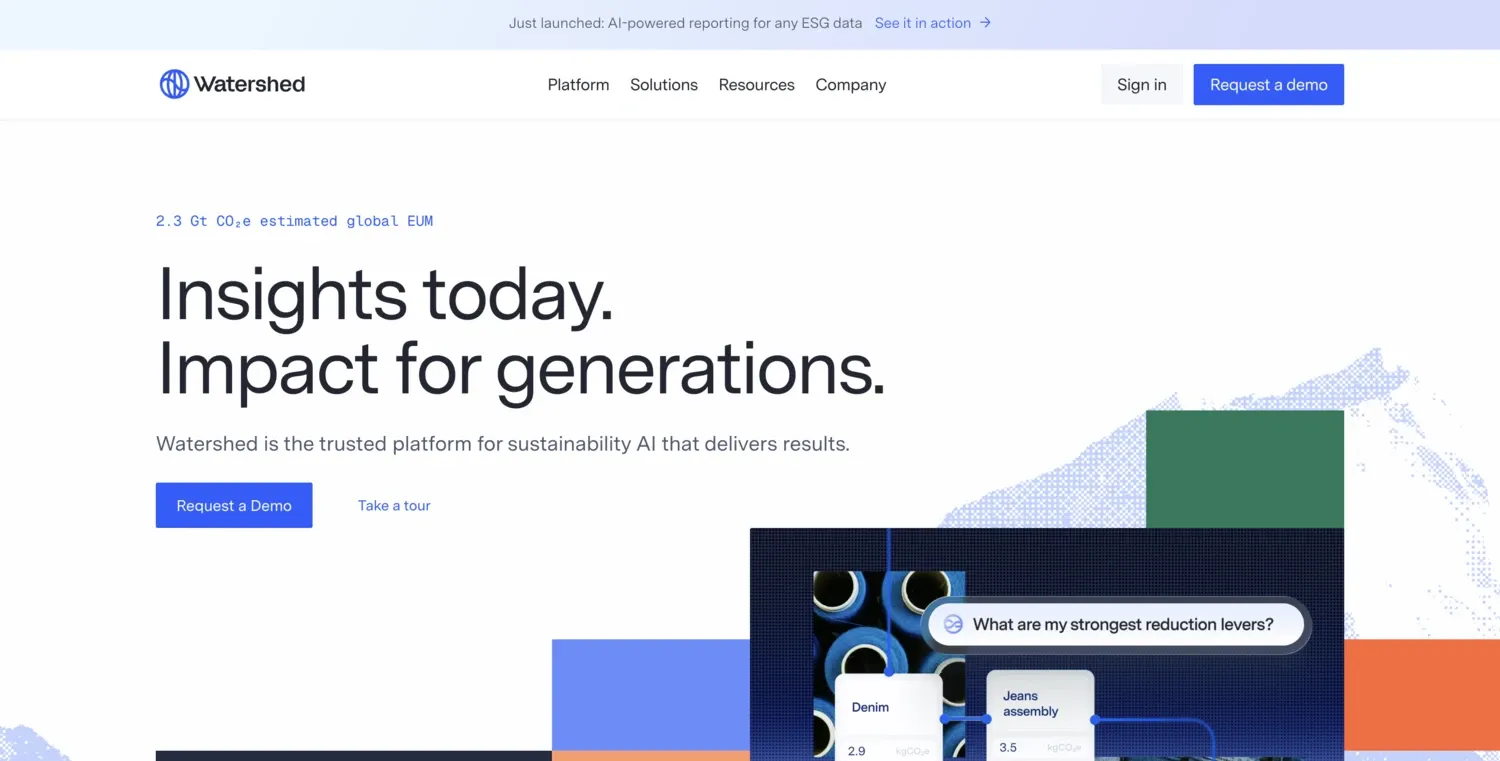
Watershed provides an intuitive platform designed to meet the data needs of CSRD compliance, offering tools for tracking, managing, and validating sustainability data across an organization’s value chain.
- Materiality assessments: Watershed’s report builder enables businesses to perform double materiality assessments and centralize complex data inputs.
- Risk assurance: Built-in governance tools ensure data meets strict audit standards, allowing companies to give auditors direct access to view data lineage and evidence.
- Expert support: Watershed’s team of environmental scientists and policy advisors provides guidance on answering complex ESG questions and ensuring reliable metrics.
Why Watershed?
Watershed’s expert-driven platform and strong governance tools make it a solid choice for companies needing real-time collaboration and oversight to ensure smooth sustainability reporting processes.
3. Greenly – Simplifying double materiality and ESG reporting
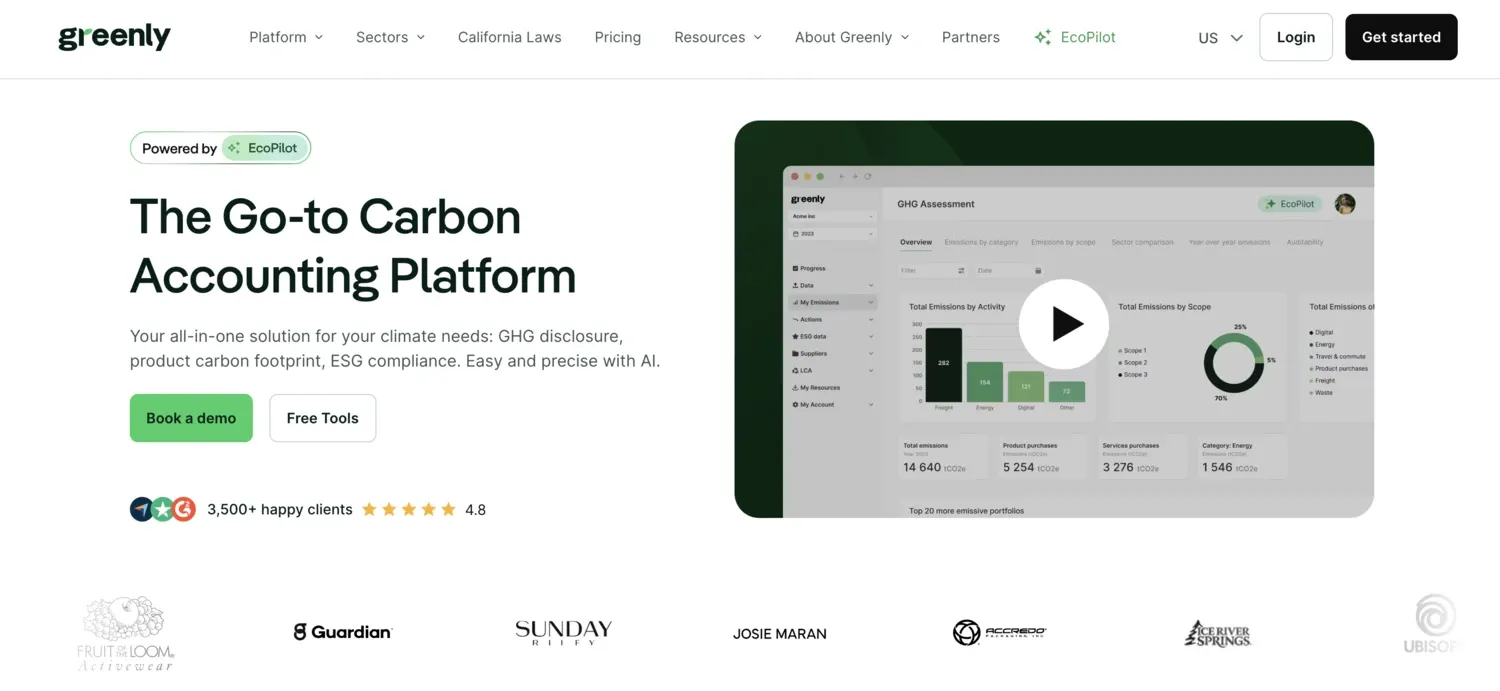
Greenly is an AI-driven platform that helps businesses manage their CSRD compliance, with a focus on double materiality assessments and streamlined ESG data management.
- Materiality assessment: Use Greenly’s AI to map your value chain, assess climate risks, and define material topics, supported by certified implementation partners.
- Gap assessment and data integration: Conduct gap analysis and simplify data integration to ensure alignment with ESRS guidelines.
- Environmental reporting: Greenly supports comprehensive reporting on environmental factors like climate change, biodiversity, pollution, and the circular economy.
- Audit readiness: Collaborate with internal and external experts to ensure high-quality results and streamline audit processes.
Why Greenly?
Greenly’s AI-powered platform is ideal for businesses looking for an advanced, user-friendly tool to manage materiality assessments and sustainability reporting.
4. Position Green – Simplify ESG compliance, maximize impact
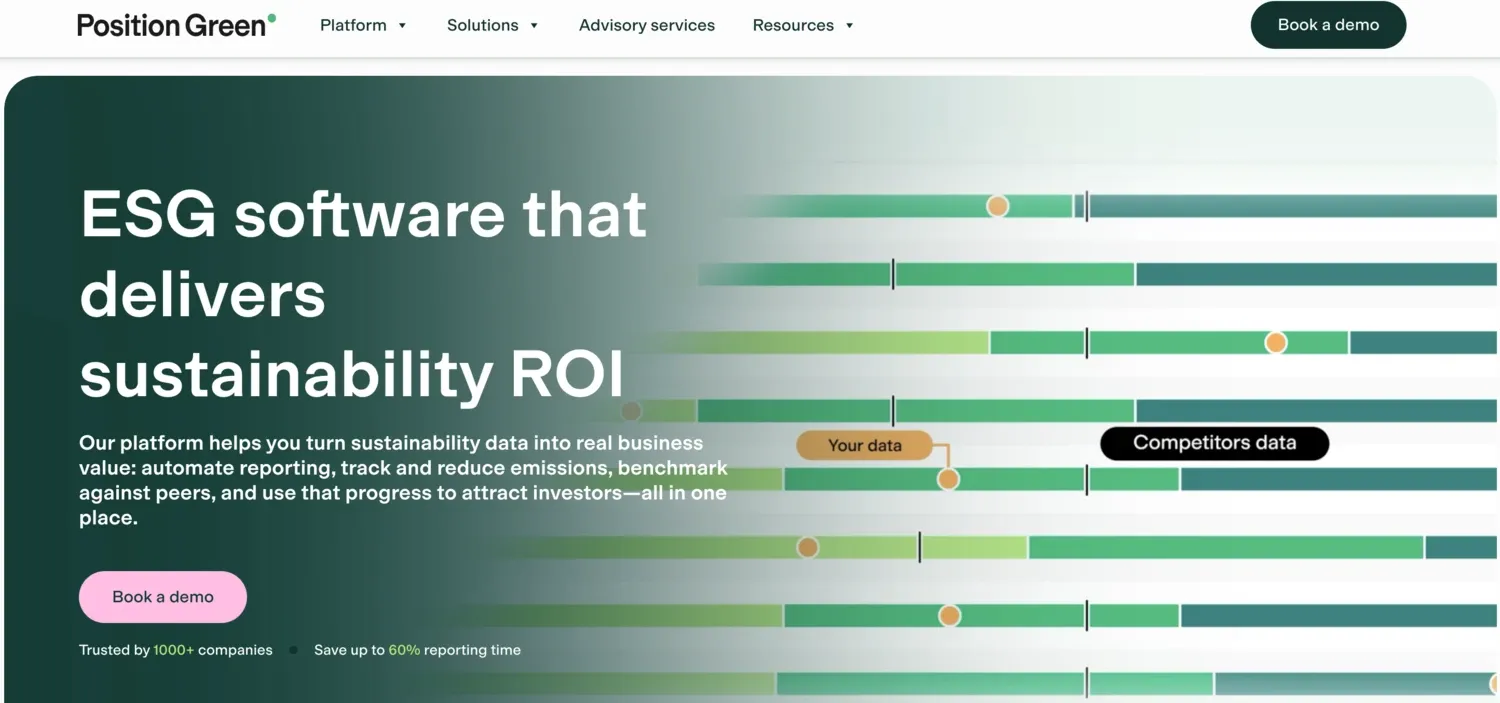 Position Green provides a sustainability management platform that helps organizations collect, manage, and report ESG data while supporting compliance with CSRD, ESRS, and EU Taxonomy requirements.
- Centralized ESG data management: Consolidate sustainability data from across the organization into a single platform, improving data quality and reducing manual reporting processes.
- CSRD and ESRS reporting: Structure disclosures in line with regulatory requirements to help teams manage reporting workflows and maintain compliance readiness.
- Carbon accounting and climate data: Track Scope 1, 2, and 3 emissions alongside broader sustainability metrics within a unified reporting environment.
Why Position Green?
Position Green is a great solution for organizations that want to combine ESG reporting, carbon accounting, and regulatory compliance within a single system.
5. Coolset – Empowering SMEs for sustainable growth
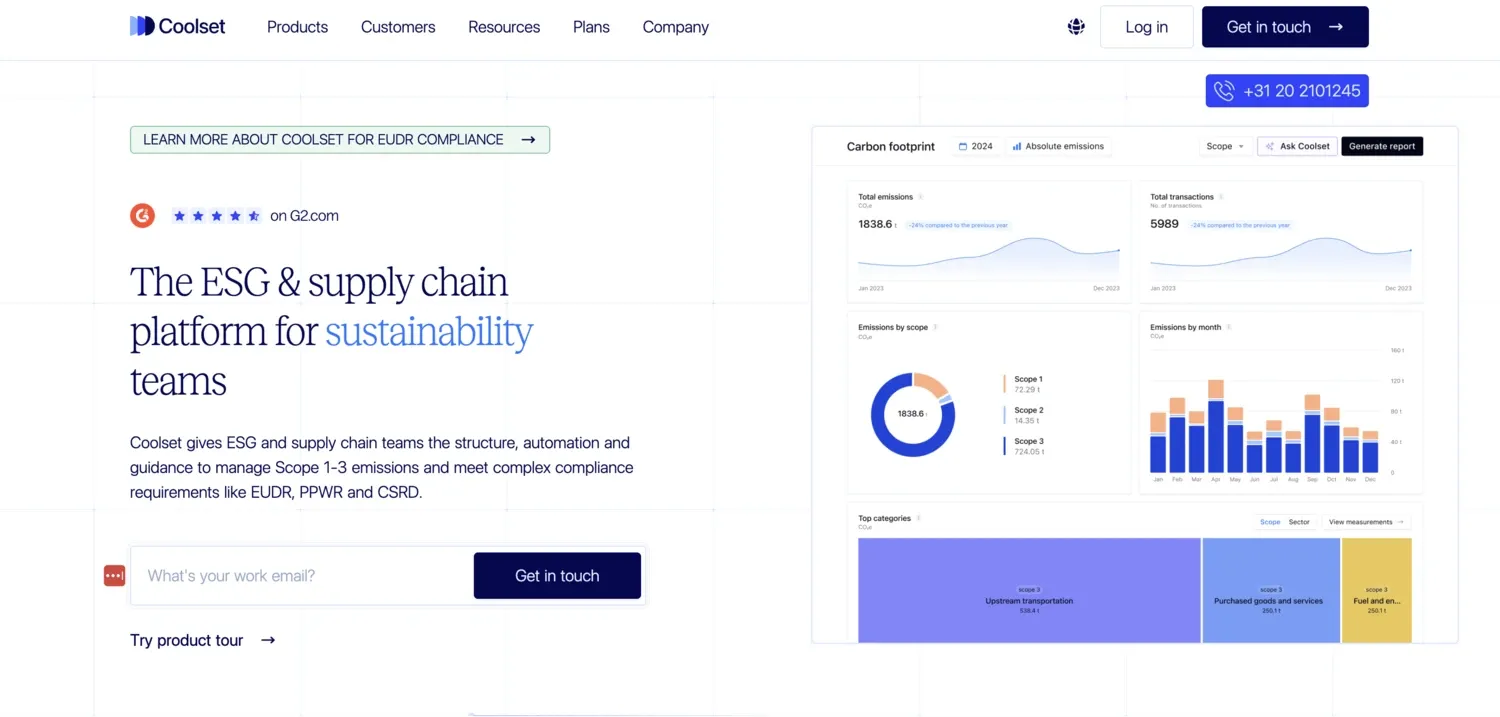 Coolset is an Amsterdam-based platform designed to help SMEs track, reduce, and eliminate carbon emissions while fast-tracking their CSRD compliance.
- Carbon footprints: Measure Scope 1, 2, and 3 emissions, identify hotspots, and provide sustainable alternatives.
- CSRD module: Coolset’s dedicated CSRD module simplifies the process, offering tools for materiality assessments and tailored reporting.
- Support for SMEs: Built for startups and mid-market companies, Coolset provides an accessible platform for businesses managing their first CSRD compliance cycles.
Why Coolset?
Coolset is ideal for SMEs looking for a flexible, easy-to-use software solution that combines carbon accounting with streamlined CSRD reporting.
Common CSRD data challenges
Complying with the CSRD directive introduces several data-related challenges for businesses as they navigate complex sustainability reporting processes.
1. Gathering accurate emissions data
One of the key challenges for companies is collecting and reporting accurate emissions data, especially when tracking Scope 1, 2, and 3 GHG emissions.
Many businesses struggle to understand the full extent of their carbon management responsibilities, particularly regarding emissions from their value chains.
This often leads to gaps in reporting and makes it difficult to ensure accuracy. Implementing robust data collection methods and using the right software solutions can help.
2. Meeting evolving regulatory requirements
As the CSRD directive comes into effect, businesses must stay up to date with the constantly evolving regulatory requirements. The scope and complexity of these requirements mean that companies must track various ESG factors while ensuring their data meets the necessary standards for audit-proof documentation.
This includes conducting gap assessments and maintaining a clear audit trail to provide evidence of compliance during reviews. Managing this regulatory landscape requires software platforms that can streamline compliance and offer real-time updates.
3. Ensuring data quality and audit readiness
Ensuring the quality and completeness of sustainability data, while maintaining audit readiness, is another major challenge.
Poor data governance, coupled with inefficient systems for data validation, can lead to inconsistencies or errors in reporting. Businesses must ensure their data is accurate, verifiable, and easy to trace, creating an audit trail that supports all reported metrics.
Establishing processes that ensure data integrity across various ESG metrics, from carbon accounting to social factors, is critical for producing audit-proof reports and avoiding compliance issues.
What to look for in CSRD reporting software
CSRD compliance requires much more than producing an annual sustainability report.
Organizations need to collect data from multiple stakeholders, assess double materiality, manage supporting evidence, and prepare disclosures for assurance.
The most effective CSRD software platforms address these challenges by combining sustainability data management, reporting workflows, governance controls, and carbon accounting capabilities within a single system.
Double materiality assessments
Double materiality is a core requirement of CSRD reporting. Software should help organizations identify, assess, and document material sustainability topics from both a financial and an impact perspective.
Many platforms provide structured assessment workflows, stakeholder surveys, scoring methodologies, and audit trails to support this process and demonstrate compliance.
Centralized sustainability data management
CSRD reporting relies on data from multiple departments, including finance, HR, procurement, operations, and supply chain teams. A strong platform should centralize data collection, standardize inputs, and create a single source of truth for sustainability reporting.
This helps reduce manual spreadsheet work, improve data quality, and increase consistency across disclosures.
Gap analysis and ESRS readiness
Many organizations are still building the processes and datasets needed to meet ESRS requirements.
Gap analysis tools help identify missing disclosures, incomplete datasets, and areas that require additional stakeholder engagement. These capabilities allow teams to prioritize efforts and create a clear roadmap toward compliance.
Audit trails and assurance support
As sustainability reporting comes under greater scrutiny, audit readiness is increasingly important. Look for software that maintains detailed audit trails, tracks changes to reported data, stores supporting documentation, and provides review and approval workflows.
These features help improve transparency and simplify assurance processes.
Carbon accounting and environmental reporting
Environmental disclosures form a significant part of CSRD reporting requirements. Many platforms include carbon accounting functionality that enables organizations to measure and manage Scope 1, 2, and 3 emissions alongside broader sustainability metrics.
Bringing these activities together within a single platform can improve reporting efficiency and data consistency.
Collaboration and stakeholder engagement
Successful CSRD reporting requires input from internal teams and external stakeholders. Features such as questionnaires, task management, approval workflows, role-based permissions, and automated reminders can help streamline data collection and improve coordination across the reporting process.
Reporting and performance tracking
Beyond compliance, organizations should be able to monitor sustainability performance over time. Dashboards, benchmarking tools, target tracking, and reporting frameworks help businesses measure progress, identify trends, and communicate results to regulators, investors, customers, and other stakeholders.
By evaluating software against these capabilities, organizations can identify a solution that not only supports CSRD compliance but also strengthens their broader sustainability reporting and data management processes.
Best practices for implementing CSRD reporting software
Choosing the right software is an important step, but successful CSRD compliance also depends on governance, data quality, and stakeholder engagement.
Organizations that prepare early are better positioned to meet reporting requirements and adapt to future regulatory changes.
- Start with a double materiality assessment. A double materiality assessment helps identify the sustainability topics that are most relevant to your business and stakeholders. Completing this process early creates a clear foundation for data collection, reporting priorities, and ESRS disclosures.
- Establish ownership for sustainability data. CSRD reporting requires input from multiple departments, including finance, HR, procurement, operations, and sustainability teams. Defining data owners and approval workflows helps improve accountability and reduce reporting bottlenecks.
- Identify data gaps before reporting begins. Many organizations discover missing disclosures, incomplete datasets, or challenges with supplier data during their first reporting cycle. Conducting a gap assessment early allows teams to prioritize data collection efforts and avoid last-minute reporting issues.
- Build audit-ready reporting processes. External assurance requirements are increasing across sustainability reporting. Organizations should establish clear documentation standards, validation workflows, and evidence management processes to support audit readiness from the outset.
- Plan beyond initial compliance. CSRD reporting is an ongoing process rather than a one-time project. The most successful organizations use reporting software to strengthen sustainability data management, monitor performance over time, and prepare for future regulatory developments.
Selecting the right CSRD software platform
Choosing the right CSRD software platform is an important step as organizations prepare for increasingly complex sustainability reporting requirements.
The five platforms noted in this guide each offer different strengths, from double materiality assessments and carbon accounting to sustainability data management and audit-ready reporting workflows. The right choice will depend on your organization’s size, reporting scope, internal resources, and long-term sustainability objectives.
As CSRD requirements continue to evolve, organizations should look for software that not only supports compliance today but also provides a scalable foundation for future reporting, assurance, and sustainability management initiatives.
With the right platform in place, businesses can streamline data collection, improve reporting accuracy, and build a more effective approach to sustainability reporting and performance management.