osapiens is a sustainability platform that gives organizations a single foundation for managing value chain transparency, regulatory requirements, and operational efficiency.
Its focus extends beyond meeting compliance requirements. osapiens combines AI-powered automation with a broad portfolio of solutions spanning supplier relationship management, carbon accounting, product traceability, maintenance, and resource planning, giving businesses a centralized foundation for transparency, operational efficiency, and sustainable growth.
As regulations become more complex and supply chains more interconnected, many organizations are looking for platforms that can support both compliance and day-to-day business operations.
This review explores osapiens’ approach to supply chain transparency and sustainability compliance, its core capabilities, and the types of organizations it’s best suited to.
What is osapiens and who is it best suited for?
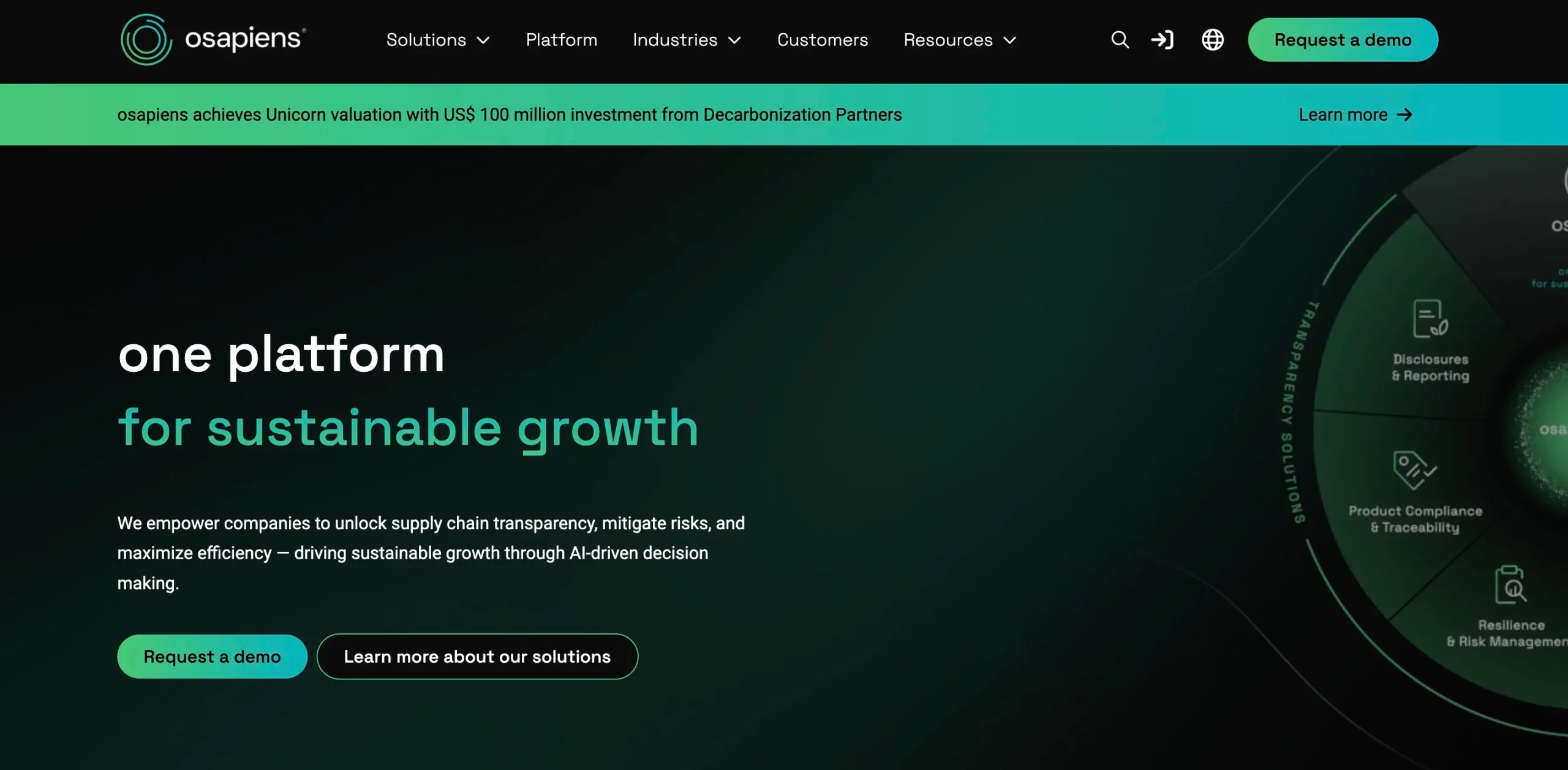
Osapiens is a cloud platform built around the osapiens HUB, which brings together more than 25 solutions spanning supply chain transparency, sustainability reporting, regulatory compliance, supplier collaboration, and operational management.
Rather than addressing individual sustainability challenges in isolation, the HUB provides a centralized environment for managing transparency, efficiency, and compliance across the value chain.
AI-powered automation runs throughout the platform, streamlining compliance activities, reducing manual effort, and providing real-time visibility into sustainability and operational performance.
Businesses choose osapiens to:
- Empower transparency across complex global value chains
- Manage sustainability reporting and comply with regulations such as CSRD, EUDR, CSDDD and CBAM
- Strengthen supplier collaboration, due diligence, and risk management
- Connect sustainability, compliance, and operational processes within a single platform
- Increase operational efficiency through automation, maintenance, and resource planning capabilities
The breadth of the osapiens HUB makes it a solid fit for organizations looking to manage sustainability and compliance alongside wider operational processes, using a single platform to improve transparency, efficiency, and long-term business resilience.
osapiens’ core features and capabilities
Value chain transparency and compliance
At the core of the osapiens HUB is a suite of solutions for improving transparency across complex global value chains. The platform brings together supplier relationship management, due diligence, risk management, and regulatory compliance in a centralized environment, providing businesses with greater visibility into suppliers, products, and operational risks.
The platform supports compliance with multiple global frameworks, including the Corporate Sustainability Reporting Directive (CSRD), the Corporate Sustainability Due Diligence Directive (CSDDD) and Sustainable Finance Disclosure Regulation (SFDR), and other supply chain requirements, using AI-powered automation to reduce manual processes and embed compliance into day-to-day operations.
Sustainability reporting and carbon management
The osapiens HUB includes a comprehensive reporting suite covering CSRD, Corporate Carbon Footprint (CCF), EU Taxonomy, X-Degree Compatibility (XDC), and Disclosure Management. Organizations can manage double materiality assessments, sustainability disclosures, financial and ESG reporting, and carbon accounting from a shared data foundation.
By combining reporting and carbon management in a single platform, osapiens enables businesses to streamline regulatory reporting while maintaining greater consistency across sustainability data.
Product compliance and traceability
Product compliance is another major focus of the platform. The osapiens HUB includes dedicated solutions for Digital Product Passports (DPP), Product Carbon Footprints (PCF), EUDR, PPWR, PFAS, and other product and traceability requirements.
These capabilities allow businesses to manage product-level sustainability data, improve traceability across the value chain, and prepare for evolving product compliance regulations from a single platform.
Operational efficiency and business performance
Beyond sustainability and compliance, the osapiens HUB includes solutions for maintenance, facility management, resource planning, distribution, and field service operations. These capabilities connect sustainability objectives with broader operational performance, helping organizations reduce downtime, improve productivity, and automate routine workflows.
AI-powered technologies operate throughout the platform, supporting automation, data integration, and decision-making across both sustainability and operational processes.
Notable osapiens customer example
The hagebau group, a European retail network with around 350 shareholders and more than 1,500 locations across six countries, partnered with osapiens to simplify compliance with growing sustainability regulations while improving visibility across its supplier network.
Faced with increasingly complex requirements under CSRD, EUDR, and CSDDD, the company needed a more centralized approach to managing sustainability data and regulatory processes.
The osapiens HUB was implemented to help hagebau:
- Centralize sustainability and supplier data within a single platform
- Streamline compliance with regulations including LkSG, CSRD, and EUDR
- Reduce manual data collection and reporting processes
- Improve collaboration with suppliers through a shared supplier portal
- Create a scalable foundation for future sustainability reporting requirements
Using the osapiens HUB, hagebau completed its Double Materiality Assessment and established a centralized reporting foundation that can be reused across future reporting cycles. By storing sustainability data in a single platform and making it available across multiple compliance processes, the company reduced manual effort and created a more scalable approach to sustainability reporting and value chain transparency.
Potential limitations and considerations
osapiens brings together supply chain transparency, regulatory compliance, sustainability reporting, and operational management within a single platform, making it a strong contender for organizations navigating complex value chains and evolving regulatory requirements.
For some businesses, sustainability priorities extend beyond compliance and transparency into areas such as financed emissions, enterprise sustainability performance, and cross-functional sustainability strategy. In these cases, organizations may also evaluate platforms that place greater emphasis on connecting sustainability data with business planning and operational decision-making.
As sustainability responsibilities continue to evolve, buying criteria often shift alongside them. Businesses comparing enterprise sustainability platforms should consider not only the breadth of available solutions, but also how sustainability data is used to coordinate activities across teams, inform strategic decisions, and create long-term business value.
How does Sweep compare to osapiens?
Sweep and osapiens both support enterprise sustainability management, but they approach it from different starting points.
| Area | Sweep | osapiens |
| Core focus | Sustainability intelligence, workflows, and business performance | Value chain transparency, compliance, and sustainable growth |
| Primary users | Sustainability, operations, procurement, finance, and supply chain teams | Sustainability, compliance, operations, procurement, and supply chain teams |
| Reporting approach | Workflow-driven sustainability management and multi-framework reporting | Centralized compliance, disclosures, and regulatory reporting |
| Value chain management | Supplier collaboration and sustainability performance | Supplier transparency, due diligence, traceability, and compliance |
| Operational capabilities | Sustainability initiatives, financed emissions, and cross-functional collaboration | Operational efficiency, maintenance, resource planning, and value chain operations |
| AI positioning | Sustainability workflow automation and operational insights | AI-powered automation for compliance, transparency, and operational efficiency |
| Best suited for | Organizations connecting sustainability data with operations and strategy | Organizations managing value chain transparency, regulatory compliance, and operational efficiency |
In a nutshell:
osapiens is built around creating transparency across the value chain, embedding regulatory compliance into day-to-day operations, and improving operational efficiency through a unified platform.
Sweep is built for organizations looking to connect sustainability reporting with supplier collaboration, financed emissions, operational decision-making, and sustainability intelligence across the business.
Choosing the right approach to value chain transparency and sustainability
osapiens is built for organizations that want to manage sustainability, regulatory compliance, and operational processes from a single platform. Its combination of value chain transparency, reporting, supplier collaboration, and operational management provides a centralized foundation for meeting regulatory requirements while improving efficiency across the business.
As sustainability initiatives become more closely connected to business performance, some organizations also look for platforms that extend beyond transparency and compliance to support sustainability intelligence, financed emissions, cross-functional collaboration, and strategic decision-making. In these environments, sustainability data becomes a driver of ongoing operational and business improvement, not just regulatory reporting.
Book a demo to see how Sweep helps organizations connect sustainability reporting, supplier collaboration, operational workflows, and sustainability intelligence across the enterprise.
Disclaimer: The information in this article is based on publicly available sources, including vendor websites, product documentation, and other published materials, at the time of writing. Product features, pricing, and capabilities may change over time. If you identify any inaccuracies or would like us to review updated information, please contact us.